Ruth J. Simmons Center for the Study of Slavery and Justice

2025–2026 Academic Year Recap

Throughout this past school year, the Ruth J. Simmons Center for the Study of Slavery and Justice has engaged in a wide variety of research and public humanities projects to examine historical forms of racial slavery, injustice, and their modern legacies. We also welcomed our second cohort of Public Humanities Master’s students in August and bid farewell to our first graduating class in May.

In the fall of 2025, we engaged local community members with several panel events and talks including our new Public Humanities Talk Series. Our activities extended internationally through documentary film screenings of “The Unfinished Conversations Series: Telling New Stories” and “Uncorking the Bitter Truth” in Johannesburg, South Africa, as well as other Global Curatorial Project activities in Rio de Janeiro, Brazil. These activities included a two-day international conference, the openings of the traveling exhibitions “In Slavery’s Wake” and “The Unfinished Conversations Series,” and a screening of the documentary “The Unfinished Conversations Series: Telling New Stories,” in Portuguese.

On December 13, 2025, the Brown community experienced an act of senseless violence. The Simmons Center students, staff, and faculty are grateful to our community, which reached out to offer support during this challenging time. As we continue to work toward healing and recovery, we remain committed to advancing a wide range of ideas, perspectives, and experiences to advance knowledge and understanding.

Our robust events and exhibitions schedule continued through spring 2026 as we marked the closing of the Reimagining New England Histories Project culminating exhibition, “Entwined,” installed two new exhibitions in our gallery on campus, and followed “In Slavery’s Wake” and “The Unfinished Conversations Series” and related documentary films to Cape Town, South Africa.

Across both semesters, we hosted a range of lectures, panels, Slavery & Legacy Walking Tours, symposia, conferences, Teach-Ins, film screenings and book talks. Check out some of the highlights and photo galleries below. We hope you will join us for upcoming programs and events in the 2026–2027 academic year as we celebrate 15 years since the Simmons Center’s work began.
Public Humanities Events

Public Humanities Master’s Program

The Master’s in Integrative Studies, focused on public humanities, provides students with an interdisciplinary exploration of issues surrounding race, decolonial practices and social justice with specific references to cultural work in museums and other cultural organizations. In fall 2025, we welcomed six new students to the program. In May 2026, our first cohort of four students graduated and are going on to pursue a range of career paths including Ph.D. programs, a curatorial assistantship with a digital humanities focus, and other non-profit work.

Public Humanities Lunch Talk Series

To supplement our Master’s students’ core curriculum, the Public Humanities Talk Series was launched in fall 2025. The series brings artists, curators, educators, activists, writers, community organizers, and thinkers together to highlight emergent themes in the public humanities through public talks. This year, we were in conversation with thought-leaders such as Victoria Chang, Jocelyn Bell, Paula Gaetano-Adi, Lisa Doi, Marian Carpenter, and others about a range of themes. From digital humanities and robotic exploration projects to films, museums, and exhibitions, our guests considered the core themes of decoloniality, resistance and cultural preservation while highlighting new modes of commemoration, redistribution and justice. The events this spring were made possible by the Debra Lee Lecture Fund.

Learn more about all of the Public Humanities Events

View our Public Humanities Photo Galleries from fall 2025 and spring 2026.

Exhibitions

An additional aspect of the Public Humanities work of the Simmons Center is its dedication to public history and education through its rotating gallery exhibitions. Each exhibition is specifically curated for the Simmons Center’s space to share a more nuanced understanding of the past. The exhibitions connect the public to historic images, documents, and contemporary art as well as the innovative work done by scholars. They encourage visitors to read history differently and conceptualize new ideas about the lives of enslaved peoples, victims of racial injustice, and their descendants.

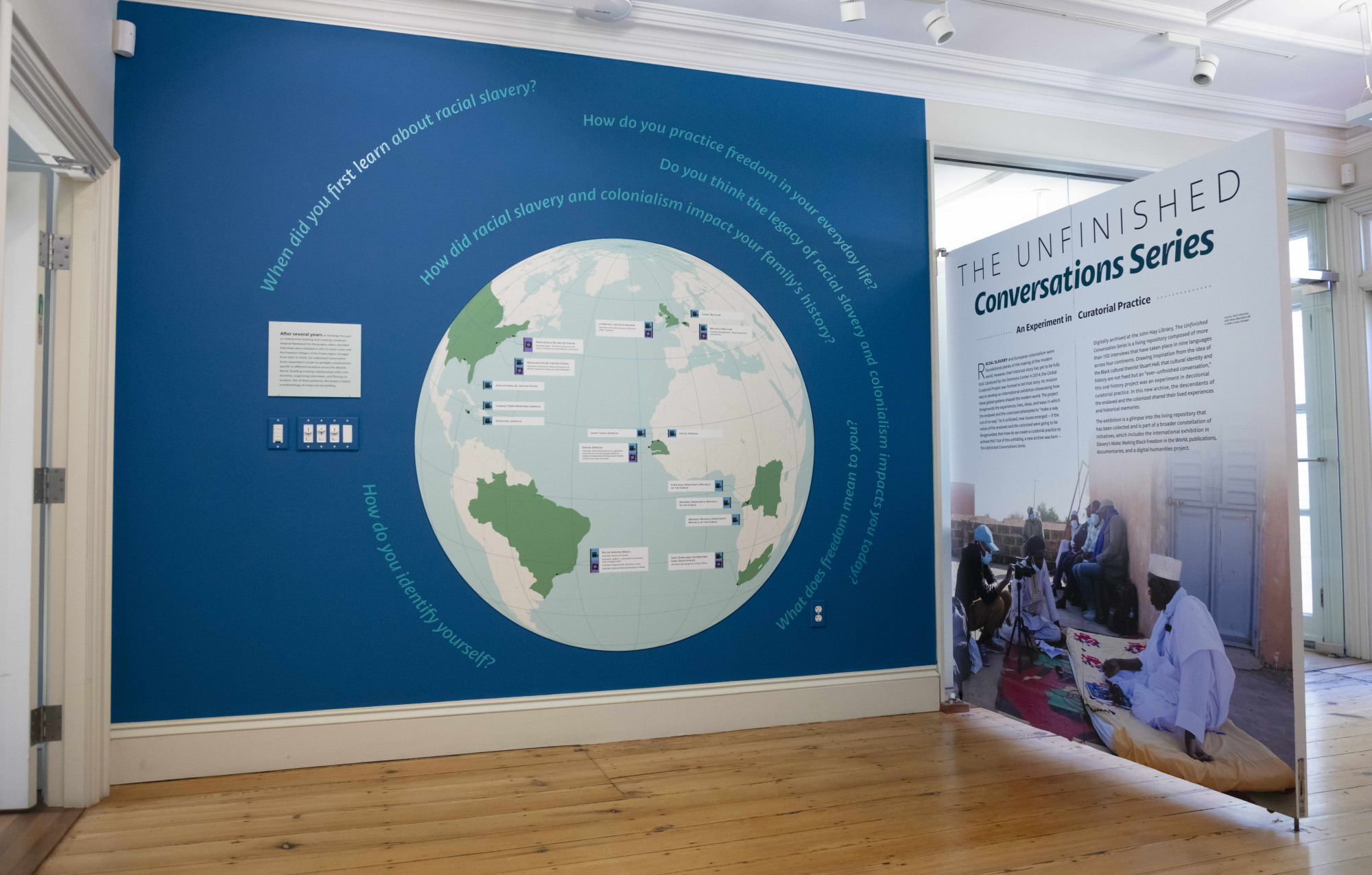
A wall with a bisecting panel featuring a graphic of a globe and pictures of people for an exhibition
The introductory walls for the “Unfinished Conversations Series” Exhibition Installation. Photo by Kiku Langford McDonald.

The Unfinished Conversations Series exhibition shows the work of the Global Curatorial Project to collect stories of slavery and captivity through a series of oral history interviews. Curators and community leaders from across four continents came together to form an archive of over 200 hours of interviews. The full Unfinished Conversations Digital Archive is housed at the John Hay Library and is accessible through the Brown Digital Repository. The series has included exhibitions, film screenings, and book talks at Brown University, in Brazil, and in South Africa. The “Unfinished Conversations Series” is generously supported by the Abrams Foundation and the Wyncote Foundation.

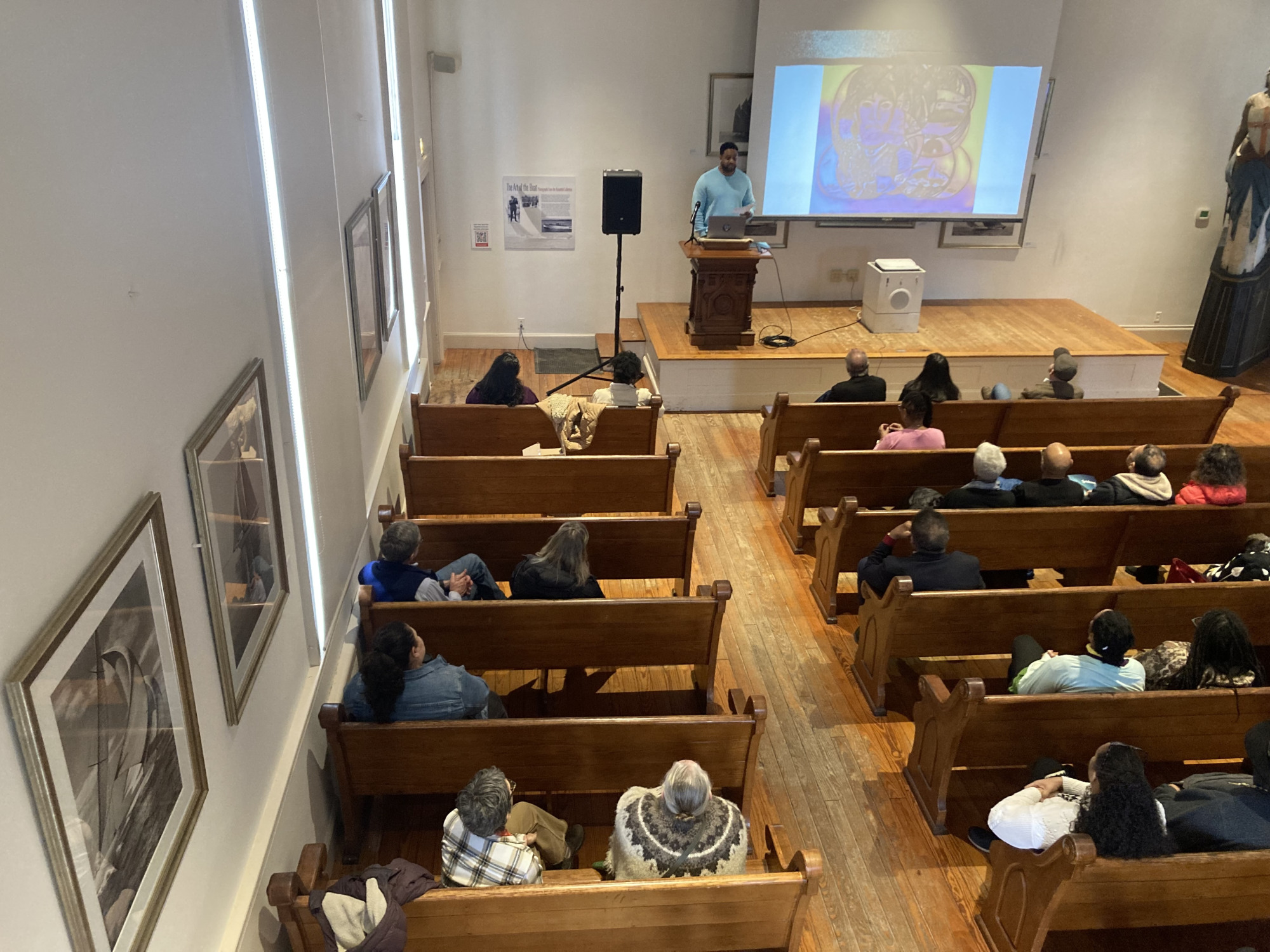
An overhead view of a room of people sitting on benches facing a woman speaking at a podium at the front of the room.
Dr. Mack Scott speaking at the “Entwined” exhibition's closing reception. Photo by Shana Weinberg.

Entwined: Freedom, Sovereignty, and the Sea was on view at the Mystic Seaport Museum from April 20, 2024, through January 19, 2026. On January 17, 2026, the Simmons Center and our institutional and community partners gathered to mark the closing of the Reimagining New England Histories project (RNEH) exhibition with an afternoon of reflection, including remarks by the exhibition’s curator, Akeia de Barros Gomes, Ph.D., Director of the Edward W. Kane and Martha J. Wallace Center for Black History at the Newport Historical Society, and Simmons Center Visiting Assistant Professor Mack Scott, who led the RNEH Education and Publications Committees, among other activities.

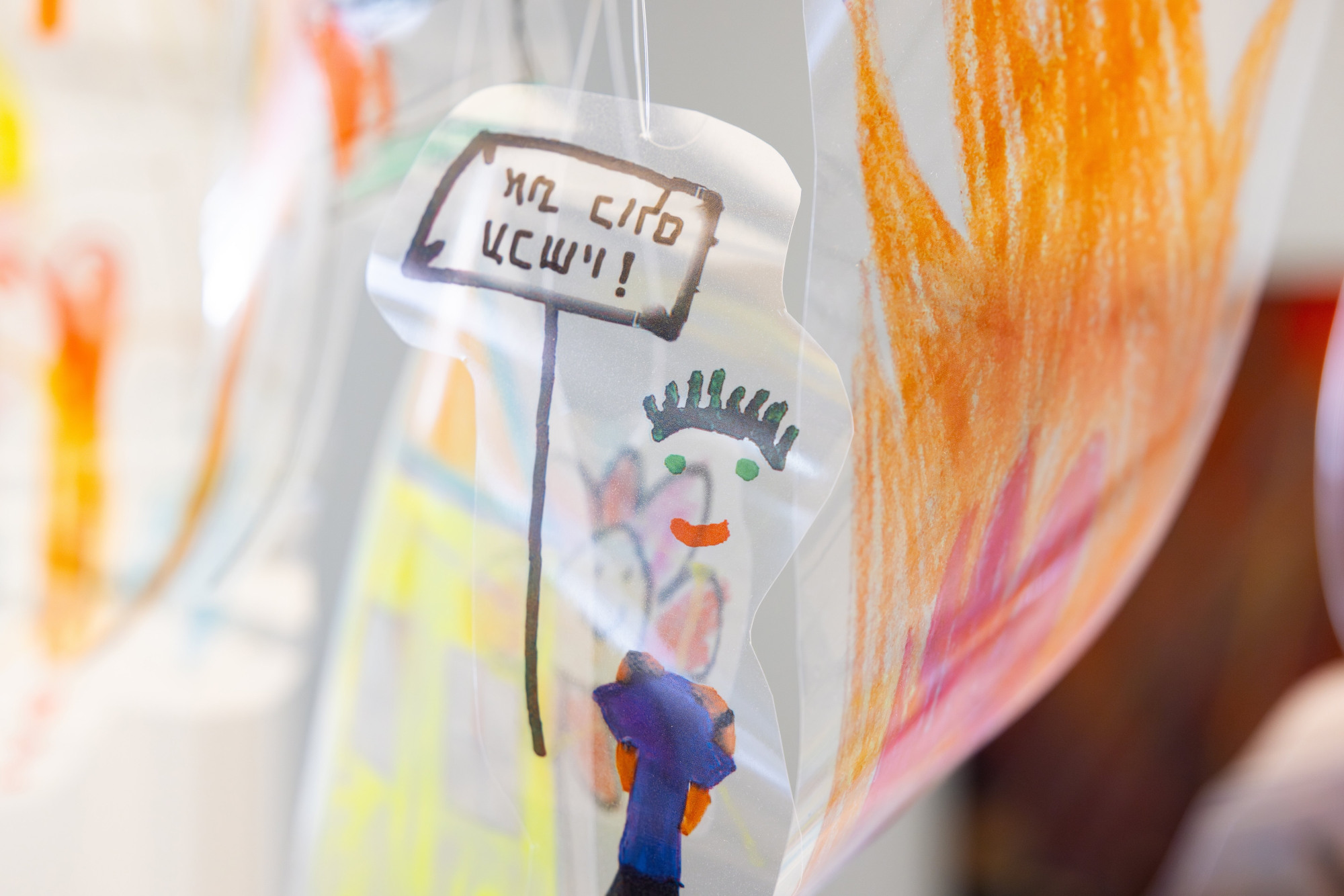
A hanging children's drawing of a person holding a sign on translucent plastic as part of the Innocent Knowledge Exhibition
A set of imagery from children's drawings was made into a mobile installation by Francesca Liuni (Rhode Island School of Design) as part of the “Innocent Knowledge” exhibition. Photo by Mike Cohea.

Innocent Knowledge was on view in the Simmons Center gallery January 26–February 20, 2026. Co-curated by Brown undergraduate students Canaan Estes and Taher Vahanvaty along with Associate Teaching Professor of Judaic Studies Katharina Galor, “Innocent Knowledge” gathers images of children’s drawings from fifteen communities across Israel, East Jerusalem, the West Bank, and the Gaza Strip. The drawings offer a rare and intimate glimpse into how young people experience a deeply fractured and unequal landscape. The exhibition opening included a live performance of lullabies in Arabic and Hebrew by Layan Hawila and Yuval Gur. An accompanying panel discussion explored how war, space, and history shape the lives of children in Israel and Palestine.

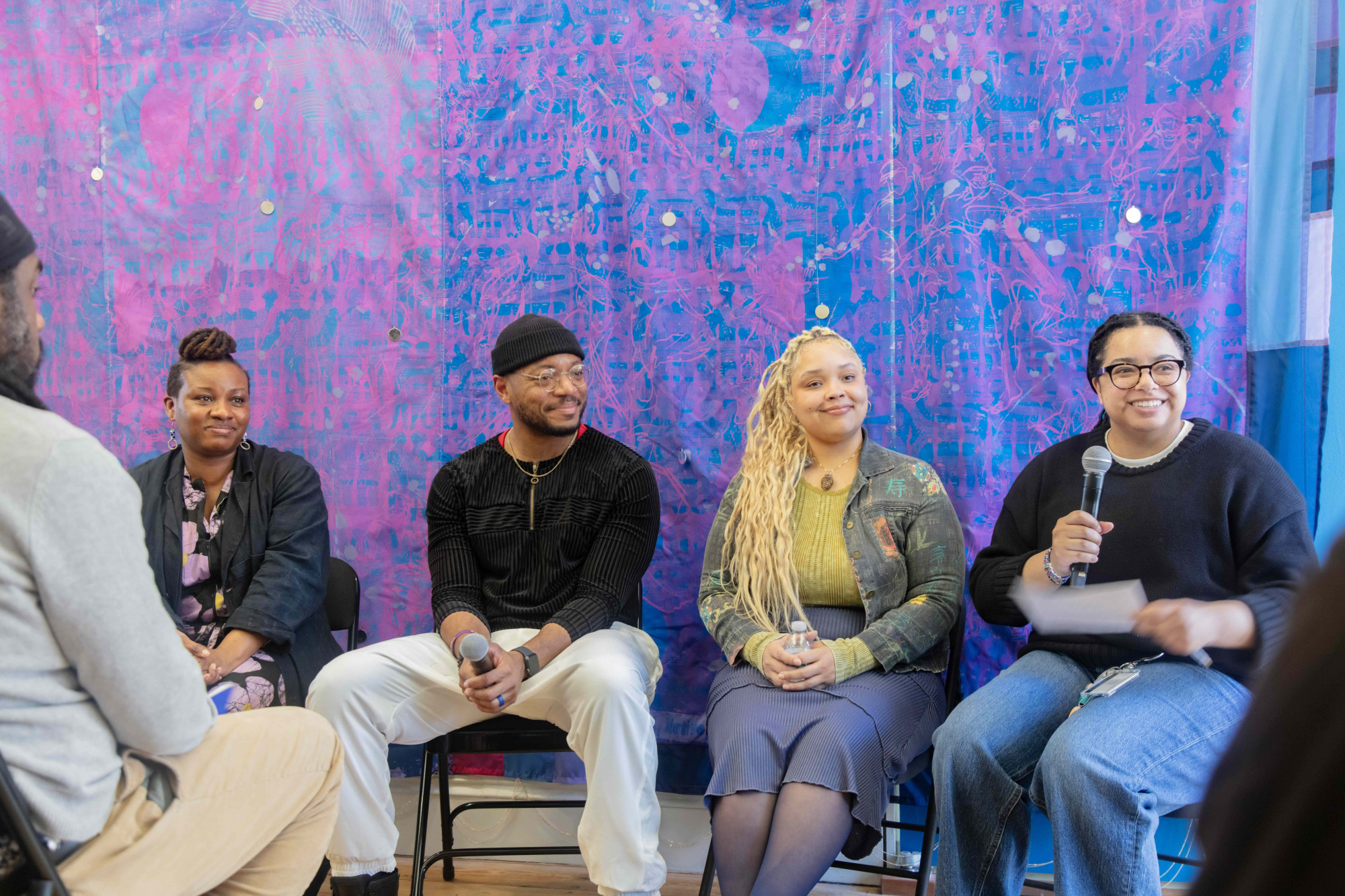
A group of people seated in front of a colorful fabric panel.
Artists Jazzmen Lee-Johnson, Spencer Evans, and Kia Lenise sat with the “Sites of Remaking: Port Cities and Our Present” Curator Ivie Orobaton for a panel discussion about the artistic practices they employed to develop their pieces regarding the legacies of the Transatlantic Slave Trade. Photo by Mahliat Tamrat.

Sites of Remaking: Port Cities and Our Present” opened on March 30, 2026, as a companion to the international conference “Reconsidering Port Cities,” both of which investigated the importance of ports and port cities as sites of encounter and exchange during the Transatlantic Slave Trade. Student Curator Ivie Orobaton, A.M. Candidate in Public Humanities, hosted several artist talks with three contemporary Rhode Island artists, Jazzmen Lee-Johnson, Kia Lenise, and Spencer Evans, whose works are included in the exhibition. Orobaton also led group visits to the exhibition, highlighting the ways these artists continue to investigate, layer, and juxtapose the histories of port cities and the Transatlantic Slave Trade with ongoing struggles among descendant African and Indigenous communities.

Conferences & Symposia

The Simmons Center brought dozens of scholars, practitioners, experts, civil rights activists, and artists to campus for conferences and symposia this year.

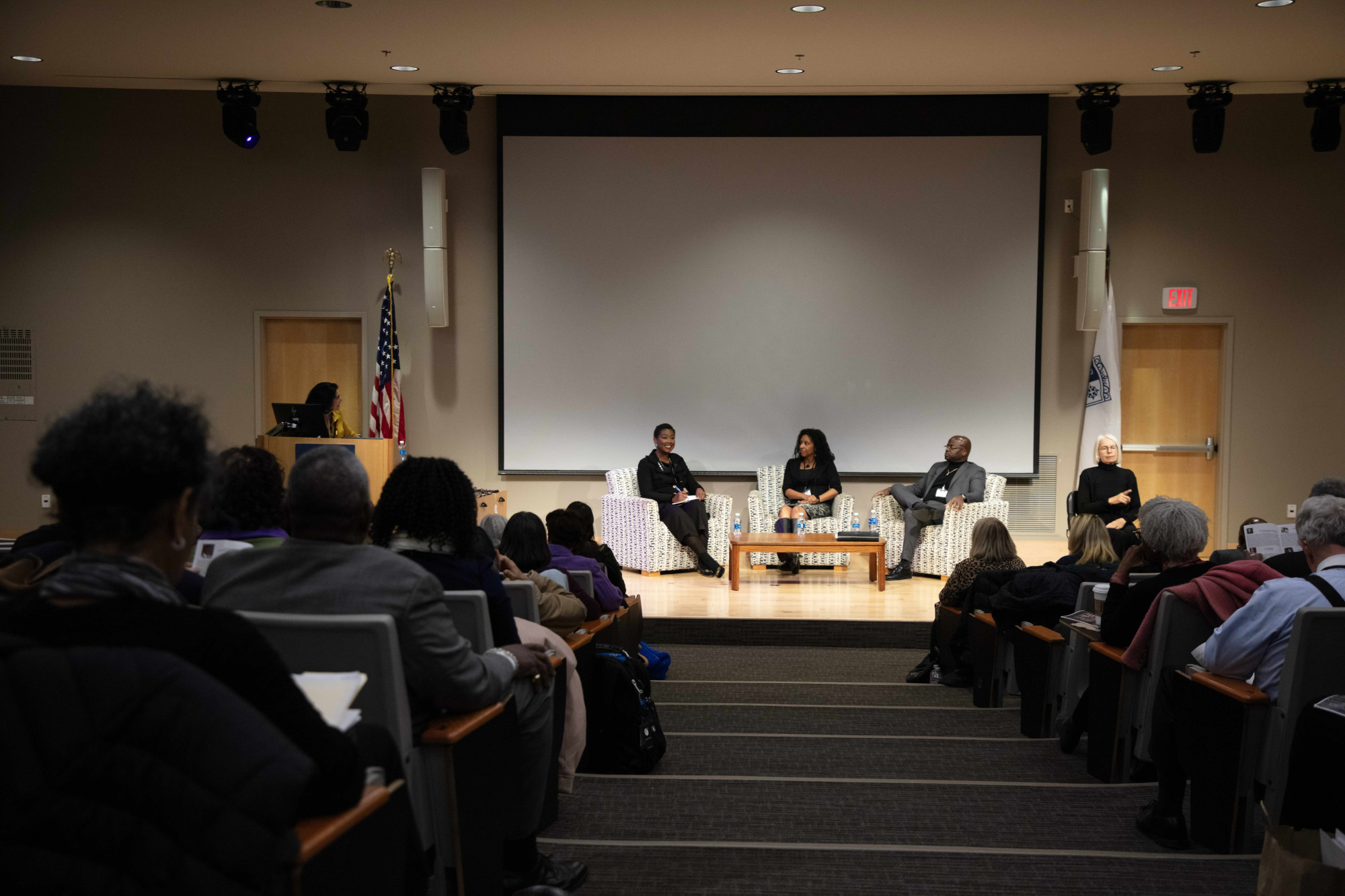
A panel of people sitting in front of an auditorium of people.
Michele Goodwin, Dr. Akeia de Barros Gomes, and Thomas Koonce speaking at the 160th Anniversary of the 13th Amendment Conference on “Vestiges.” Photo by Kiku Langford McDonald.

The 160th Anniversary of the 13th Amendment Conference celebrated the 160th Anniversary of the ratification of the 13th Amendment, which officially abolished slavery. The U.S. District Court for the District of Rhode Island gathered judges, attorneys, law clerks, legal scholars, law students, and members of the public to discuss the ongoing impact of slavery and this Amendment in our country and steps to take in the future to continue to reckon with our history.

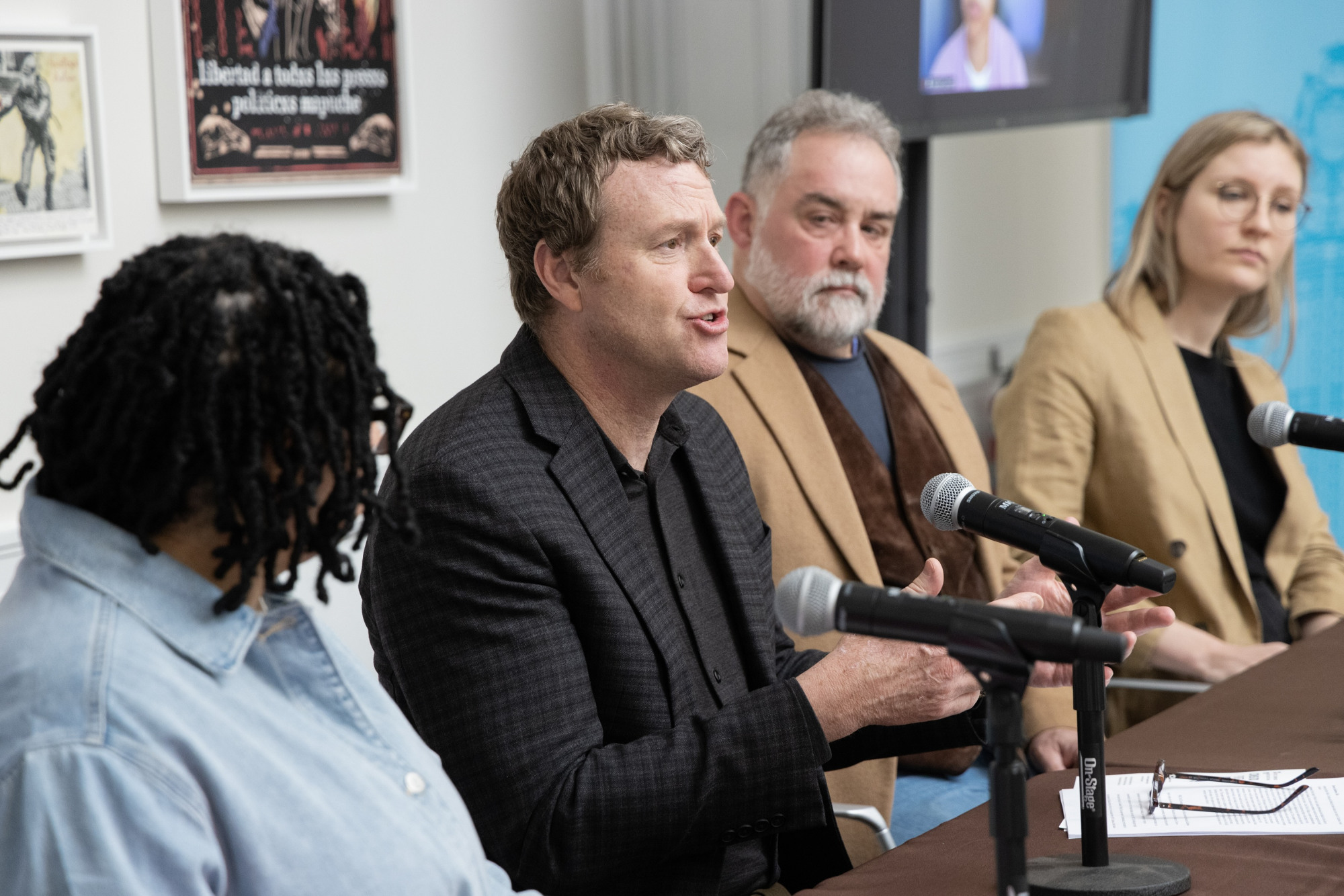
A group of people sat behind a table with mics.
Ivie Orobaton, Louis Nelson, Timothy Walker, and Emily Hirsch speaking on a panel exploring contested histories and memories of ports during the Reconsidering Port Cities Conference. Photo by Adam Mastoon. 

The Reconsidering Port Cities Conference explored the port cities across the Atlantic and their relations to the Transatlantic Slave Trade. We hosted several panelists who shared their experiences researching and commemorating the histories of these ports in the community. 

A group of people standing in front of a screen for the Walter Rodney Symposium.
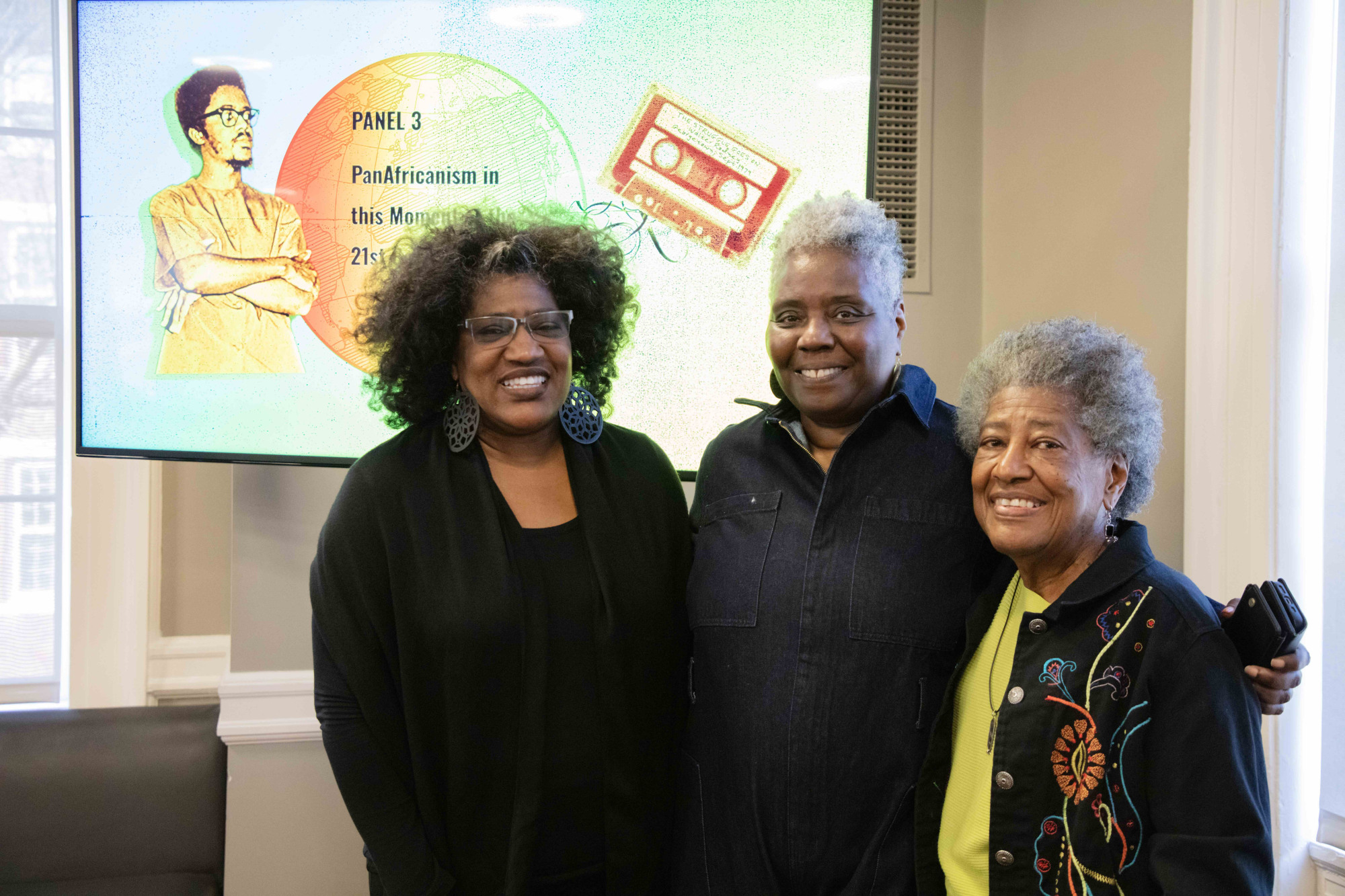
Asha T. Rodney, Esq., Prof. Noliwe Rooks, and Dr. Patricia Rodney at the Walter Rodney Symposium. Photo by Kiku Langford McDonald.

The Walter Rodney Symposium “The Struggle Goes On: Applying Dr. Walter Rodney’s Principles” was Brown’s inaugural event of the 22nd Annual Walter Rodney Symposium aimed at discussing contemporary issues and reflecting on Walter Rodney’s works, ideas, and methodology. Several speakers, including activists, archivists, and scholars, shared their insights on a variety of topics ranging from Global Pan-Africanism to Caribbean Politics.

A group of people standing around a table full of different colorful items.
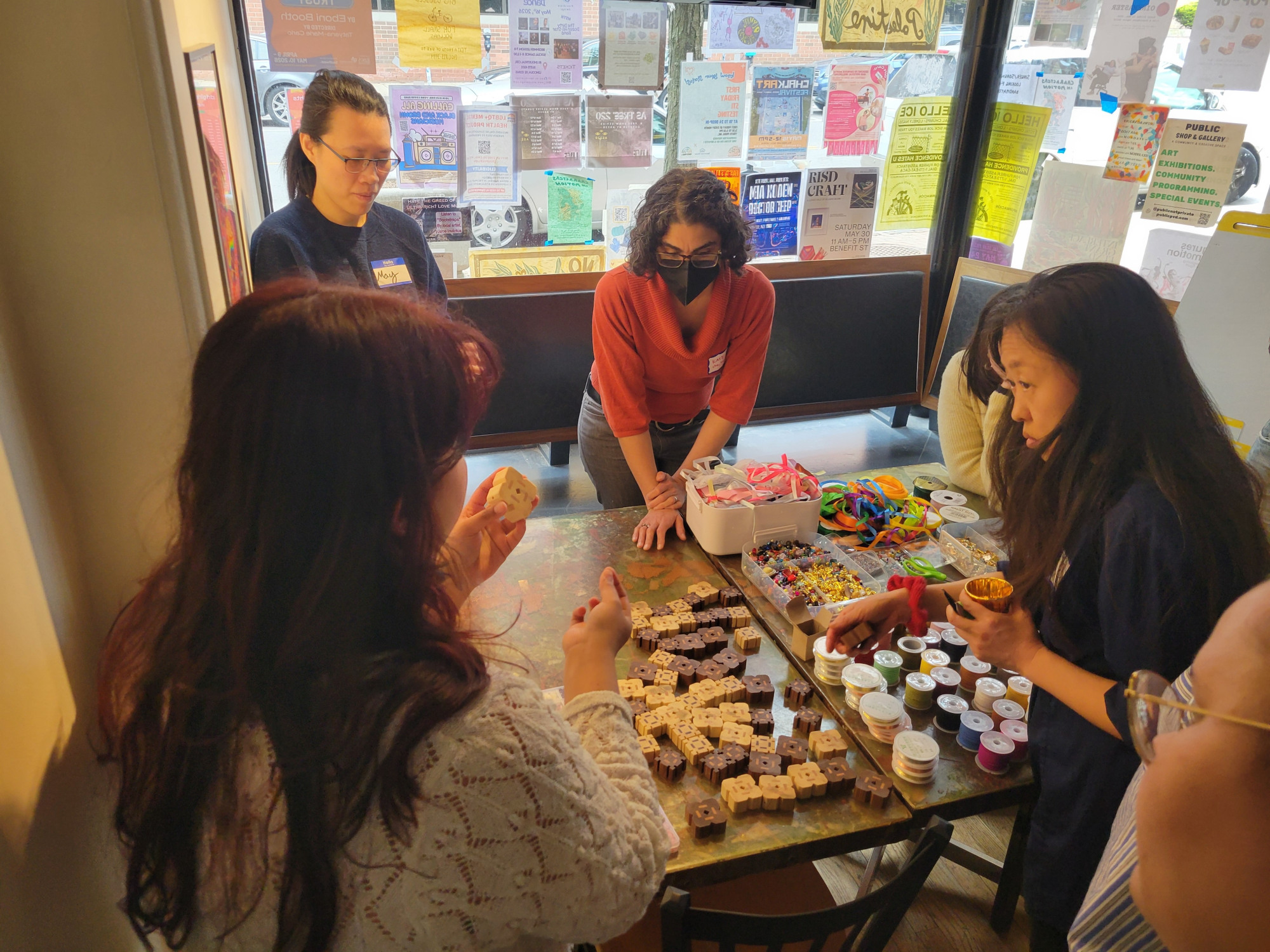
Alayka Seputra, RISD BFA ’26 leads people in decorating wooden charms she designed for her project "Daur Asmara" as part of the Moving Towards Life Conference. Photo by Tara Leininger.

The Moving Towards Life: Community and Care in the Arts and Cultural Work convening was hosted by students in the Simmons Center’s MA in Public Humanities course “Decolonization of Museums: Nations, Museums, Anti-Colonialism and the Contemporary Moment.” Highlighting the intersection between care, the arts, and cultural spaces, it pushed for museum practices to move away from flattening and negligent representations and towards life.

Artists in Residence

Heimark Artists in Residence | Marian Anderson String Quartet

A string quartet performing on a stage in front of an audience.
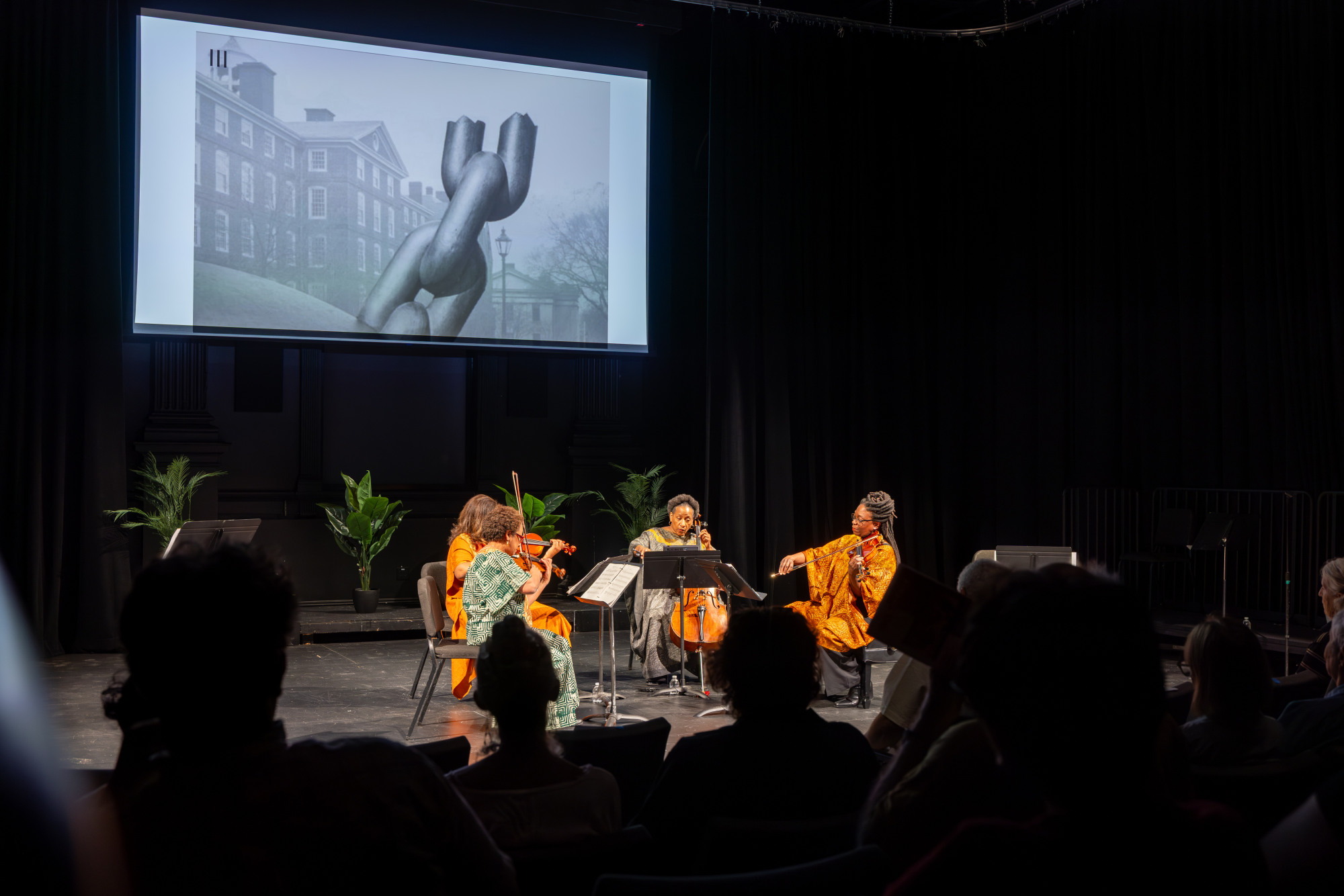
The Marian Anderson String Quartet performing their piece “Face to Face” at Brown's Rites & Reason Theatre. Photo by Mike Cohea.

The Heimark Artist in Residence program has brought a variety of artists, musicians, poets, and performers on campus to grapple with the lasting legacies of racial slavery through their work. The Marian Anderson String Quartet were the first Heimark Artists in Residence in 2014–15. The quartet returned as our 2024–26 Artists in Residence in May 2026 to perform Face to Face: a curated, immersive program connecting Brown University’s layered histories to sound. The performance allowed the audience to experience how music can reflect, respond to, and resonate within a specific institutional and cultural environment.

Reimagining New England Histories Artist Residency | Thawn Sherenté Harris

A man dressed in Indigenous clothing while playing a native drum.
Thawn Sherenté Harris performing for the opening day of the Reconsidering Port Cities Conference. Photo by Adam Mastoon.

The Reimagining New England Histories Artist Residency is part of the Reimagining New England Histories project (RNEH), which aims to foreground the silenced stories of Indigenous and African American experiences of New England. The 2025–26 resident was Storyteller Thawn Sherenté Harris, a citizen of the Narragansett Tribe, who shares his culture with the greater community through oral history, traditional song, and dance. As part of his residency, Thawn gave a Public Humanities Lunch Talk at the Simmons Center on November 18, 2025 and performed a new work, ““This is my land, which you have got from me!”: The burning of God’s Providence” during the conference “Reconsidering Port Cities: Critical Commemoration of Slavery, and Transatlantic Legacies,” on April 23, 2026.

Research Clusters & Seminar Series

Race, Medicine, and Social Justice Research Cluster

In March, the Race, Medicine, and Social Justice Research Cluster co-hosted a lecture with Brown’s Science, Technology and Society Colloquium. The lecture by Dr. Deirdre Cooper Owens revealed how the institution of U.S. slavery was directly linked to the creation of reproductive medicine in this nation; how and why physicians denied Black women their full humanity, yet valued them as "medical superbodies;" and shed light on the legacy of medical racism and what we should do to create birthing and medical equity for all.

Slavery and Finance Research Cluster

The Slavery and Finance Research Cluster continued its work on the endeavor to “follow the money” and in doing so, to recognize the role of finance in the rise and fall of the Atlantic slave system, as well as to center slavery in the broader history of the modern financial sector. In the fall, the research cluster held a series of convenings to engage scholars working on these topics and to nurture research by scholars at Brown exploring these questions. 

Human Trafficking Research Cluster

In the fall, the Human Trafficking Research Cluster (HTRC), in collaboration with Brown’s U-FLi Center, hosted “South East Asian Refugee Families and Deportation: Voices from Providence,” a panel with the Providence-based family members of two recently deported Laotian refugees. The event looked closely at the impacts of family separation, the state violence of deportation, as well as the formidable transnational community organizing that is ongoing in its wake.  

In addition, the research cluster collaborated with Thailand’s Empower Foundation, and New York’s Red Canary Song to host a weeklong exchange between scholars, Thai sex workers and Asian migrant sex workers in the US. The HTRC was delighted to host the US-premiere of Empower’s “Reality Theater,” an interactive performance piece written and performed by over a dozen sex workers working in Thailand, about sex worker resilience in the face of global anti-trafficking and anti-migrant panics. 

Carceral State Reading Group

The Carceral State Reading Group continued meeting regularly throughout this past school year. They hosted three public events including a short documentary film screening, an event at Providence’s Southside Community Land Trust that reflected on recent student movements and their relations to broader anti-carceral struggles, and a panel discussion with former political prisoners and Black Panther Party members who offered reflections on the “Prisoners of Love: Until the Sun of Freedom” exhibition at the Bell and discussed the long tradition of radical kinship and solidarity from Palestine to Black liberation struggles in the United States.

Mass Incarceration and Punishment in America Research Cluster

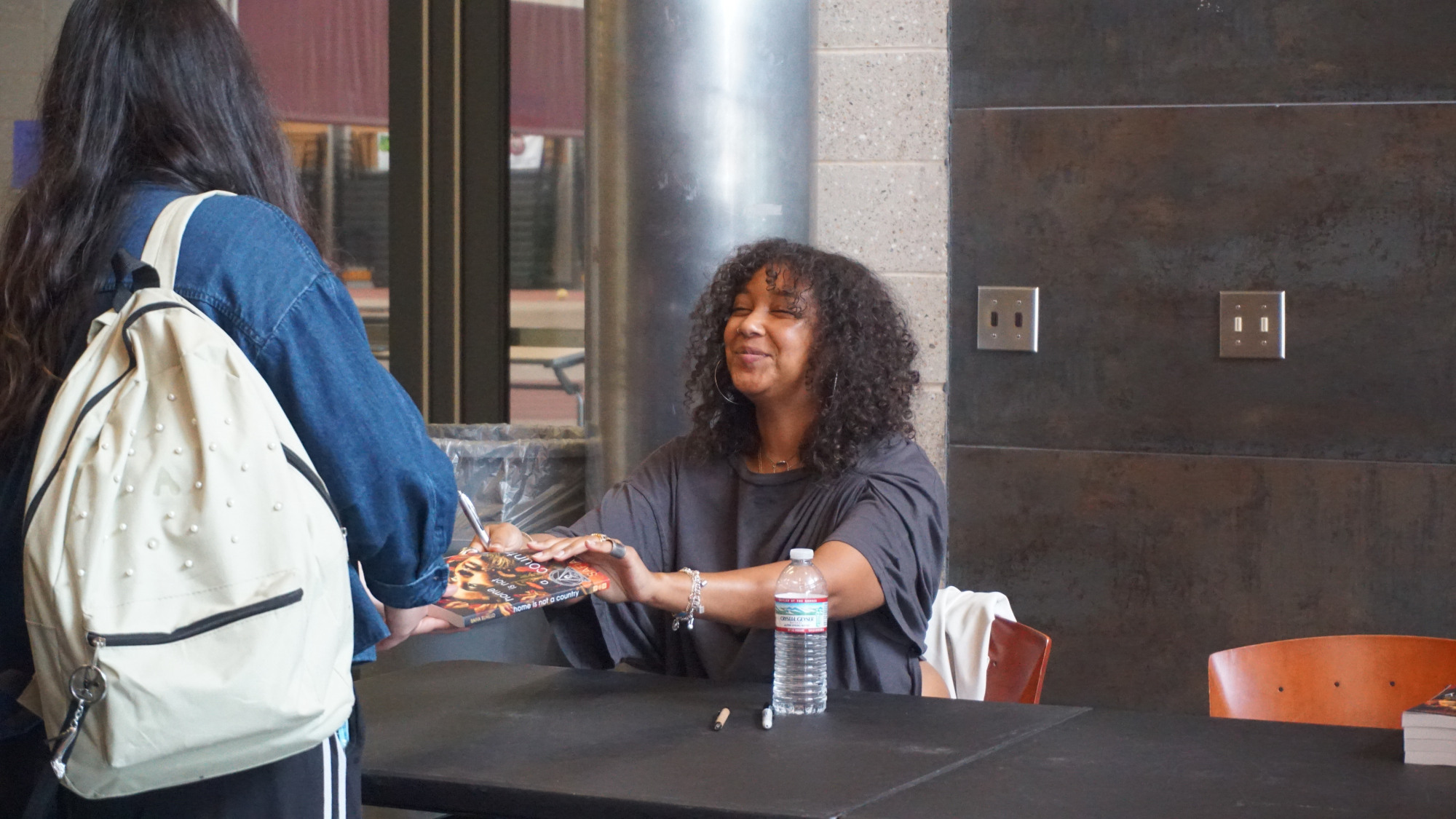
Ben Austen signs books for a student with a line of other students in the background
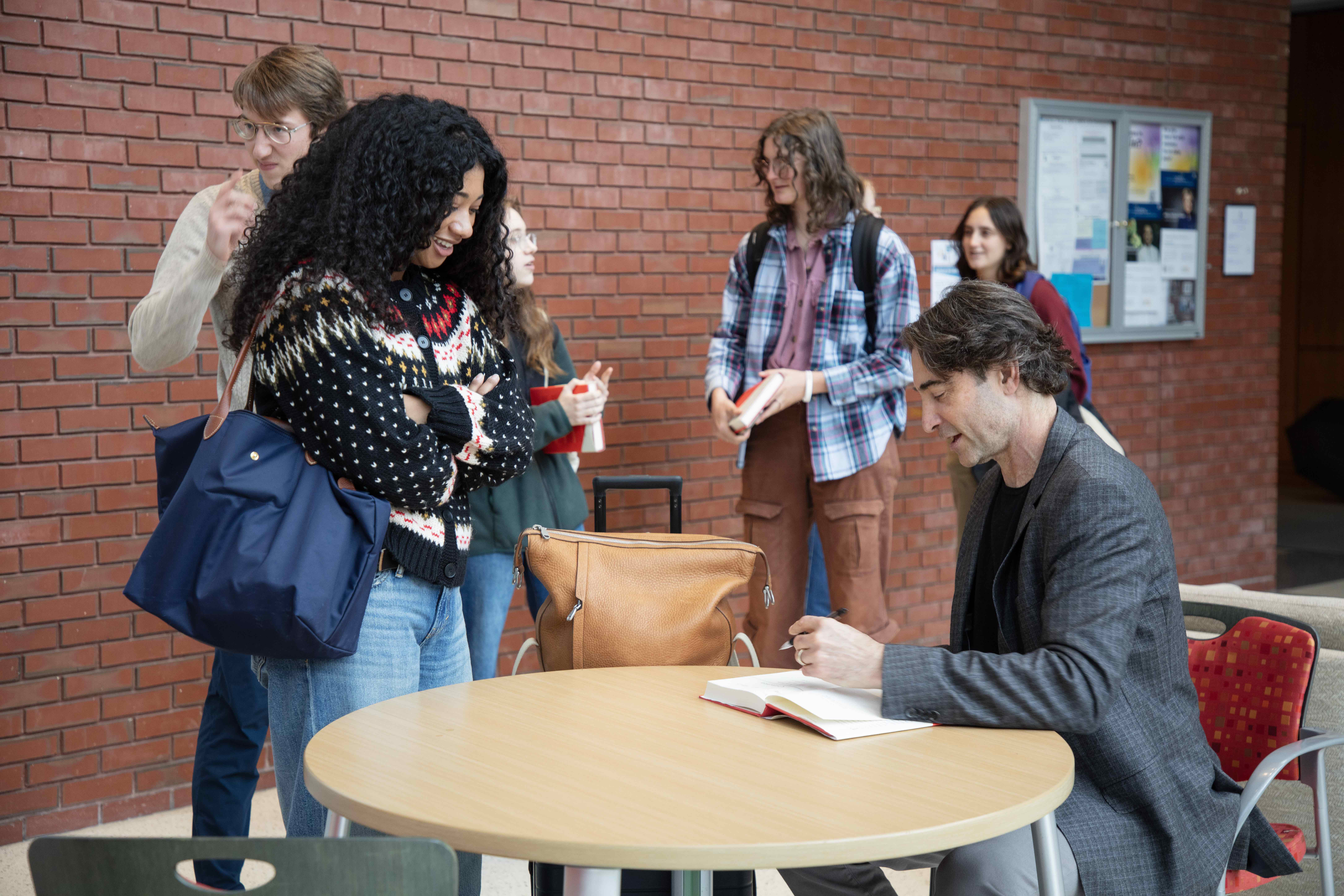
Mass Incarceration and Punishment in America Book Talk with Ben Austen. Photo by Kiku Langford McDonald.

This year, the Mass Incarceration and Punishment in America Research Cluster hosted a variety of events to educate our community about mass incarceration of marginalized communities as a form of continual racism, captivity, forced labor, and surveillance. Invited speakers examined the origins and consequences of mass incarceration through a variety of film screenings, book talks, and panels.

Education

Met in the Text

A woman smiling and handing a signed book to another person.
Safia Elhillo signs books for students after her conversation. Photo by Reina Thomas. 

In the second year of the Simmons Center’s partnership with the MET High School (Dexter Street), they focused on reading the literature of Safia Elhillo. Safia Elhillo is a Sudanese-American poet and novelist who emerged as a Spoken Word Artist whose writing focuses on themes of Muslim girlhood, mother-daughter relationships, Islamophobia, immigration, identity, Sudanese history and culture, rebellion, patriarchy, and friendship. The MET juniors read Elhillio’s books “Home is not a Country” and “Bright Red Fruit” throughout the year alongside Manager of Public Education Reina Thomas. To conclude the year, they joined Providence Public School students for a conversation between Safia Elhillo and Angel Cruz, a 2026 Rhode Island Youth Poetry Ambassador. The conversation was followed by audience questions and a book signing with Elhillo.

The Teach-Ins

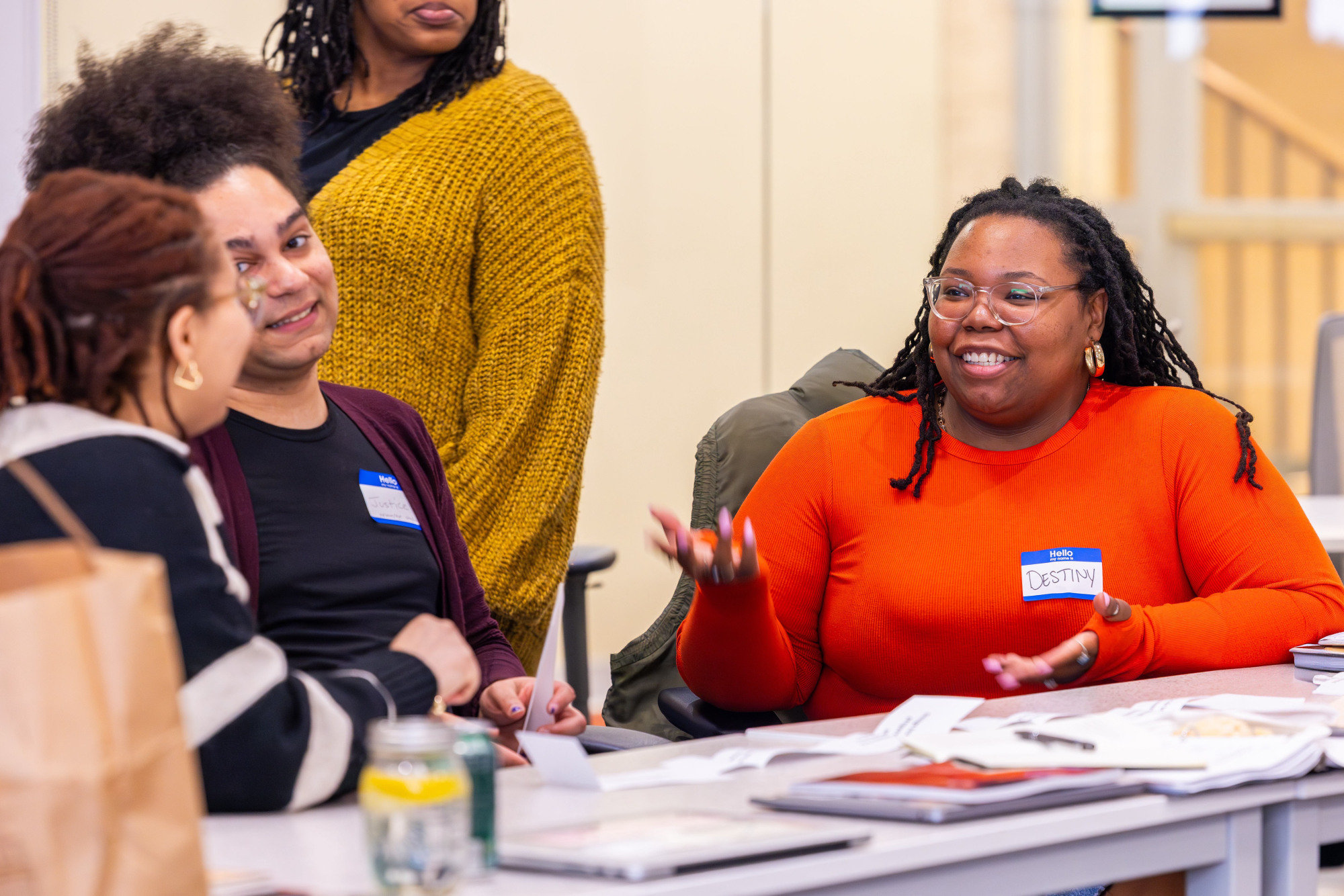
A group of educators conversing at a table.
A group of educators converses at the March Teach-In.  Photo by Mike Cohea. 

The Teach-Ins program continued for its second round of sessions in spring 2026. We hosted two sessions for K-12 educators to learn how best to teach their students about the layered histories of slavery in New England, as well as to curate new lessons to implement in their classrooms. While many know that 2026 marks the 250th anniversary of the signing of the Declaration of Independence, it also marks some other monumental events such as the 500th anniversary of the San Miguel de Gualdape Rebellion, the 350th anniversary of King Philip’s War, 200 years of the Black press, and 50 years of Pride here in Providence. Guest speakers investigated these topics and others using art, architecture, and monuments to include the voices of Black and Indigenous people in the founding narrative of what is now the United States.

Global Curatorial Project

“In Slavery’s Wake” and Traveling “Unfinished Conversations” exhibitions in Brazil and South Africa

The Unfinished Conversations Series” exhibition first opened in the Simmons Center’s gallery in May 2025. Since then, it has traveled globally alongside the Global Curatorial Project’s exhibition “In Slavery’s Wake: Making Black Freedom in the World.” The two exhibitions’ first international stop was in Rio de Janeiro, Brazil in November 2025. “In Slavery’s Wake” was exhibited at Museu Histórico Nacional and “Unfinished Conversations” was exhibited at the community-based Instituto de Pesquisa e Memória Pretos Novos. Both exhibitions were presented in Portuguese. The exhibition openings were accompanied by a two-day international conference which included a screening of the accompanying documentary film, “The Unfinished Conversations Series: Telling New Stories.”

In May 2026, the exhibitions travelled to Cape Town, South Africa. “In Slavery’s Wake” opened at Iziko South African National Gallery and the “Unfinished Conversations” exhibition opened at the Iziko Slave Lodge. As the “Unfinished Conversations” exhibition travels, each host location shares voices from across the global archive while also highlighting locally-specific legacies and histories. The traveling exhibition has also been accompanied by screenings of the documentary film, “The Unfinished Conversations Series: Telling New Stories.” The “Unfinished Conversations Series” is generously supported by the Abrams Foundation and the Wyncote Foundation.

“Uncorking the Bitter Truth” Documentary Film

Uncorking the Bitter Truth: Slavery’s Legacy in Cape Wine” is the second documentary film based on “The Unfinished Conversations Series” oral history archive and premiered in South Africa in September 2025. It exposes the painful legacy of South Africa’s famous winelands and features interviews conducted through “The Unfinished Conversations Series.” The film was screened again in May 2026 when the exhibitions traveled to Cape Town, South Africa. Audience members included participants in “The Unfinished Conversations Series” such as farm workers and organizers on wine farms on the Western Cape. The screening was followed by a panel discussion. “Uncorking the Bitter Truth” was made possible through a generous grant from the Abrams Foundation.