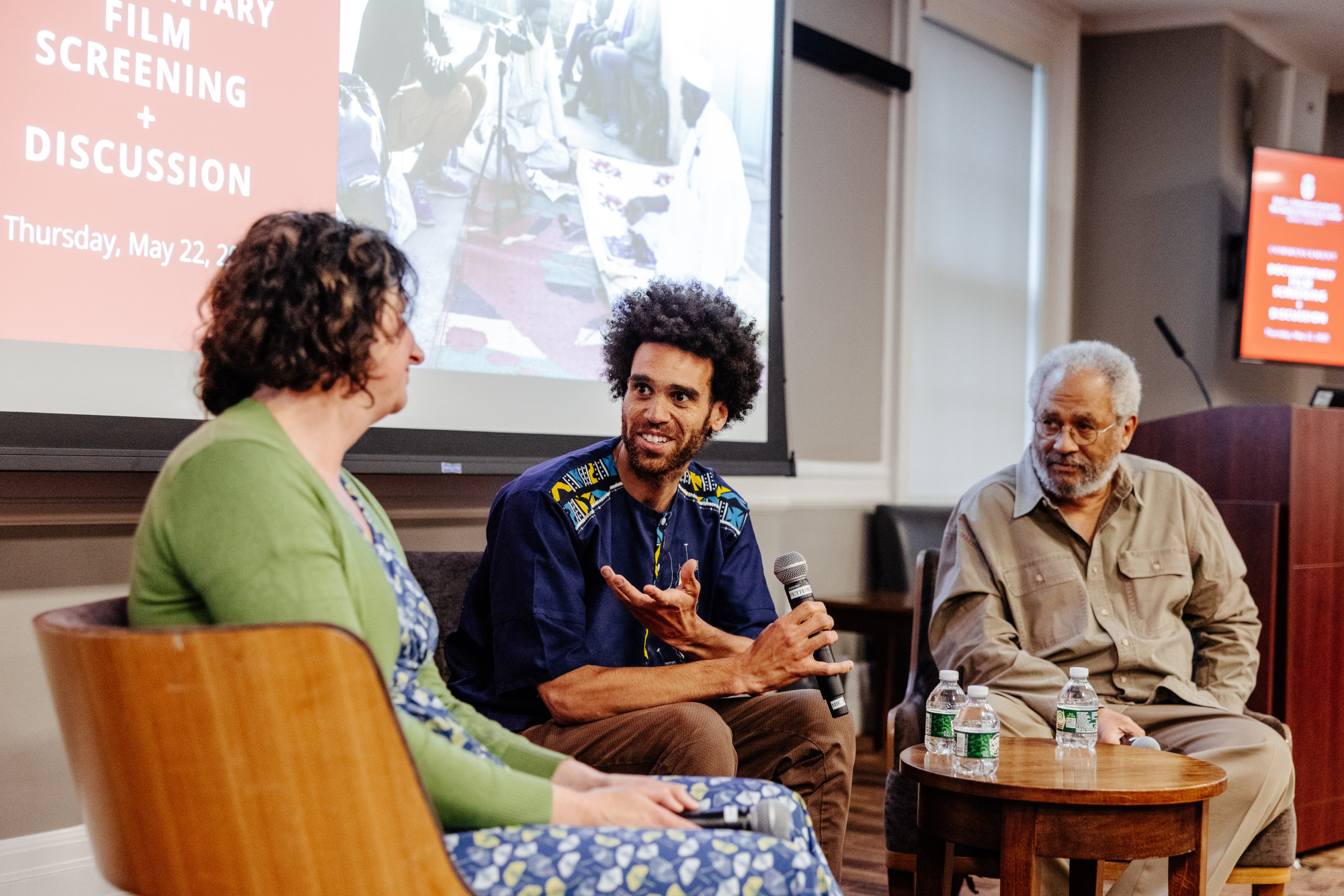
I was first introduced to “The Unfinished Conversations Series” in 2023. Little did I know that over the next few years, I would come to play such a pivotal role in shaping this digital archival project.
When I first joined a team of Brown University student researchers in the summer of 2023, we were tasked with drafting and reviewing interview materials for the Brown Digital Repository in addition to proposing content to be included in the traveling exhibition “In Slavery’s Wake: Making Black Freedom in the World.” Yet, it was at the end of spring 2024 that the most fortunate of opportunities came up. While seeking support to advance my dissertation project, I was ultimately accepted into the Interdisciplinary Opportunities Dissertation Fellowship program, with an appointment at the Simmons Center for the upcoming academic year. At the same time, “The Unfinished Conversations Series” oral history archive was in its final stages of production, and simultaneously, discussions were underway around ways the Simmons Center could unveil this global archival project at Brown University and beyond. In many ways, I stepped into this role to help bring “The Unfinished Conversations Series” to the forefront.
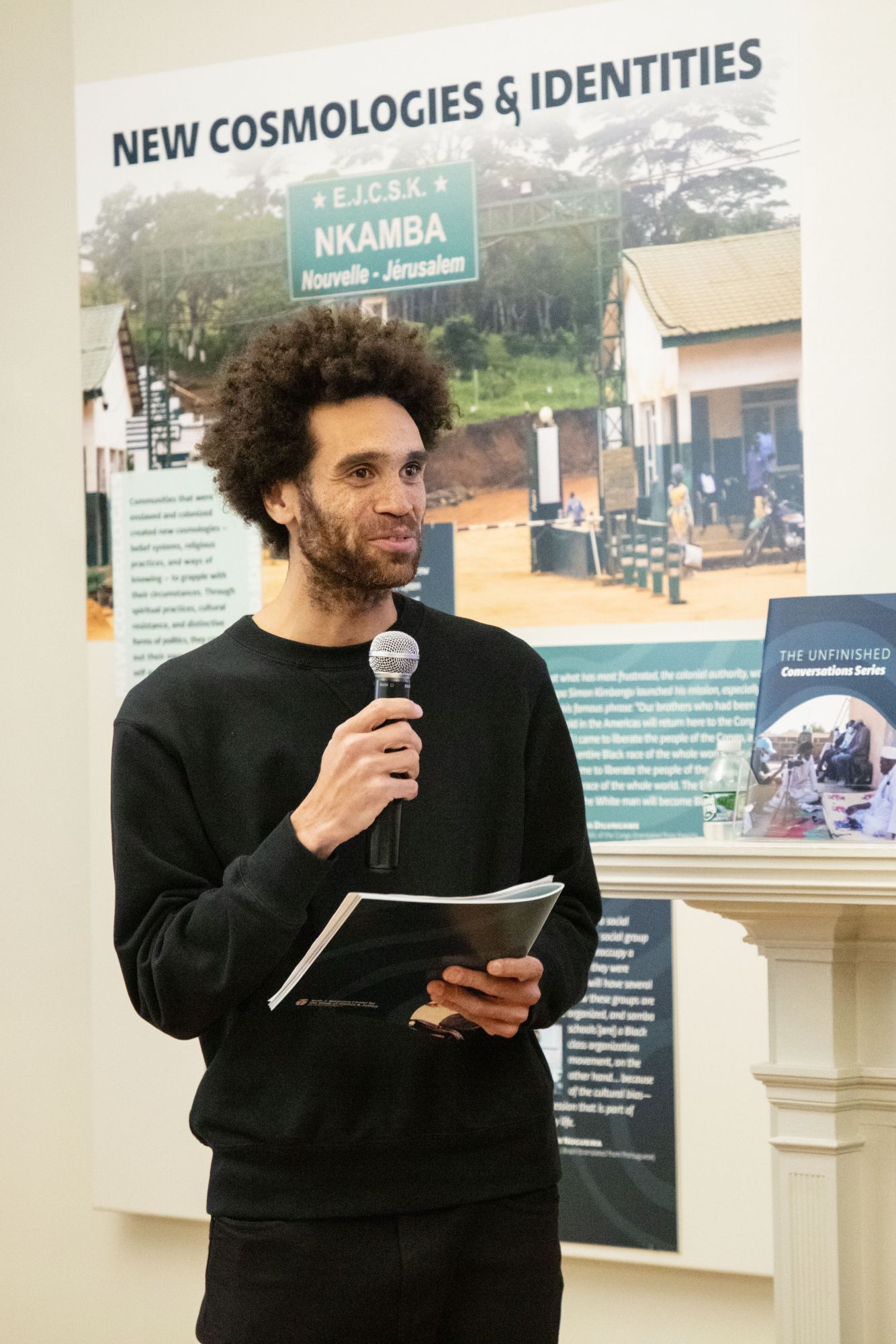
A new round of filming brought me to New York City, Washington, D.C., and, importantly, Dakar, Senegal, where I had the opportunity to interview some of the curators of the Global Curatorial Project. As “The Unfinished Conversations Series” expanded in scope to include Caribbean voices, I traveled with a team to Jamaica, where we filmed a new set of interviews, including a particularly memorable one with the late colonel of the Charlestown Maroons. Stepping behind the camera gave me a deeper understanding of all the work that made this project possible: coordinating logistics for interviews and environmental filming, crafting interview questions, working with local film crews on location, reviewing audio/video material and collaborating closely with an editing team to produce the documentary. It was an incredible moment then to host a screening of the documentary “The Unfinished Conversations Series: Telling New Stories” alongside the official opening of “In Slavery’s Wake” at the Smithsonian National Museum of African American History & Culture in December 2024.
When I was asked to curate a small exhibition at the Simmons Center about “The Unfinished Conversations Series,” I was able to draw on these past experiences as inspiration for my curatorial approach. It was an opportunity to engage with the archive from a different perspective, to explore some of the major themes that emerged across each location, to reference key moments from the interviews, and to put these stories in dialogue with one another. Creating an exhibition catalog enabled me to present a more comprehensive view of the project by incorporating essays, testimonies, photographs and objects, in addition to acknowledging all those who have made “The Unfinished Conversations Series” possible over the last decade. Looking back at this work, my fellowship year truly helped me gain a deeper understanding of the methods, practices and skill sets associated with public humanities.
.jpg)
As an architectural and art historian, my research examines histories of racial slavery and colonialism through the built environments and material cultures of the Black diaspora. Due to the nature of these areas of research, I often reflect on the ways that communities engage with these histories, particularly those who have long been excluded from the very institutions that have shaped my field of work. “The Unfinished Conversations Series,” as an interdisciplinary, multifaceted, and importantly, internationally collaborative project, has been enlightening in demonstrating that things can be done differently, that institutions can adopt better practices to tell more holistic stories of the past without reproducing its violence, and that communities that have been shaped by these histories can have their voices heard throughout this entire process.
The Interdisciplinary Opportunities Dissertation Fellowship was an immensely formative experience on both a professional and personal level, and I am deeply grateful to the staff of the Simmons Center for supporting me throughout this fellowship.
Yannick Etoundi ’26 Ph.D.
Ph.D. candidate in History of Art & Architecture
Interdisciplinary Graduate Dissertation Fellow, 2024–2025
Unfinished Conversations Student Researcher, 2022–2025