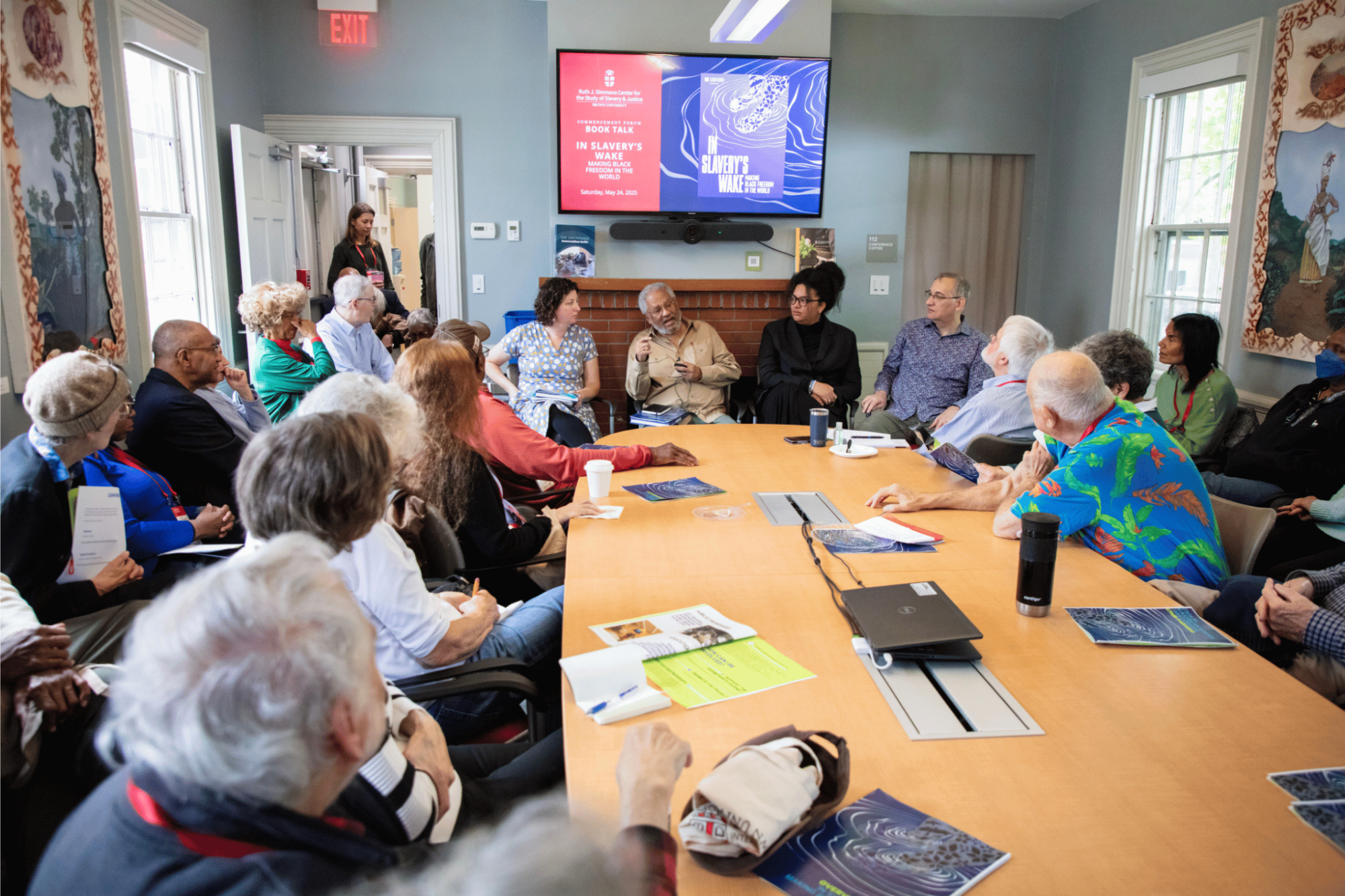
This standing-room-only Commencement Forum featured the editors of “In Slavery’s Wake: Making Black Freedom in the World,” from Smithsonian Books, a companion to the exhibition of the same name, both of which debuted in 2024. Editors Prof. Anthony Bogues, Simmons Center director; Dr. Paul Gardullo, assistant director of history at the Smithsonian Institution National Museum of African American History and Culture (NMAAHC); and Johanna Obenda A.M. ’19, researcher and exhibition development specialist at NMAAHC, discussed the book's mission to frame the history of slavery as a global system and to move beyond “top down” narratives. The conversation was moderated by Shana Weinberg.
Prof. Bogues introduced the book's core methodology, which was born from the question: “how do we tell the stories from the perspective of those who were enslaved?” To achieve this, as Obenda explained, the team avoided trying to tell an “encyclopedic story,” opting instead for powerful, personal “vignettes into this broader history” that are “really person-centred.” She also no
ted that this approach helps audience members “make that person-to-person connection” and “break down this history, which often feels so impersonal because it's so vast.”
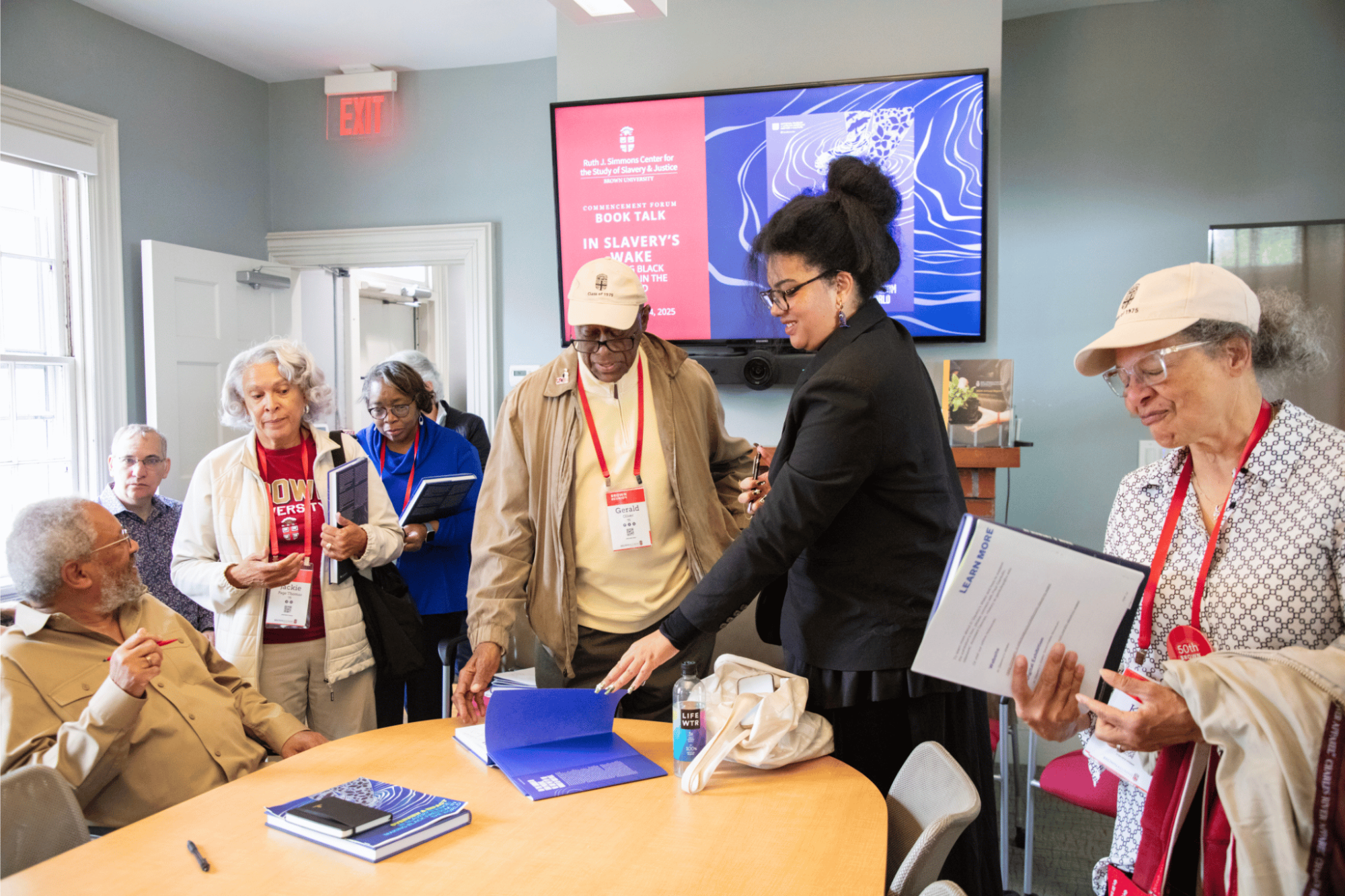
Dr. Gardullo stressed the essential connective nature of stories around slavery and colonialism. He asserted, “we need to connect the dots, geographically, on a global scale. That is deeply important to understand that this is a story that has shaped our world locally, nationally and internationally — the Atlantic world, but well beyond the Atlantic world.” Gardullo also noted the “resonance of themes across these different geographies,” noting that “themes about systemic violence, themes about environmental injustice... but also themes about humanity,” came up over and over again in conversations with communities across the Atlantic.
The panelists also stressed the continuing relevance of the global freedom struggle, which includes anti-colonial and equal rights movements. Gardullo emphasized that “the other thing is to connect the dots between the past and the present, because this history lives with us now." Prof. Bogues framed the project as an intervention in history, aiming to ensure that the "lines of humanity that were attempted to be erased are never erased.” He concluded by quoting James Baldwin to underscore the deep impact of the past: “history travels in our bodies.” Understanding this history, he argued, is vital “to begin to understand the present and to understand how we must never have these things happen again.”