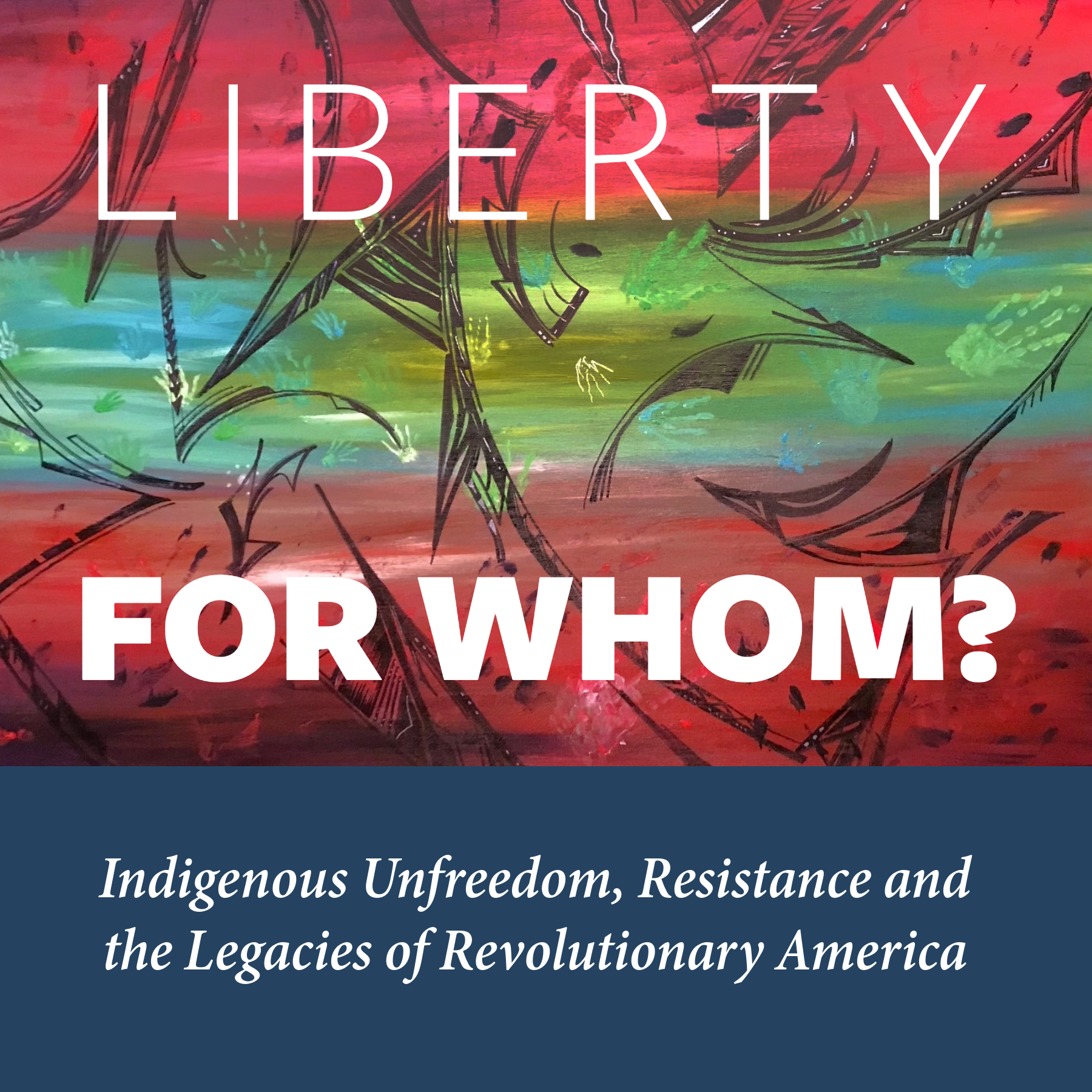
Not all Americans experienced the Revolutionary rhetoric of liberty and rights equally. The exhibition “Liberty for Whom? Indigenous Unfreedom, Resistance and the Legacies of Revolutionary America” takes a closer look at the wider history of Native American enslavement and unfreedom, with a particular focus on the experiences of Indigenous people during the American Revolutionary era. This exhibit highlights often-obscured histories of enslavement and attempts to secure freedom by Native people. These stories expand our understanding of unfreedom and resistance in the United States.
Despite these experiences of unfreedom throughout American history, Native individuals continued to defend their personal freedom and the sovereignty of their nations through self-emancipation, petitions, treaties and war. These actions forced the United States in many instances to eventually recognize the presence and self-determination of Native peoples, efforts that are still ongoing today.
The artwork included in “Liberty for Whom?” speaks to this ongoing survivance and the vitality of Native nations today.
The inspiration for this exhibit was the tribally collaborative project at Brown, Stolen Relations: Recovering Stories of Indigenous Enslavement in the Americas. Founded in 2015 and available at www.stolenrelations.org, this project seeks to bring a hidden side of Native history to light in ways that are usable to tribal nations and the public.