The Black and Indigenous Histories Summer Institute (BIHSI) kicked off with Orientation at Public PVD, “an African & Latina, family-owned and home-grown creative business” owned by Cas and Spocka. Public hosts a shop, gallery, and studio spaces for artists while also developing and managing community events as parents, artists, curators, and organizers. At Public, BIHSI students and their families were welcomed with food, painting, and a friendly competition of Uno with stacking and doubles, so as you might imagine, things got a little spicy. But it also broke the ice and allowed the students, parents, staff, and instructors of the program to get to know each other. Following lunch, Silvermoon LaRose, the Assistant Director of the Tomaquag Museum, joined us to share her knowledge of Narragansett traditional ecological practices to conclude our orientation and set the tone for the week.
Black and Indigenous Histories Summer Institute 2026

BIHSI students and instructors playing a game of jumbo Uno. All photos by Kiku Langford McDonald/Simmons Center.
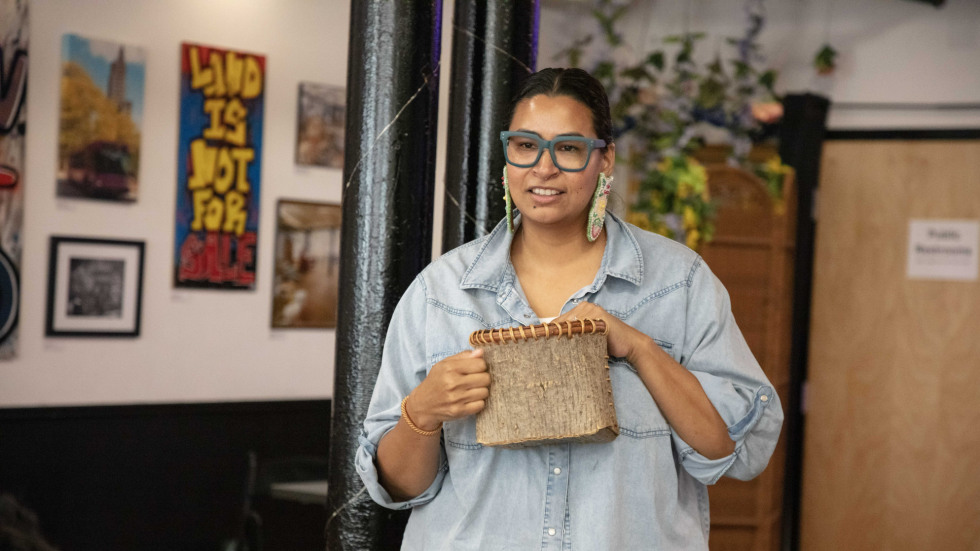
Silvermoon LaRose shared Narraganset belongings and artifacts from the Tomaquag Museum's collection, explaining each one's uses, origins, and significance.

A display of some of the belongings in the collection of the Tomaquag Museum.
The program began the following Monday with a welcome from the Director of the Simmons Center, Prof. Anthony Bogues, and the building of an altar for the program led by Abigail Jefferson, our returning Reflection and Meditation instructor. Students were asked to bring an item that holds a memory of a loved one to be placed on the altar.
History Courses
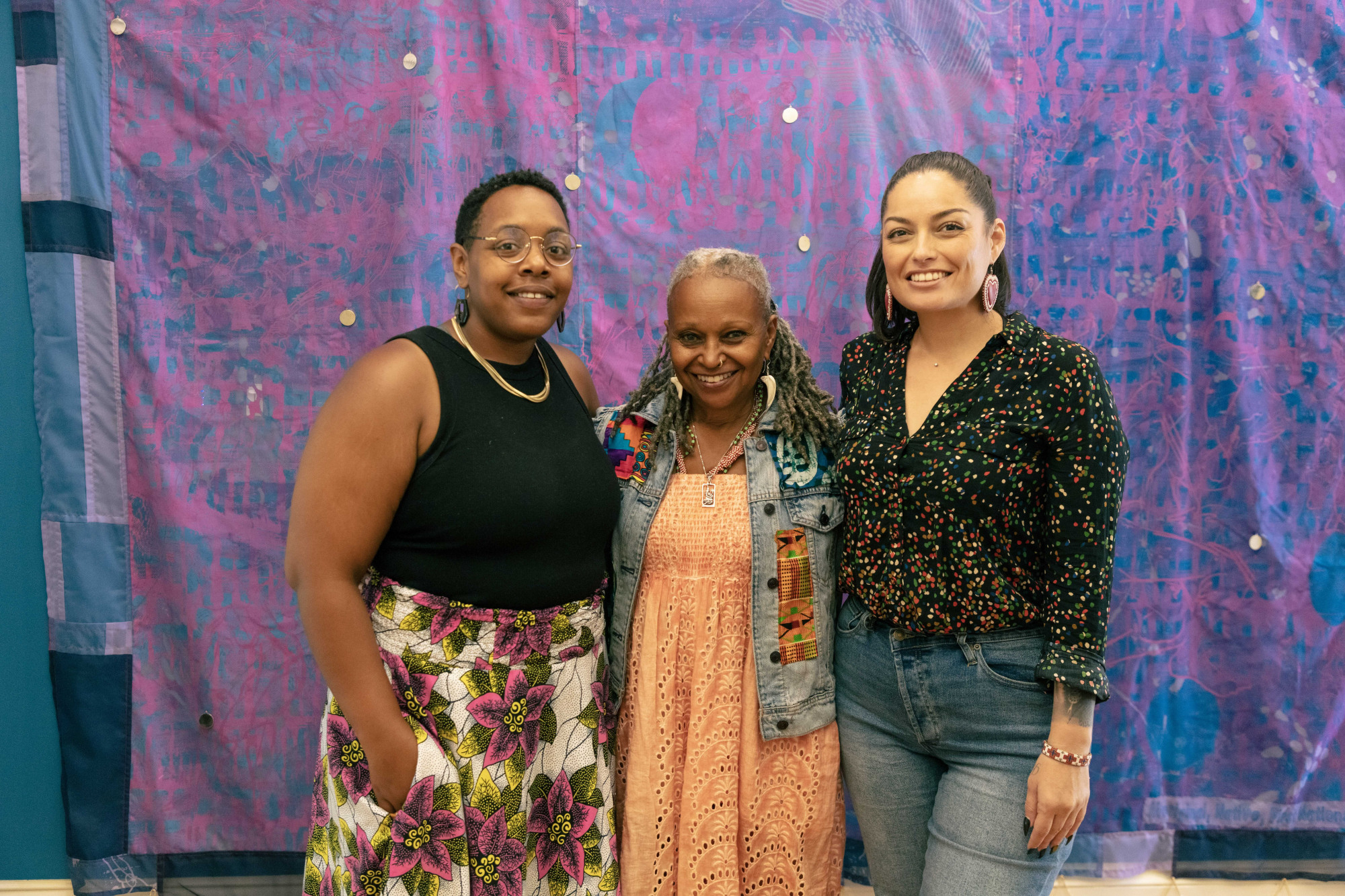
From the altar ceremony, students went off to Andrews House for their morning courses.
The Black History class was taught by the Manager of Education at the Simmons Center, Reina Thomas. This course focused on the history of the 14th Amendment and contemporary events in the United States challenging the meaning and enforcement of the amendment. Last year’s BIHSI focused on the 13th Amendment and Thomas knew she wanted to tackle each of the Reconstruction Amendments in subsequent years. She was especially excited to teach a course on the 14th Amendment because it is everywhere: when people are debating citizenship, insurrection laws and voting, they are very much talking about the 14th Amendment.
I really wanted the students to understand the conversations taking place around them by diving into the history, significance, meaning, and relevance of the 14th Amendment through current events.

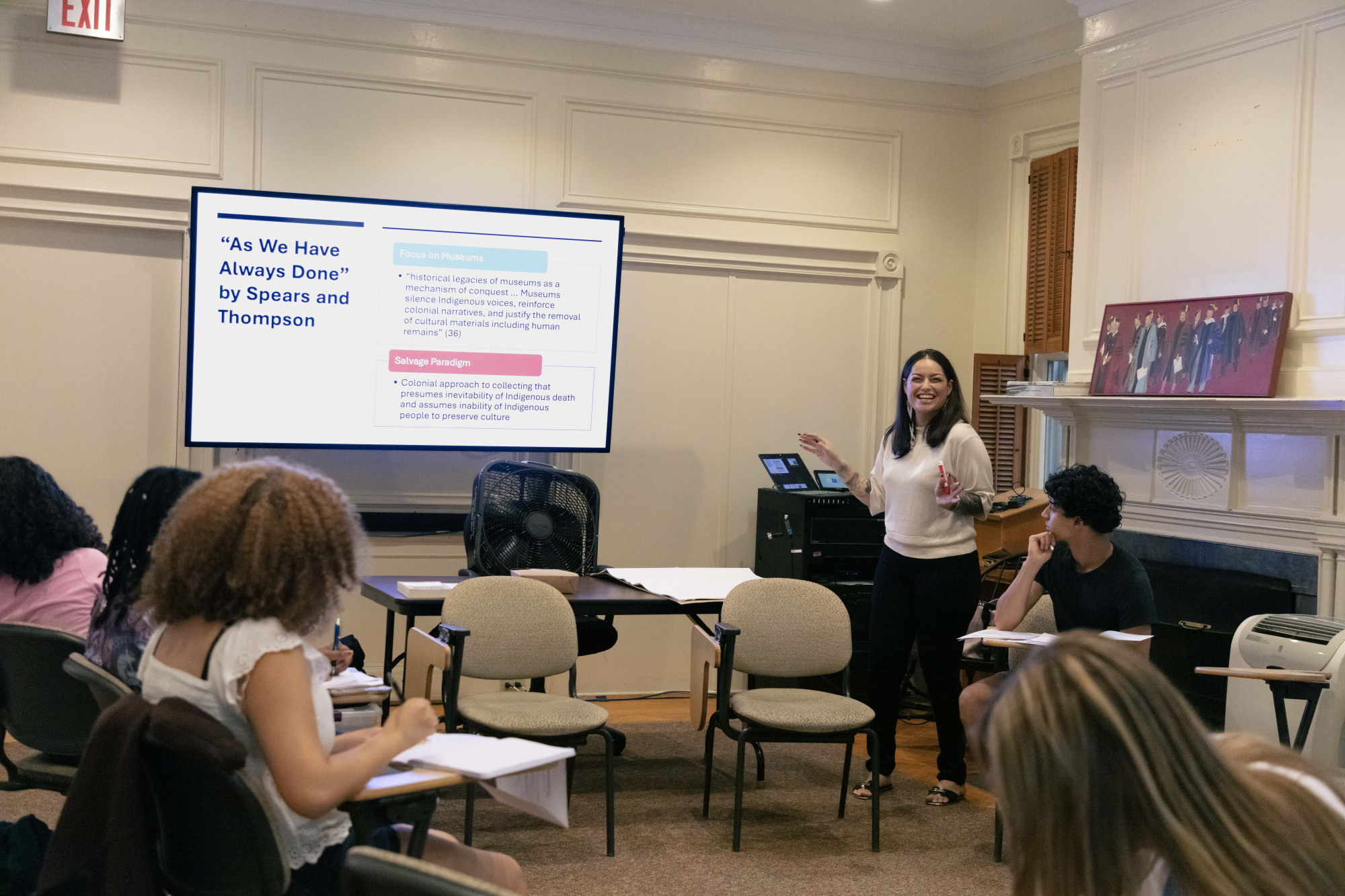
This year's instructor for the Native American Studies course was Professor Jessica Fremland (Sisseton-Wahpeton Dakota) of the American Studies Department and Native American and Indigenous Studies Initiative at Brown University. Her course, Indigenous Aesthetics & Politics of Refusal, familiarized students with the politics of representation and refusal through Indigenous aesthetics of poetry, film, zines, museum curation, and comic books.
Meditation and Reflection
Following each history class, the students were led through various meditation, yoga, and reflection practices with Abigail Jefferson. Throughout the week, they practiced mindfulness through four-part breathing and alternate nostril breathing to help prepare for brief seated meditation and guided visualizations. Their yoga practice included Sun Salutations to connect breath and movement, Warrior Pose to explore strength and empowerment, and Tree Pose to reflect on balance and stability. They ended each practice in Savasana (a relaxation pose), using lavender eye pillows generously provided by Abigail to create a relaxing space for students to rest, restore, and simply take time to be. Students also responded to journaling prompts that encouraged them to reflect on their experiences and personal takeaways. To help balance some of the emotional weight of the history lessons, they incorporated creative intuitive movement and sound, using a Tibetan singing bowl and percussive instruments, colorful scarves, and meditative background music to reduce stress, encourage creativity, and make space for play, laughter, and joy.
My hope was that students left with simple practices they could continue using to care for their minds, bodies, and spirits long after the summer program ended.

Non-Traditional Courses
To better understand the aesthetics of resistance, we were joined by several amazing guests for our non-traditional courses.
On Monday, we met with the John Hay Library archivists and zine-enthusiasts Kim Toney, Janaya Kizzie, and Emily Jean Leischner who pulled materials from the Joy Harjo, Tall Oak Weeden, and zines and comic books from the Indigenous Collections of the university. During this session, students were able to examine Tall Oak’s wide-ranging artistic and organizing practices, from his poetry, song lyrics, and collaging, they were able to see a glimpse of Tall Oak’s creative process and how he connected Indigenous peoples' struggles in the US with other groups across the globe. Within the Harjo collection, students were able to view Harjo’s manuscripts, notes between herself and her editor, her love for jazz, and her background as an organizer before she became known as the 23rd Poet Laureate of the United States. As they learned about these two amazing individuals, the students began to draft ideas for the zines they would create at the conclusion of the program as part of their course with Professor Jessica Femland.
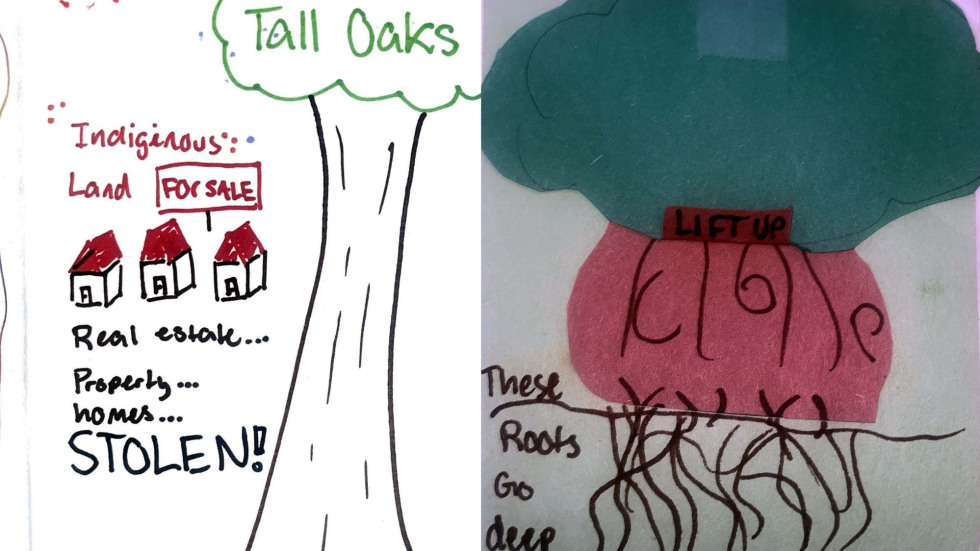
Pages from Charlotte O'Gorman's zine, July 17, 2026
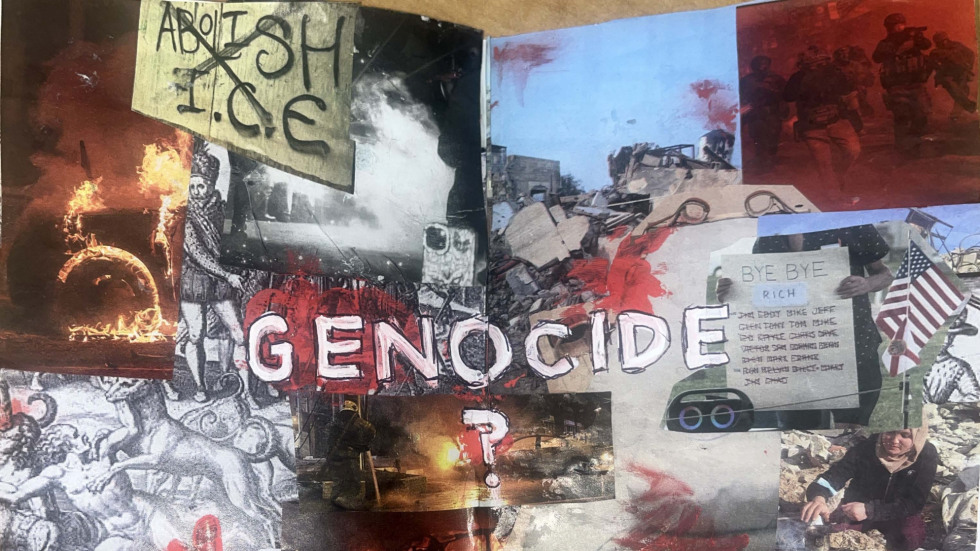
Detail from a page from Isabel Rojas Asen's zine, July 17, 2026
On Tuesday, we welcomed choreographer and dancer Katerina “Katie” Wong, who created a dance piece called "the 14th." During her visit, Wong showed the students the full piece while diving deeply into her process, collaboration, and decision-making for designing this piece. To give students insight into one way of approaching choreography, students were given 1–2 sentences that they individually choreographed by focusing on key language within those sentences.
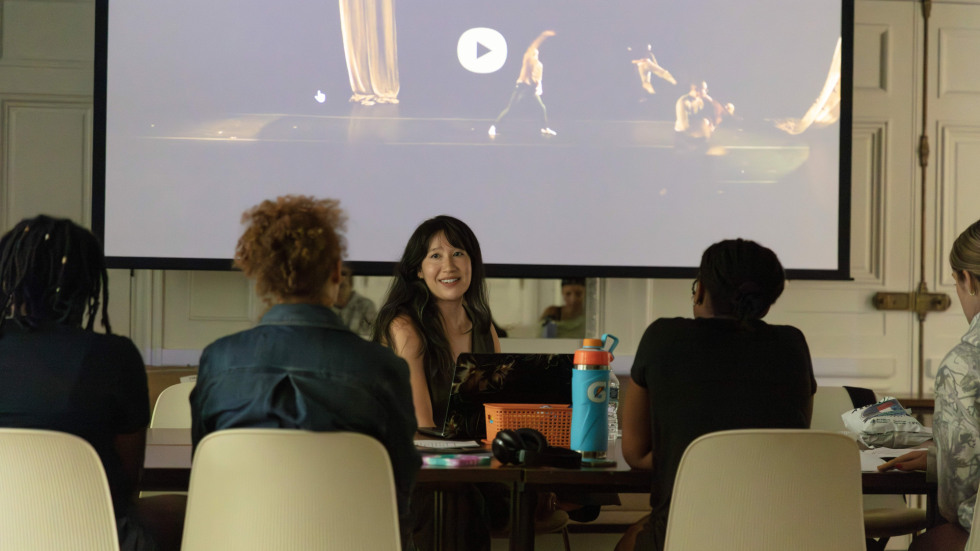
Katerina Wong presenting her piece “the 14th.”
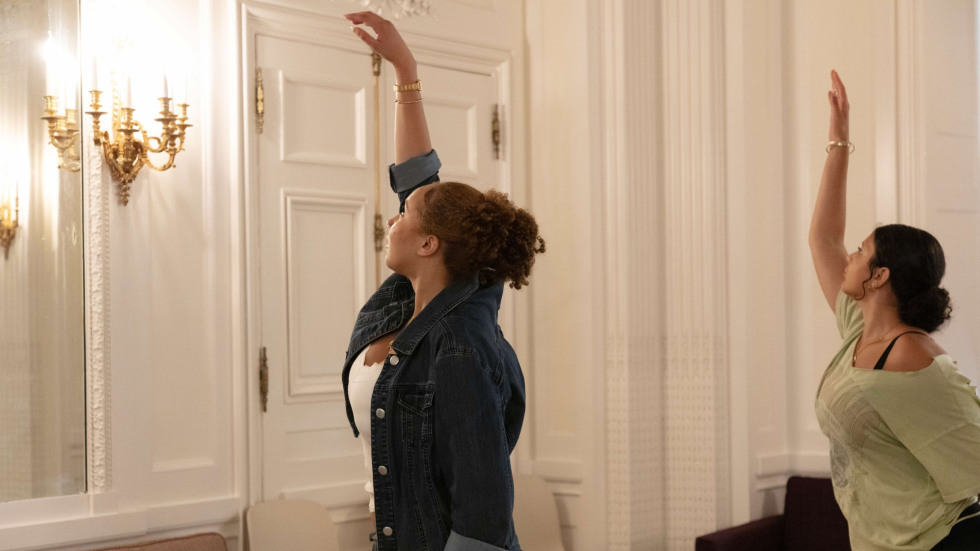
Students Maddie and Aliah perform their choreography during Katerina Wong’s workshop.
Jazzmen Lee-Johnson joined us on Wednesday afternoon at the Simmons Center to share about and show students her creative process of screen printing and meaning-making. The session began with students entering into a room with vinyl records, comic books, graphic novels, art history books, poetry, art books, novels, and zines laid across the table, with a vinyl player set up in the corner of the room. Jazz shared her printmaking process of finding images and texts that speak to each other and become the concept for a piece of history she seeks to explore. Then, students moved into the Simmons Center’s gallery to see some of those various pieces hanging on the walls. After Jazz shared her process, she invited students to the patio to teach them how to print and layer images upon each other. Students left the session with hands covered in paint and silkscreen-printed posters and t-shirts.

Students looked through some of the many books in Jazzmen's collection.
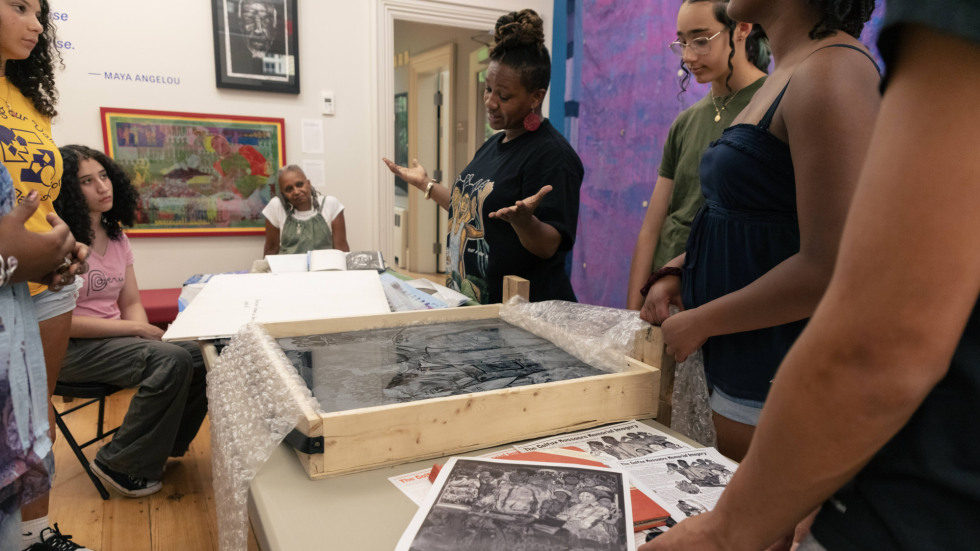
Jazzmen Lee-Johnson describing some of her pieces.
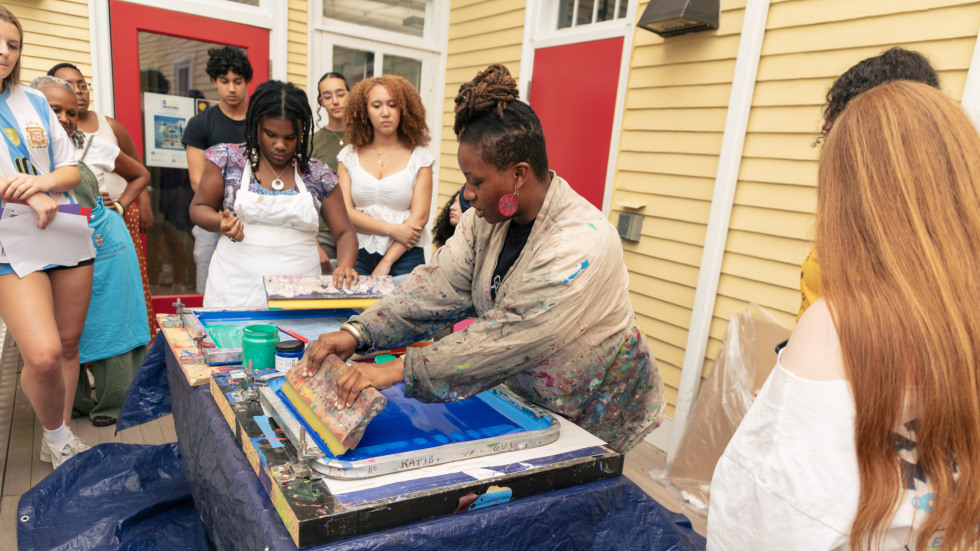
Jazzmen Lee-Johnson demonstrating her screenprinting technique.
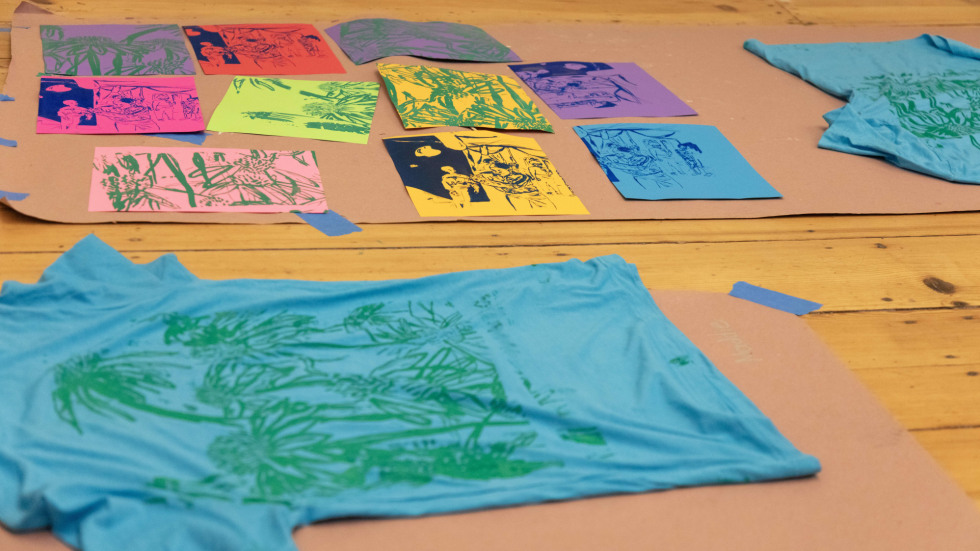
Silkscreen-printed t-shirts and posters created by students led by Jazzmen Lee-Johnson.
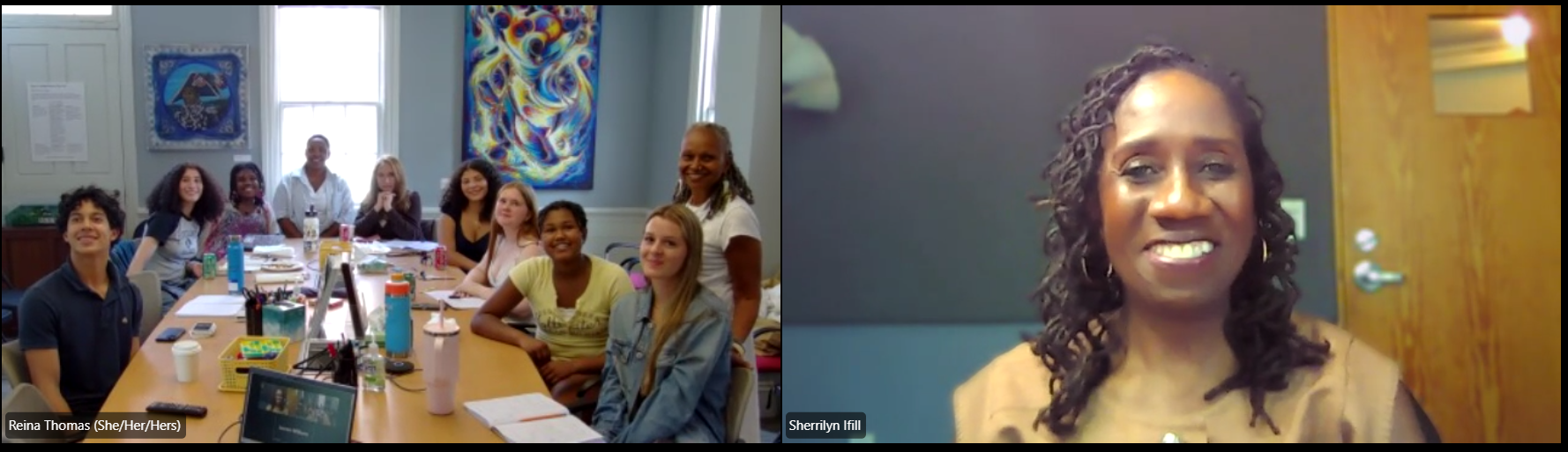
On Thursday, we were joined by an extraordinary attorney, Professor Sherrilyn Ifill, the Vernon E. Jordan, Jr., Esq. Endowed Chair in Civil Rights at Howard University and former president and director-counsel of the NAACP Legal Defense Fund. Professor Ifill joined us to share the work of the 14th Amendment Center and, more importantly, to contextualize the 14th Amendment as well as the other Reconstruction Amendments as “the Second Founding of the U.S.” In doing so, she helped students to expand who they imagined as leaders in the founding and development of the United States.
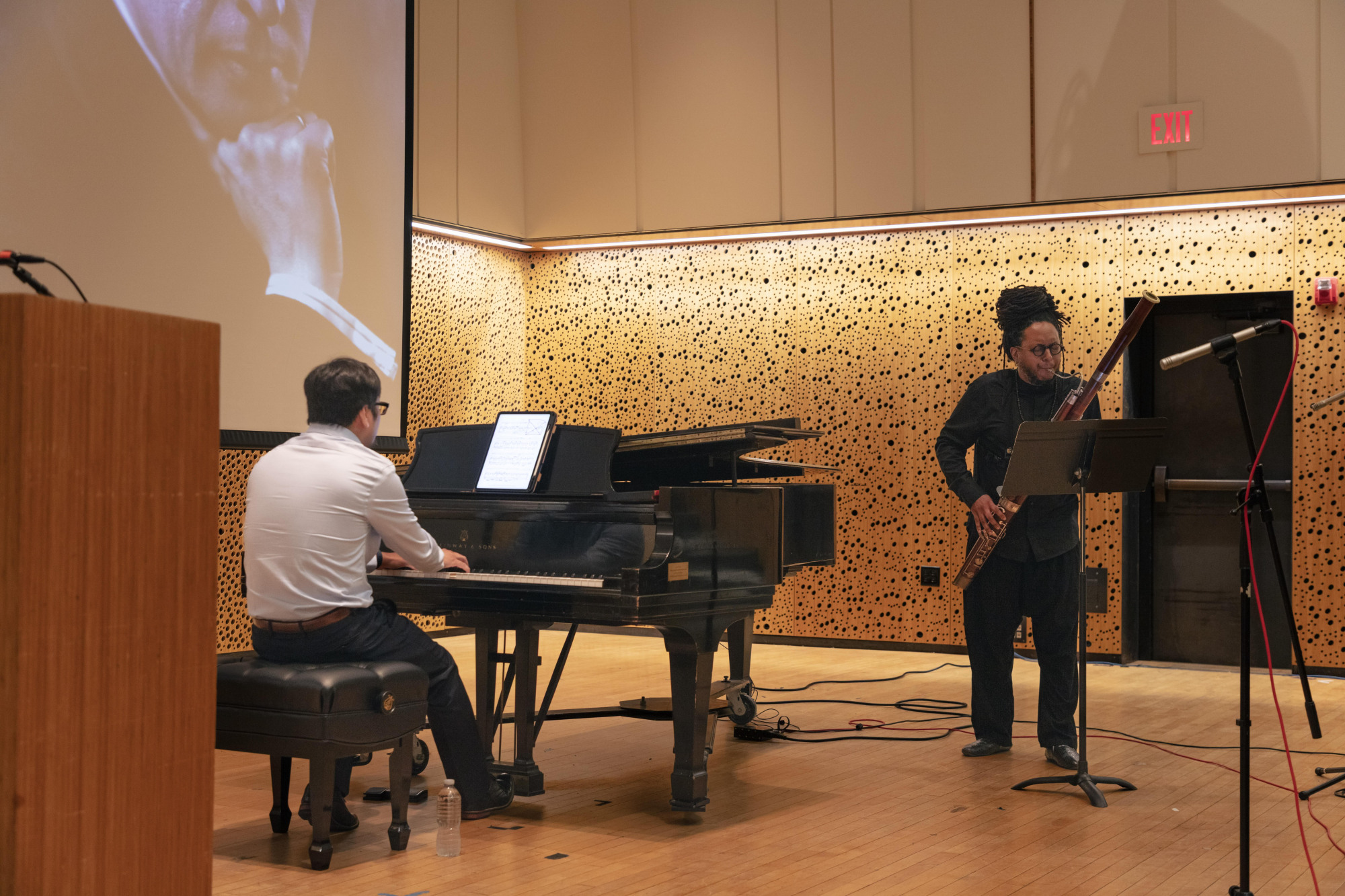
On Friday, our final guest speaker was Loki Karuna who returned to the program for the second year. In his interactive presentation interspersed with musical performances, he invited students to think about the 14th Amendment through classical compositions written and/or performed by an enslaved person, a woman, an immigrant, an Indigenous person, and an incarcerated individual.
All of our non-traditional course guest speakers opened our students' eyes to the ways in which art and profession intersect with justice, resistance, and history.
Student Reflections
This program is a fantastic opportunity to learn more about the histories not usually discussed and to meet other high schoolers in the New England area.

The teachers really know their stuff and the program is history everyone thinks they know but needs a deeper historical analysis of.
