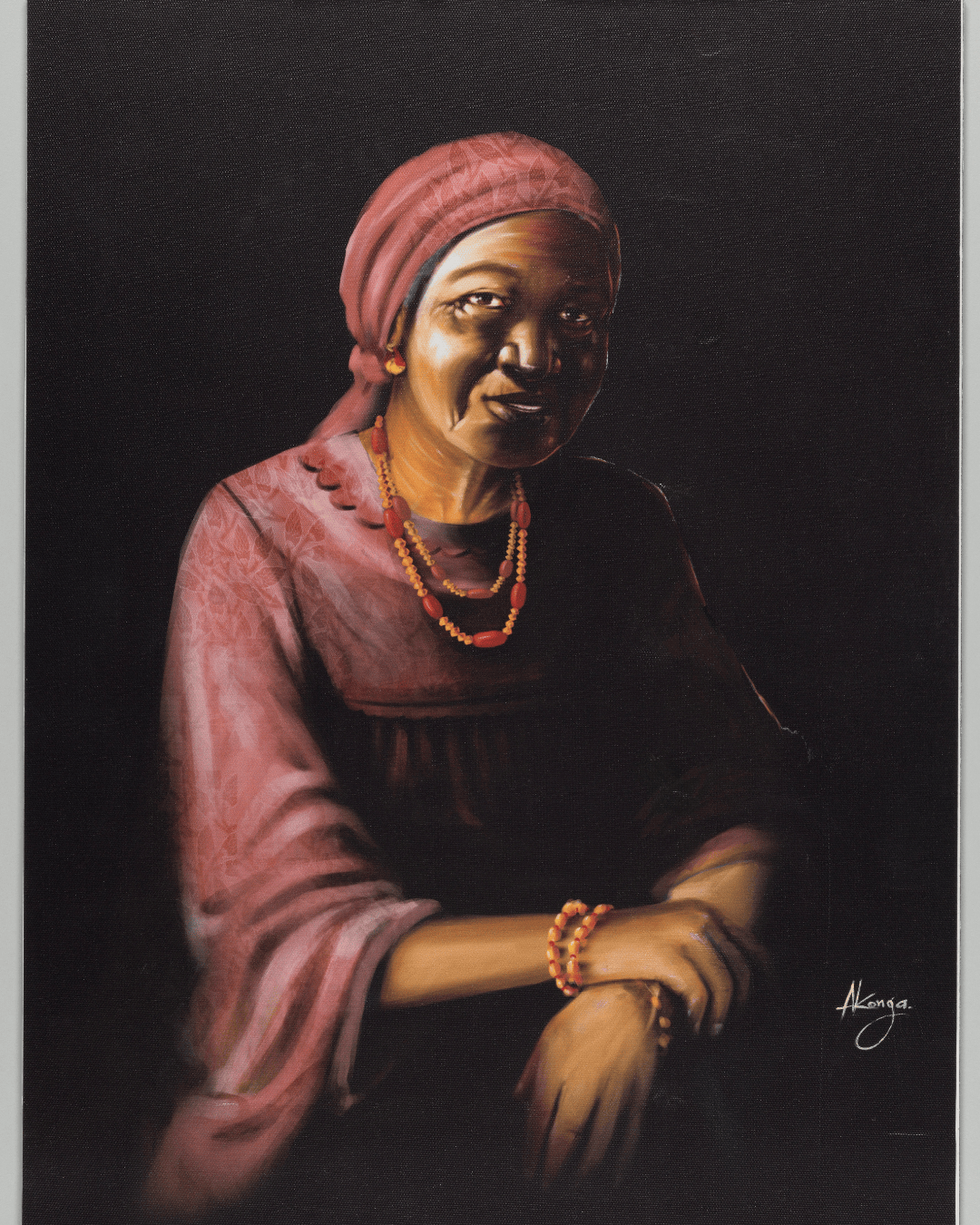
Photo by NMAAHC
With its long history of global connections, Senegambia is an extraordinary laboratory to explore and reflect on the ways in which slavery and colonization shaped the modern world. The “Unfinished Conversations” were designed to collect relevant data to engage with that history difficult history in support of the exhibition In Slavery’s Wake in ways that were more attentive to the past and present lived experiences and memories of the formerly enslaved and colonized. One critical methodological obstacle was to break the social wall of “public secret” and silencing that impose complex forms of forgetting/unforgetting for public history approaches where the setting, the comfort, the knowledge and the power of the narrator were showcased. This method inspired by teranga praxis of care and repair guided The Unfinished Conversations Series in Senegal that targeted mainly two communities in northern Senegal: the colonial city of Saint Louis and its suburbs and; the historical village of Orkadiéré, that is the seat of the Endam Bilaly organization composed of formerly enslaved Halpulaar communities spread across, Senegal, Mauritania, Mali, Guinée and the Gambia.
During those “Unfinished Conversations,” we collected untold stories on religion and spirituality, landscape transformations, socioeconomic changes, and, struggles for freedom and equality in the context of expanding French colonial rule in the 19th and 20th centuries. These changes resulted in massive population movements that were in part unleashed by the false promises of freedom and economic prosperity in French colonial cities like Saint Louis. Paradoxically though, the insecurity caused by colonial wars and African resistances and; the creation of “freedom villages” by the French colonial authorities ultimately created important labor reserves for the nascent cash crop peanut economy and for the French military.
Stories collected revealed family separations, physical abuse, and humiliations which testify to the dehumanization of the black body that was not merely physical but was also symbolic and insidiously inscribed in the realms of thought, culture, food, language, etc. The economics of slavery and of freedom were embedded in the intimate genealogies and biographies of people which highlights stories of capture, purchase, sale, resale and uses and, abuses of the human body close to anthropophagy. Stories collected show the complex coping mechanisms of enslaved descendants’ communities to cure, care and protect their members against colonial inequalities, racial discrimination and, injustice to maintain its unity, cohesion and stability. They highlight, for instance, how a small self-proclaimed abolitionist Protestant Church in Khor in Saint Louis du Senegal founded in 1905 was able, with the support of colonial authorities, to sponsor the delivery of certificates of liberty to enslaved fugitives in exchange against religious freedom and the payment of a tithe. The manipulation of the black body through religion and practices of authorization and subjection were constantly resisted which occasioned exclusion from the protestant lands. Many uprooted landless enslaved descendants were nevertheless able to rebuild their lives conquering insalubrious lands that they rendered fertile for agriculture and gardening to ultimately become the main supplier of the colony of Saint Louis with vegetables and fruits. It is only in 1995 that the Protestant church conceded the parcels of land to the descendant community that occupied them.
There are also stories of redemption and survival in the present. The Endam Bilali, a transnational Association of enslaved descendants from Senegal, Mali, Mauritania, Guinée and Gambia was founded in the early 2000 to bring together maccube (slaves). Members are united as a community by the Makari which is played out as a musical anthem that reconnects people and places through common experience and; challenges past and present political geographies that remain unsettled and unfixed.
The highlight of The Unfinished Conversations Series in Senegal also included bringing back into life through a portrait, Marème Diarra originally from Mali but who became Marème Ndiaye through Senegalese teranga praxis of care granting her full Senegalese citizenship.