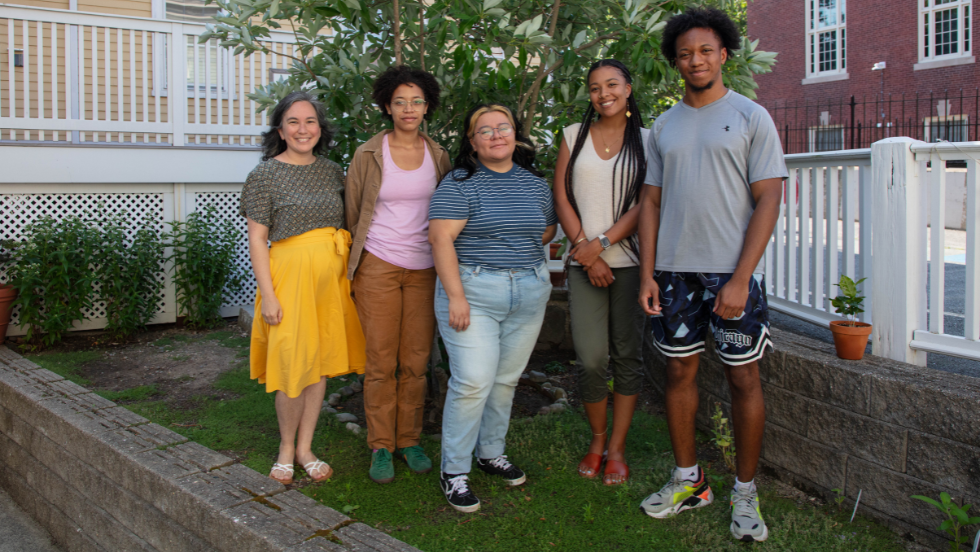
Credit: Kiku Langford McDonald
As the first winter that the student caretaker team had to face, Fall 2023 was a period of learning and planning. We used our most prolific grower, comfrey, to mulch the plants that would overwinter with a lot of success. Sadly, our African Blue Basil did not survive the winter, but we were able to use the wood it grew as mulch later in the season. Seed collection was also a new activity within the garden as the plants held their final summer blooms and began to feel the fall weather. As the garden was put to bed, students also limewashed the garden wall together on a cool fall afternoon.
In the Spring, the garden caretaking team hosted an amulet workshop for students, faculty, and community members. During this workshop – inspired by Sonya Clark’s Beaded Prayers Project – participants inscribed their personal wishes onto pieces of paper that were wrapped with fabric and ribbons and adorned with beads, creating amulets that would later be hung in the garden. Just like the other elements of the garden, these amulets were inspired by African tradition, adding on to the myriad of African culture and experience represented in the garden.
During a summer rich with sunlight and timely rain events, the garden flourished with the help of the caretaking team, who rejuvenated it by cultivating both new and pre-existing plants and elements. Sticks, twine, and burlap were used to assemble bunny cages around small plants and the flower terrace, fresh sand was spread around the magnolia tree, stones were scattered along the walking path descending from the steps, and a raised bed was constructed to hold African daisies and hibiscus. In addition, NAISI Program Manager Sophia Gumbs and the caretaker team tended to a plot in the UEL garden that included edible plants, like green onion, tomato, and collard greens.
Another project that took off during the summer is the Symbolic Garden of the Enslaved website. Over the past year, the garden caretakers worked on profiles for the plants and elements that have been featured in the garden since its inception, detailing their histories and uses as well as how to take care of them and where they are located in the garden. Now, the caretaker team is building a website where these profiles can be displayed to the public, allowing people to take a deeper dive into the garden’s lore.