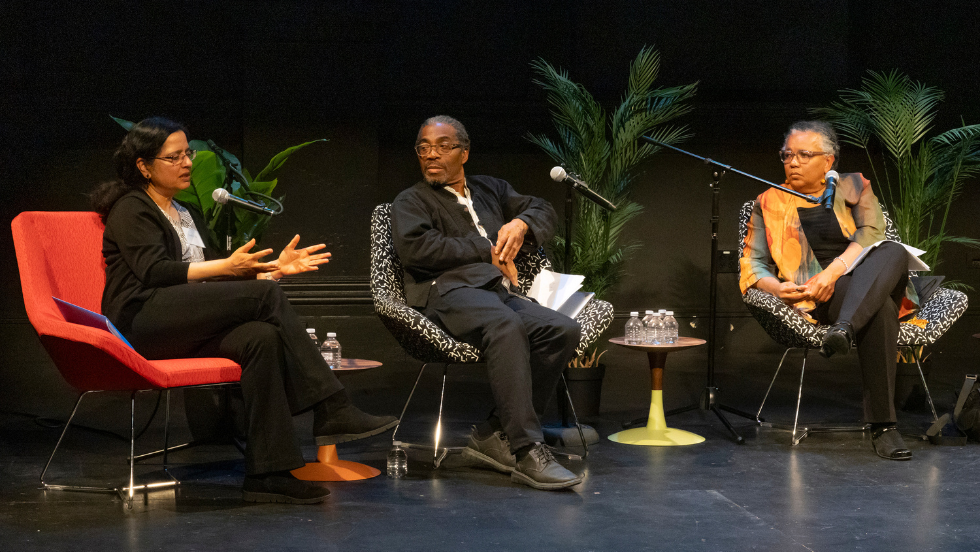
Credit: Scott Lapham
I chose for my intervention in this conference in honor of George Lamming to shift from looking at his immense contribution to Caribbean fiction to briefly explore his profound political role in helping define the Caribbean as a unique and coherent social and cultural space. In his 1999 edited volume On the Canvas of this World, Lamming combined together special issues of the New World Quarterly journal that he had edited and dedicated, respectively, to recognizing the independence celebrations of Guyana and Barbados, both of which occurred in 1966. In his choice of contributors, from CLR James to Walter Rodney, Nicolas Guillen, Paule Marshall and on to Aimé Césaire, Lamming sought to link together the poets, novelists, historians and thinkers from all language components of the region into a common purpose and vision. This was directed, not unlike most of his fictional work, towards imagining an anti-colonial future that was expansive, inclusive and defiant of notions of nationalism inherited from the recent past. While the postcolonial histories of the Caribbean suggest that the project of small micro-states surviving in the contemporary world was always fraught, Lamming’s vision and those of his collaborators in Canvas, still shine a brilliant light, suggesting possible futures for these territories, wallowing in the stasis of the neoliberal moment.
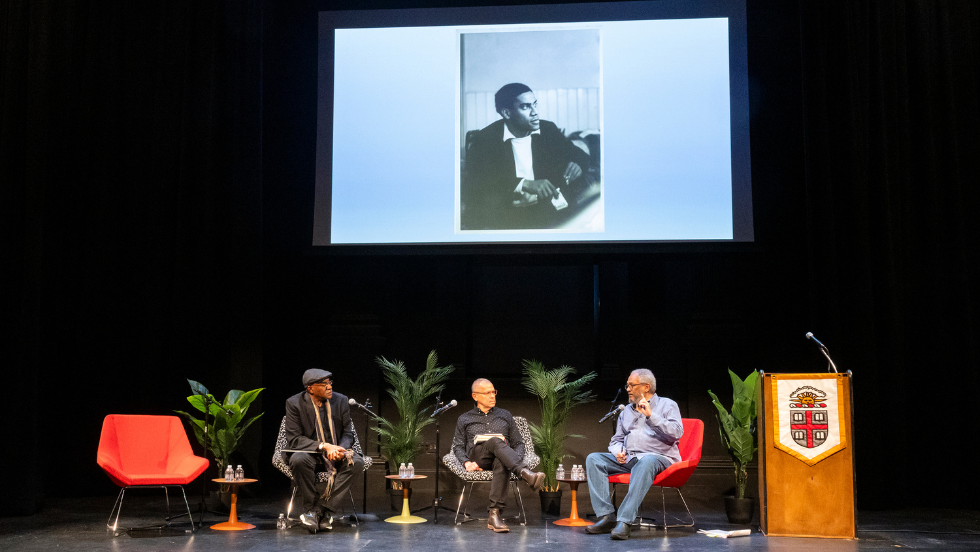
Credit: Scott Lapham