2026 Annual Report Update: The Imagined New (or, what Happens with History is a Catastrophe?)
Volume III | Confronting Violence and Catastrophe: Power, Grief and Hope
Part Two
September 2 to 4, 2025
Part One of the Imagined New Volume III was held in April 2025 and hosted by The Africa Institute in Sharjah, UAE. This was followed by another gathering hosted by VIAD Research Centre at the University of Johannesburg, South Africa in September 2025. The Part Two gathering was composed of thought dialogues with a group of invited artists, activists and academics. During the convening, storytelling surfaced as a general condition of worldbuilding, beyond medium, method, or even message, and certainly beyond its narrow artistic or literary place. This workshop was punctuated by several film screenings and performances at which the public was welcome, including the screenings of two documentary films produced by the Simmons Center: “The Unfinished Conversations Series: Telling New Stories,” and “Uncorking the Bitter Truth: Slavery’s Legacy in Cape Wine.”
Part Three
How we sense, think and feel: A Gathering to Reimagine Creative Solidarity in the Present Conjuncture
August 22 to 24, 2026
Part Three’s gathering was also hosted by VIAD Research Centre at the University of Johannesburg, South Africa. The gathering invited makers, artists and art-researchers to consider how they are actively reconstituting the aesthetic in the present time of war and brought together artists from the Sudan, the Democratic Republic of Congo, Palestine, Lebanon, South Africa, Haiti, Ethiopia and the United States of America. Also joining the conversation were three Brown University students and alumni: Kennedy Jones ’23 A.M. Public Humanities, Jun Ying Wen A.M. candidate in Public Humanities, and monaye johnson Ph.D. candidate in Africana Studies. These participants responded to the artists' presentations, extending the conversation and opening new perspectives on solidarity, artistic practice and collective world building.
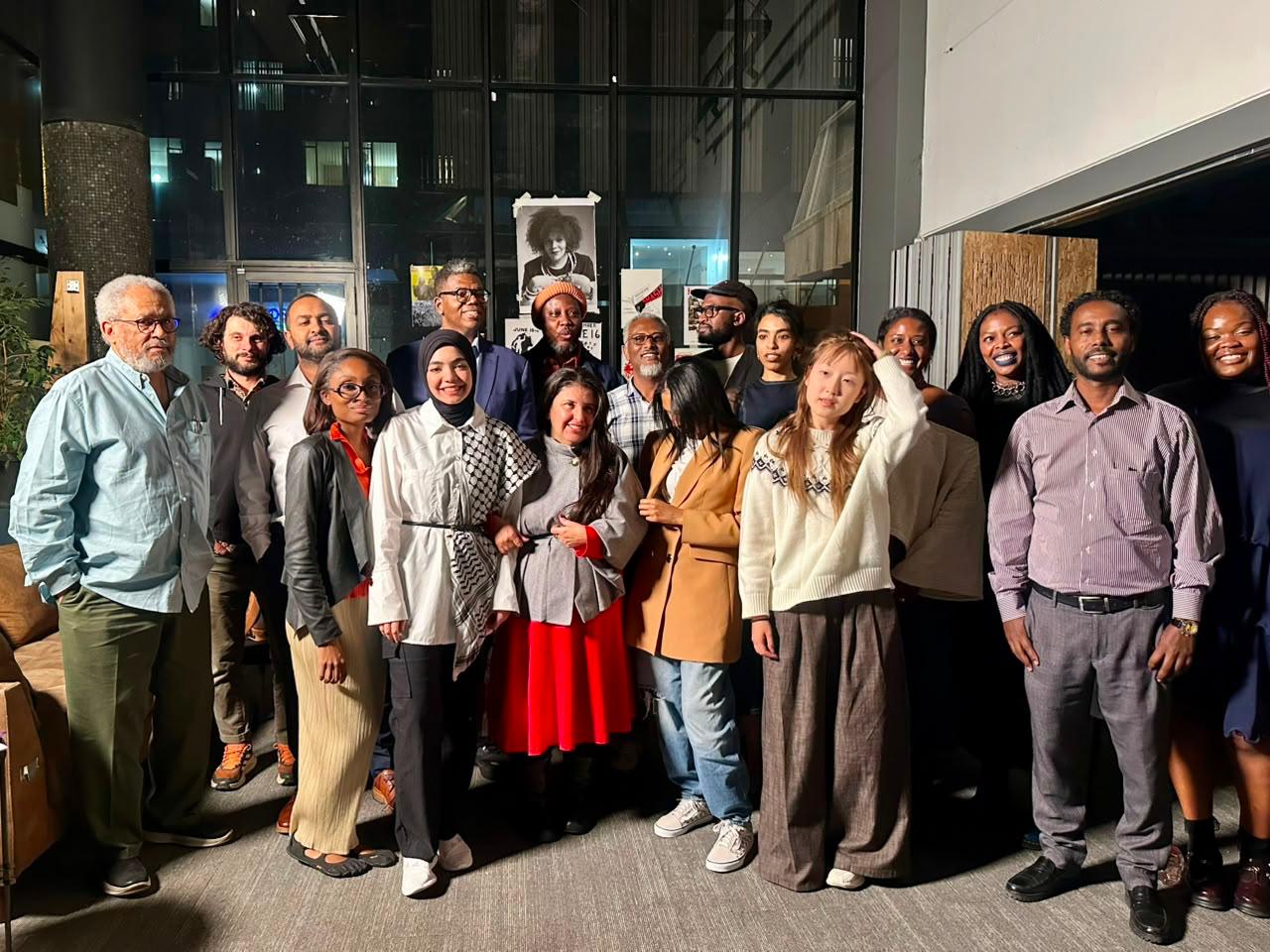
Art as generator of tissue
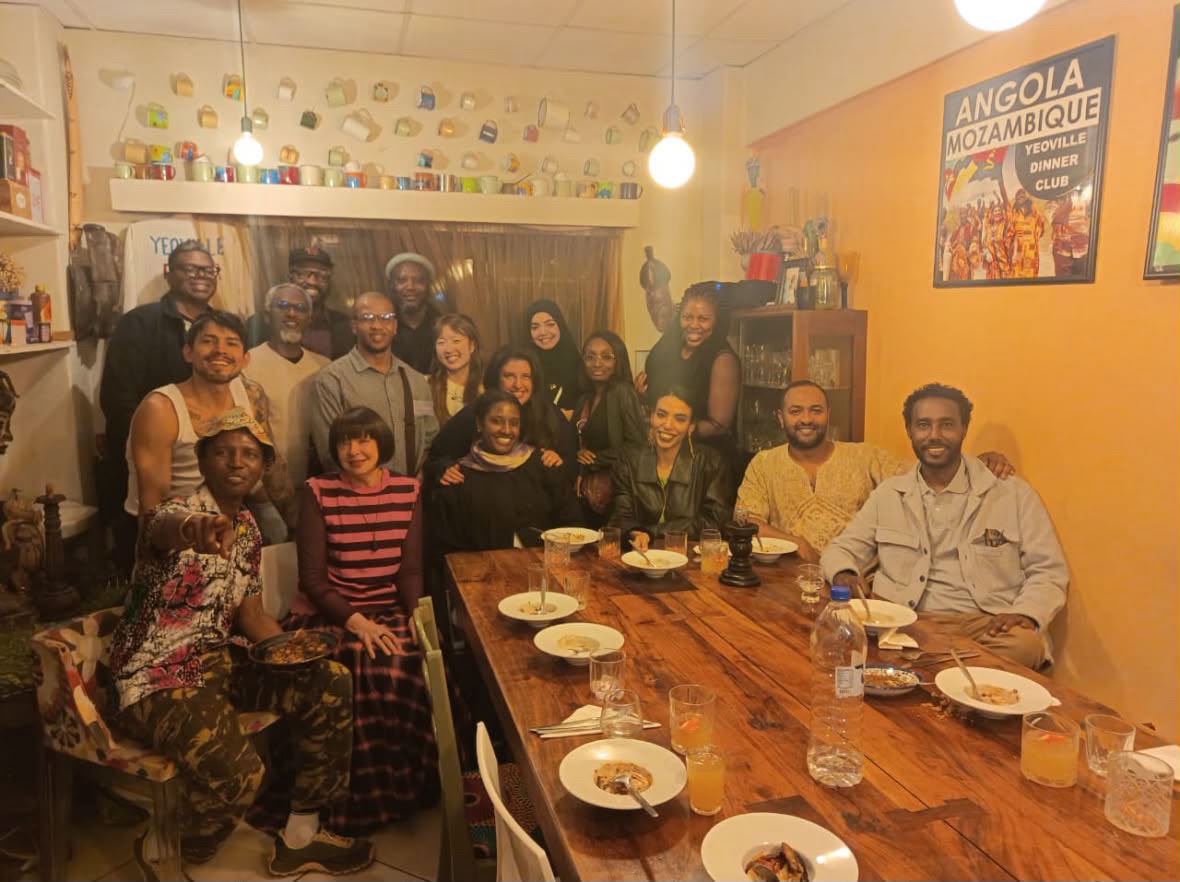
What stood out to me about this workshop was its ethos of pure experimentation. As a group, we had no obligations but to convene, and to decide ourselves if we wanted to do anything beyond this convening. In the end, we wanted to move forward with a residency that could culminate in something bigger. Many of us were dissatisfied with an exhibition in the most conventional sense of the word, and so we kept the form of this “something bigger” undecided. All we knew was that we wanted it to be public, to be decentralised and diffused across multiple contexts and spaces, and to produce a moment of what we called continuous gathering.
It seems only natural that we reached this conclusion for what we wanted an end product to look like, as much of what we talked about during the workshop came back to the gestures of kinship and generosity between people that keep us going. I am starting to conceive of these gestures as the tissue of a movement, and I wonder if the role of art has to do with facilitating the production of this tissue. I have struggled a lot, like others at the workshop, with thinking about the role of art given that it rarely makes a material difference in the face of these war and death worlds we speak of. Yes, it is true that art on its own cannot be the panacea, and that maybe it should not be tasked with being such—but I cannot help but believe after this workshop that it remains necessary, as a way to affect us sensorially, and in doing so broaden the possibilities for us to relate to one another and what is happening around us. I feel grateful to this workshop for making this so obvious.
Jun Ying Wen
Imagined New Graduate Fellow, 2026–2027
A.M. candidate in Public Humanities
Struggling Toward a Shared Language of Solidarity
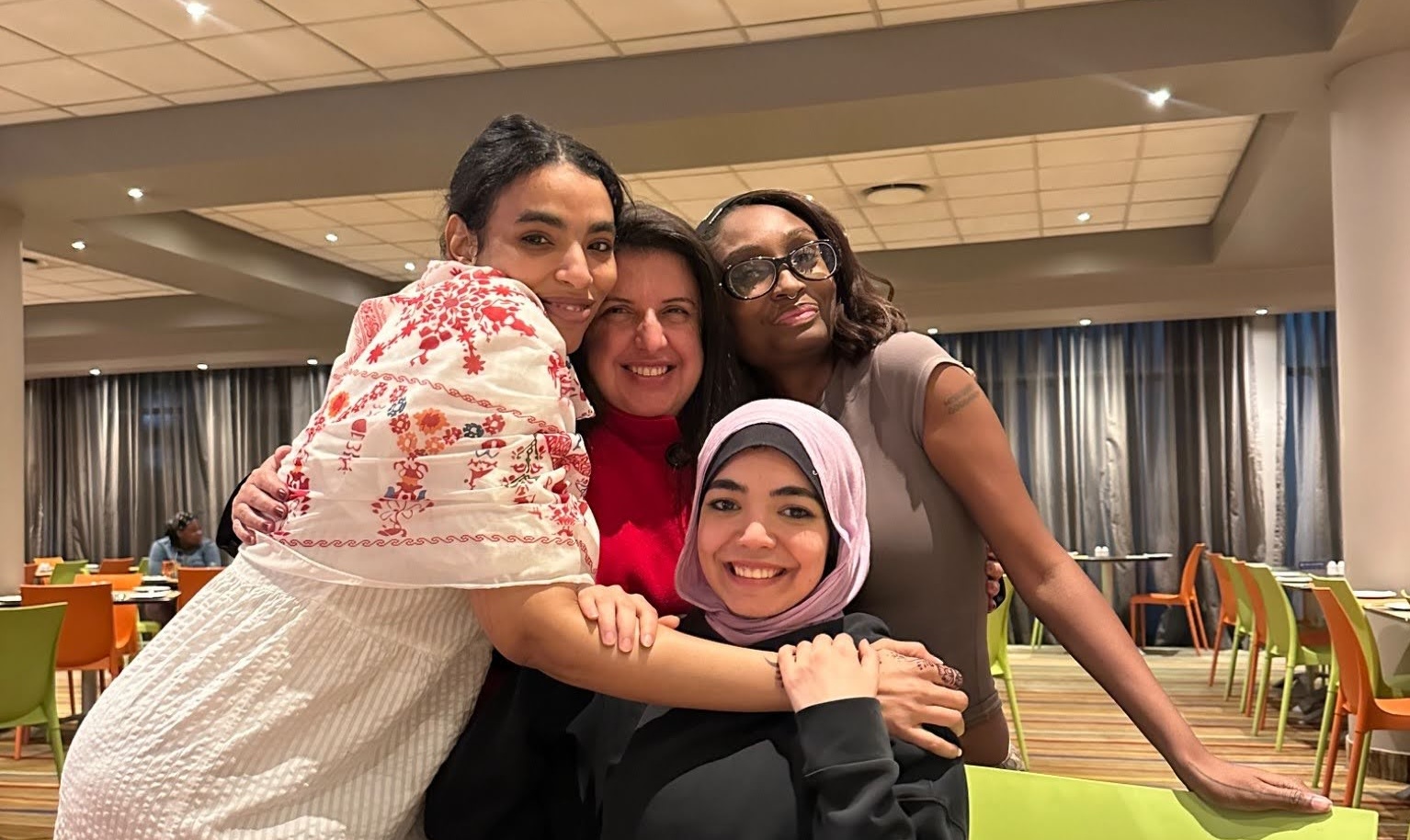
For Volume III of The Imagined New, we gathered as artists, students, and curators to think through the terms that structure our lives: hope, grief, violence, power, and more. What we learned right away is that we cannot assume we share an understanding of such language. Instead, we have to undertake the work of struggling through the meaning of our words toward a shared politic and toward solidarity.
This struggle was not simply about finding the right definitions. It was about listening to the different experiences, histories, and positions that shape how we understand the world. Hope can mean survival for one person and political possibility for another. Grief can be intimate and collective, visible and unfinished. Violence can be spectacular, but it can also be embedded in the structures and everyday conditions that organize our lives.
The gathering reminded me that solidarity does not require sameness. It requires a willingness to remain present with difference, uncertainty, and disagreement, while continuing to ask what we owe to one another. Creative practice can become a space for this kind of encounter: a place where we can sense differently, think together, and imagine forms of relation that are not yet fully realized.
monaye johnson
Imagined New Graduate Fellow, 2026–2027
Ph.D. candidate in Africana Studies
A.M. candidate in History of Art & Architecture
Bearing Witness: A Question of Capacity
Imagined New brought together scholars and practitioners invested in the potentialities of art-making to intervene and render alternative possibilities for the world we live in today. We gathered around and shared the unabstracted realities of being, living, and making under the catastrophic conditions of genocide, war, grief, and a world where those in power have decided to wield it by determining who gets to live or die. These three days cut through postulations and performances of solidarity, as each participant urgently and honestly offered their testimony to the insufficiencies of the conditions we live under. Our particular geographies of the Sudan, Palestine, the Congo, the US, Ethiopia, Jamaica, Lebanon, and South Africa rubbed up against each other as the intimacies and intricacies of those places produced particular questions and demands. Yet, in articulating our particular circumstances, we learned new language and unearthed clearer questions to seek better solutions for our collective conditions— an unnamed ache of longing for return in the Congo found its name in the demands for home in Palestine; anxiety about sustainable and safe futures in Ethiopia found courage in the endurance and faith of those amid war in the Sudan. I was invited in the role of “witness” to take notes and observe the resonating themes and ideas that unfolded during the conversation. In this role, I began to understand that the phrase “to bear witness” extends beyond merely showing up and listening; it is a question and demand of one's capacity to really hold and feel the weight of the realities and stories of another. For three days in Johannesburg this August, I, along with three other graduate students, artists, organizers, and facilitators, came together, struggled, and tested our capacity to hold and hear each other's stories and carry them forward with all the weight, immensity, and attention they deserve.
Kennedy Jones ’23 A.M.
Former Graduate Fellow for the Study of the Public History of Slavery at the Simmons Center
Curatorial Assistant at the Institute of Contemporary Art at VCU