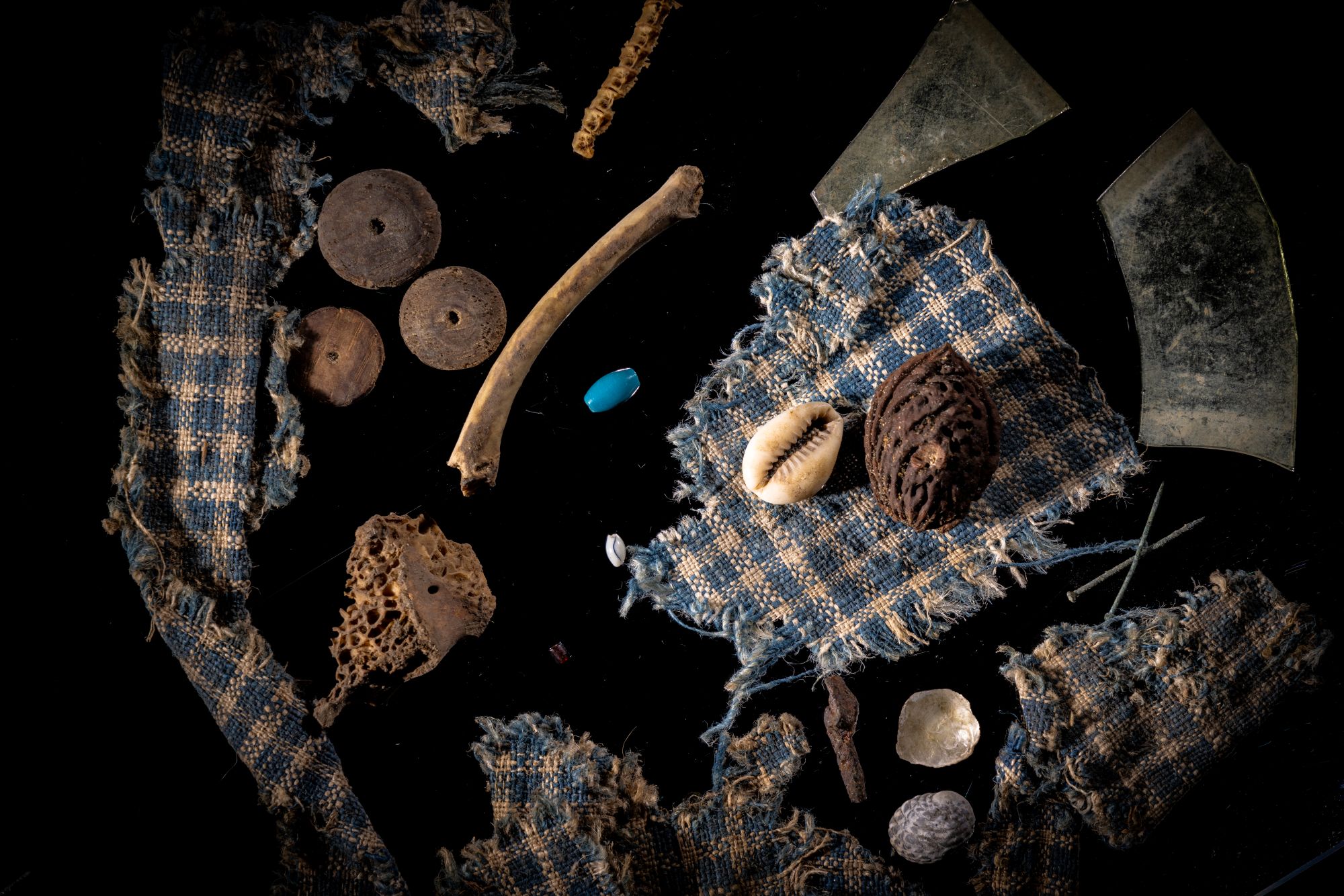
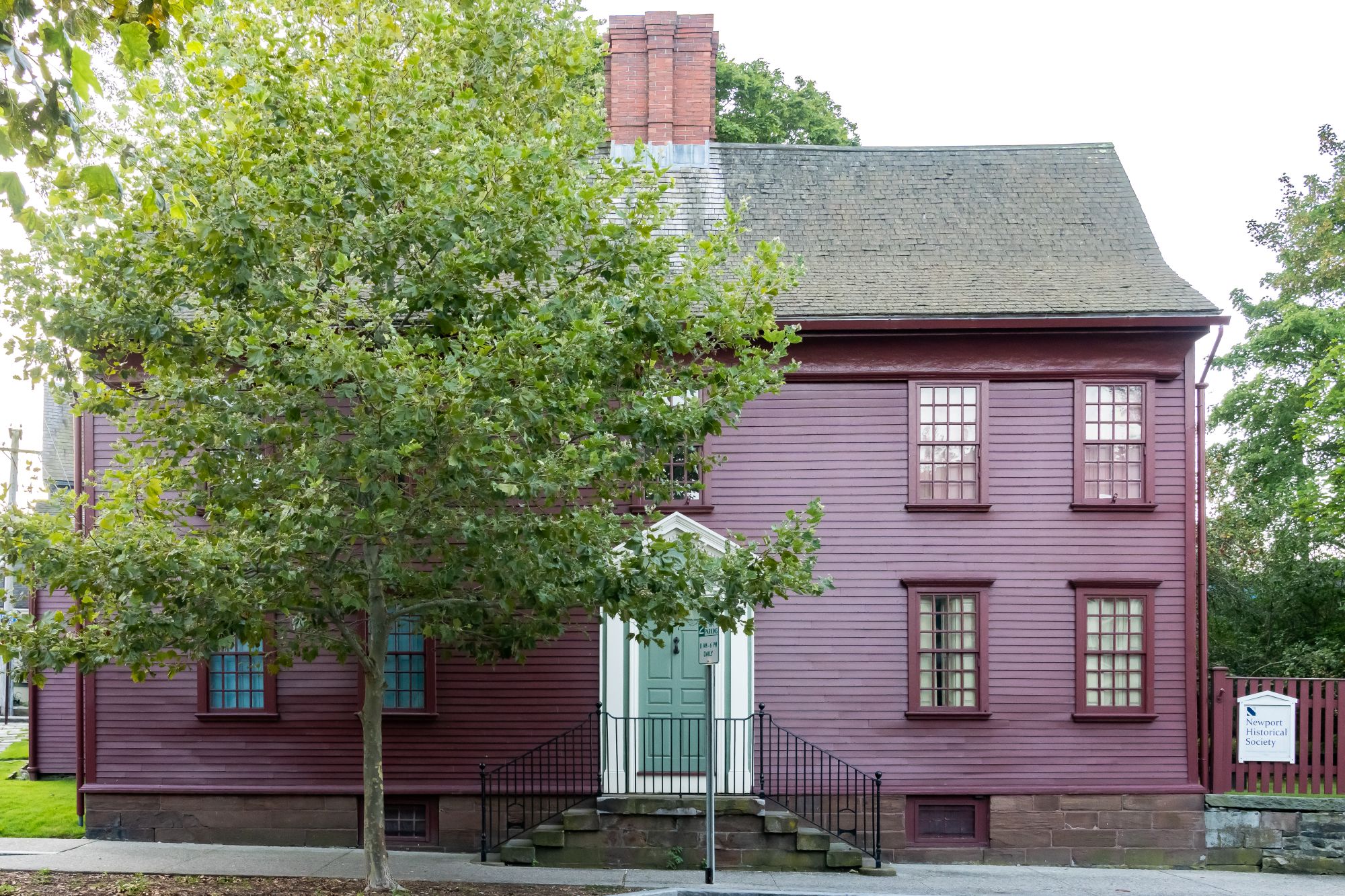
Beneath a dark and dusty floorboard, there sat a bundle – still but alive – in an attic for centuries: waiting to be discovered so that the story of its maker could be told. This attic is in the Wanton-Lyman-Hazard House in Newport, RI: the oldest documented surviving home in the city and one of the oldest buildings in the state. It was built around 1697. In 2005, the bundle was uncovered and handled for the first time since, likely, the late 1700s. Enclosed within the scraps of blue and white checkered fabric were small objects including a human molar, fragments of Chinese import ceramics, beads, wooden buttons, a worked cowrie shell, eggshell fragments, shells, iron pins, and glass shards. This bundle was identified as an “nkisi,” or an African spirit bundle, a religious object or vessel most commonly associated with religions from Central Africa and the Congo region. In these religious practices, similar bags were created and used all over the continent. It may have been made by Cardardo Wanton, an enslaved person known to have lived in the Wanton-Lyman-Hazard House. The presence of the nkisi in Newport demonstrates enslaved people’s resistance, the continued practice of indigenous religion, and persistence in the face of inhumanity and horror. This discovery is one of the reasons that the Wanton-Lyman-Hazard House was chosen as the site for the new Edward W. Kane and Martha J. Wallace Center for Black History at the Newport Historical Society (Center for Black History) which opens this month on Juneteenth.
The nkisi bundle was first exhibited at the Smithsonian National Museum of African American History and Culture in 2016 as part of its inaugural exhibitions, and most recently from 2024 through 2026 as part of “Entwined: Freedom, Sovereignty, and the Sea,” at the Mystic Seaport Museum. “Entwined” was the culminating exhibition for the Reimagining New England Histories project (RNEH) centering maritime histories in Indigenous, African, and African-descended worldviews and experiences. RNEH was co-organized by the Ruth J. Simmons Center for the Study of Slavery & Justice at Brown University, Mystic Seaport Museum, and Williams College. The RNEH project and “Entwined” exhibition were generously funded by the Just Futures Initiative of the Mellon Foundation.
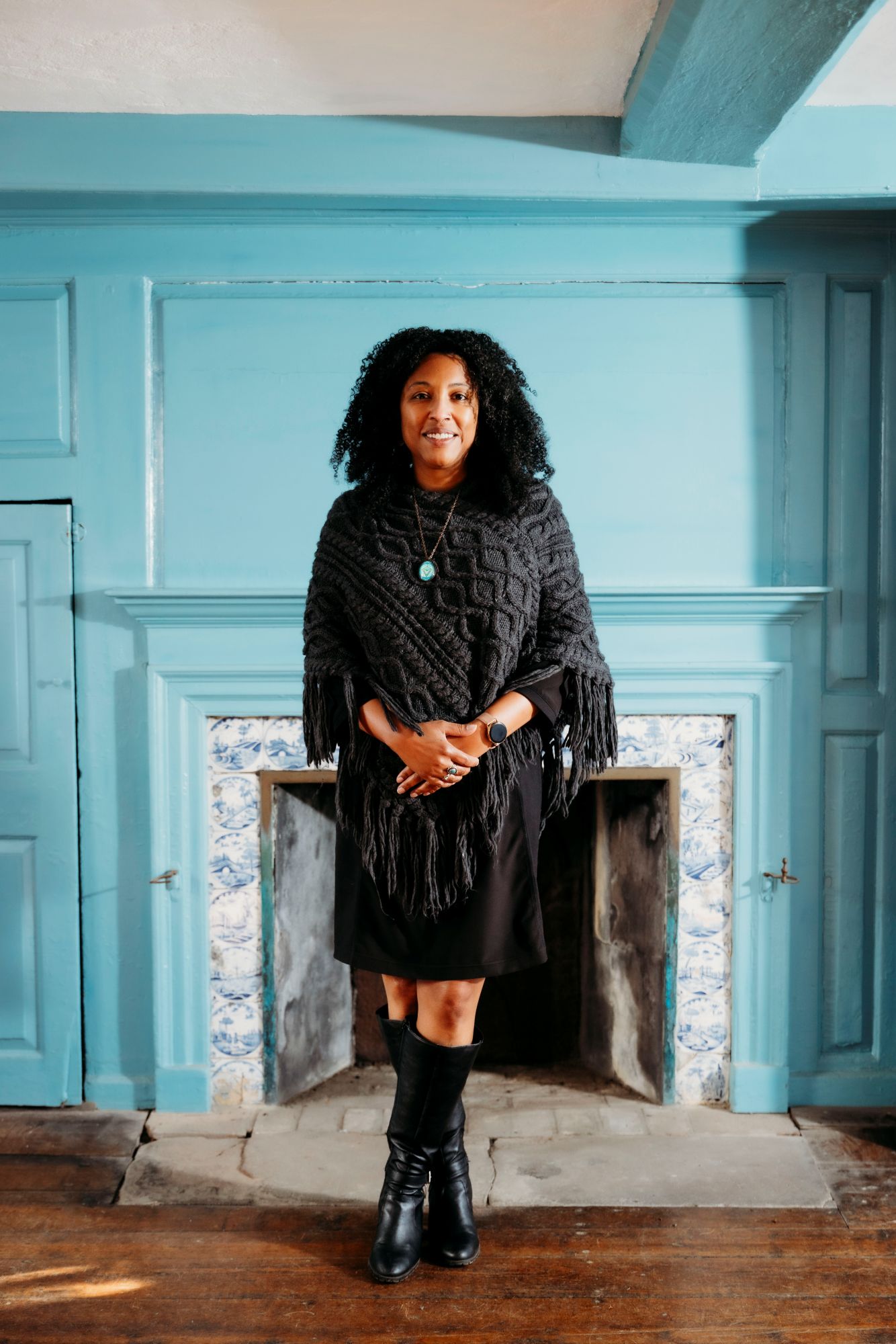
The nkisi bundle now forms the centerpiece of one of two permanent exhibitions that will be unveiled at the opening of the Center for Black History on Juneteenth, 2026. Dr. Akeia de Barros Gomes, the curator of “Entwined” who now serves as the director of the Center for Black History, consulted with a priest in Benin to seek council before exhibiting it publicly. The priest not only approved of its exhibition and helped with interpretation but also expressed the importance of sharing enslaved people’s stories and history through belongings such as this one. The nkisi is central to an exhibition that explores Newport’s role in the larger African Diaspora and presents the Black community in Newport and Rhode Island as linked to a wider global African community. Other elements of this exhibition will include interactive maps, wall projections, and a listening station where music from throughout the diaspora can be heard.
The Edward W. Kane and Martha J. Wallace Center for Black History at the Newport Historical Society, like the Simmons Center at Brown, challenges conventional histories of American racial slavery, making the Juneteenth opening of this center significant. As the story of Juneteenth reminds us, just because one is legally deemed “free,” that does not guarantee them complete or even equal access to freedom. Though the Emancipation Proclamation was issued on January 1, 1863, it took 2.5 years for the enslaved people in Galveston, Texas to learn about their “freedom” on June 19, 1865. Since then, formerly enslaved people and their descendants have had to fight for their freedom as domination and control took on new nefarious forms such as Jim Crow, redlining, and mass incarceration. These communities are still engaged in freedom making practices today. Juneteenth reminds us both of how far we have come since 1865 and of all the work that still lies ahead, especially as so many fundamental human rights continue to be stripped from people in the U.S. and around the world.
Simmons Center Director Anthony Bogues will participate in the opening ceremony and ribbon cutting for the new Center for Black History at 10 a.m. on Friday, June 19. The Simmons Center and the Center for Black History have a close relationship and are in the process of discussing joint historical research projects to be undertaken after the new center opens. Bogues notes that “Newport has historically been seen as one of the major ports in which slave ships used to enter, but today we have a different image of Newport from the Gilded Age onwards. What the Center for Black History will do is to challenge this contemporary historical image that we have of Newport. The Simmons Center's mission is to bring to the forefront histories that have been out of sight, so our relationship with this new center is part of our objectives."
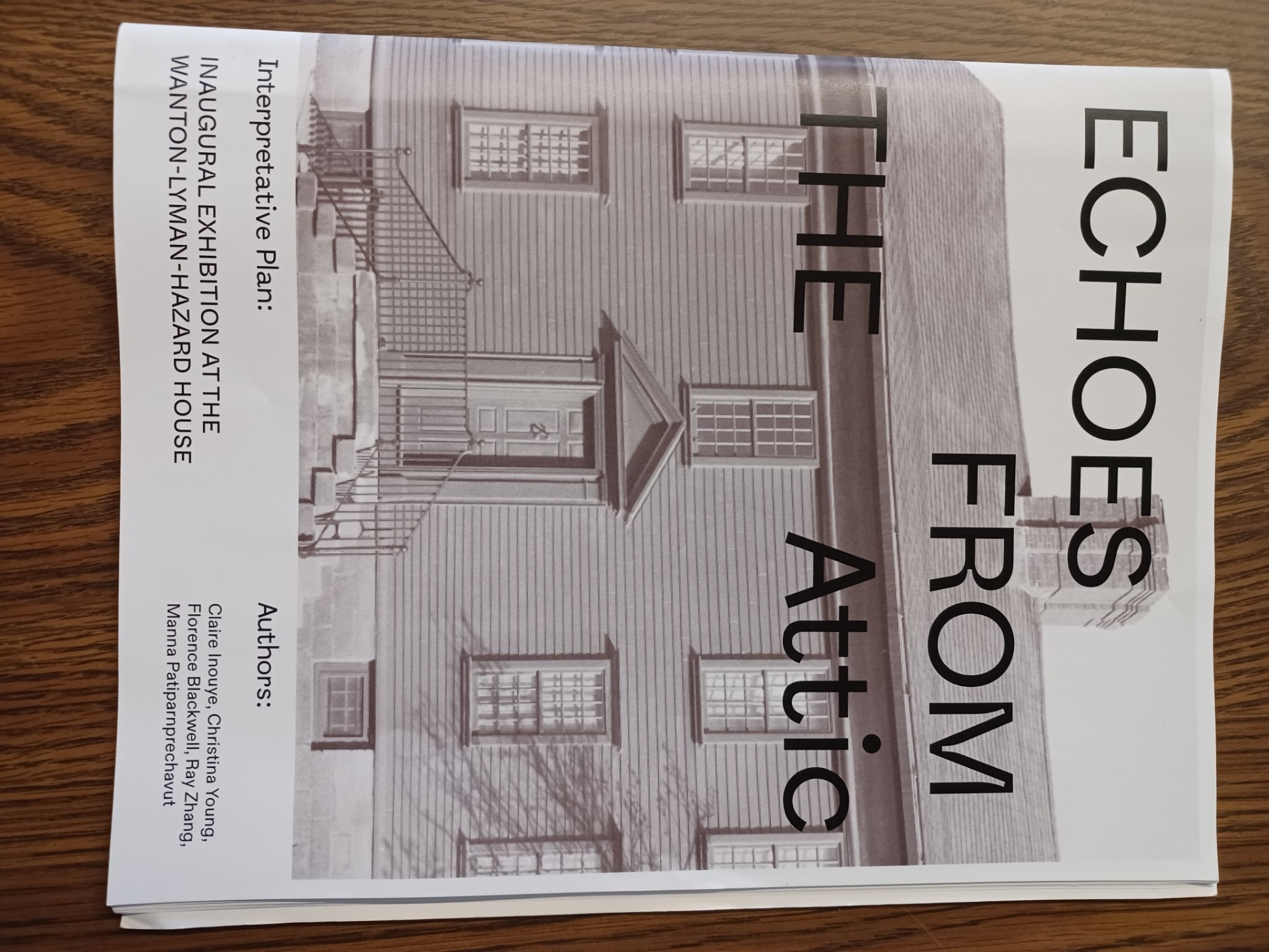
While that relationship began with Akeia de Barros Gomes’ role as curator for the “Entwined” exhibition and as a Visiting Scholar at the Simmons Center, it has grown and blossomed in new ways over the past several years. When the Simmons Center became the host of a newly reimagined Public Humanities Master’s Program at Brown in the fall of 2024, Dr. de Barros Gomes was invited to join the center as an Adjunct Lecturer. She teaches a foundational course requirement for the program, “Curatorial Practice and Change.” The final project for the course was a unique learning opportunity to design an exhibition for the Center for Black History. However, the students undertook, instead, to do a collaborative project to propose an interpretive plan for the entire center. Several of the ideas in their proposal influenced the final exhibition plans for the Center for Black History including practices on public programming, storytelling, and incorporating contemporary artists’ work. The title of the students’ plan, “Echoes from the Attic,” was borrowed as the title for the Center for Black History’s inaugural publication, “Echoes from the Attic: Stories of Slavery and Freedom-Making in Newport, RI.” The book takes up the unfinished conversation about what it is to be a descendant member of the Black community in Newport, RI, and beyond, today, and includes an epilogue by Simmons Center Director Anthony Bogues entitled “Stories about Freedom: A Scholar’s Perspective — Refashioning Liberty into Black Freedom.” Dr. de Barros Gomes will be giving a book talk about “Echoes from the Attic” on Wednesday, June 17, 2026, in Newport.
While the first floor of the Wanton-Lyman-Hazard House is an entirely public-facing exhibition space, Brown students are able to engage in open inquiry and join a community of scholars at the Center for Black History’s research center on the second floor of the house. Simmons Center Public Humanities Master’s student Florence Blackwell ’26 A.M. conducted research there as part of the program’s summer practicum requirement during the summer of 2025. Blackwell’s research turned into her Master’s thesis project: “The Newport Rebel Jazz Festival: Black Music, Collective Resistance, and Jim Crow in Rhode Island.” The research underscores the irony of the Newport Jazz Festival taking place over the Fourth of July Weekend in 1960. Despite the festival’s ties to a weekend celebrating "independence," the Black musicians originally scheduled to play at the festival faced ongoing struggles for freedom and equality. In direct opposition and as a form of protest, they formed their own festival that weekend: the Newport Rebel Jazz Festival.
We invite the Brown and Providence communities to join us in celebrating the opening of the Edward W. Kane and Martha J. Wallace Center for Black History at the Newport Historical Society on June 19 through 21. Following the ribbon cutting on Juneteenth, Saturday will be a family/community day for gathering and celebration. A centerpiece of the celebration will be “Voices of the Enslaved” performances by April Brown, Co-Director of Langston Hughes Community Poetry, and Jessica T. Pearson, Assistant Professor at Rhode Island College. Sunday afternoon, there will be an interfaith celebration with local houses of worship where Narragansett friends will offer a prayer and Dr. de Barros Gomes will offer libations alongside Black community members.