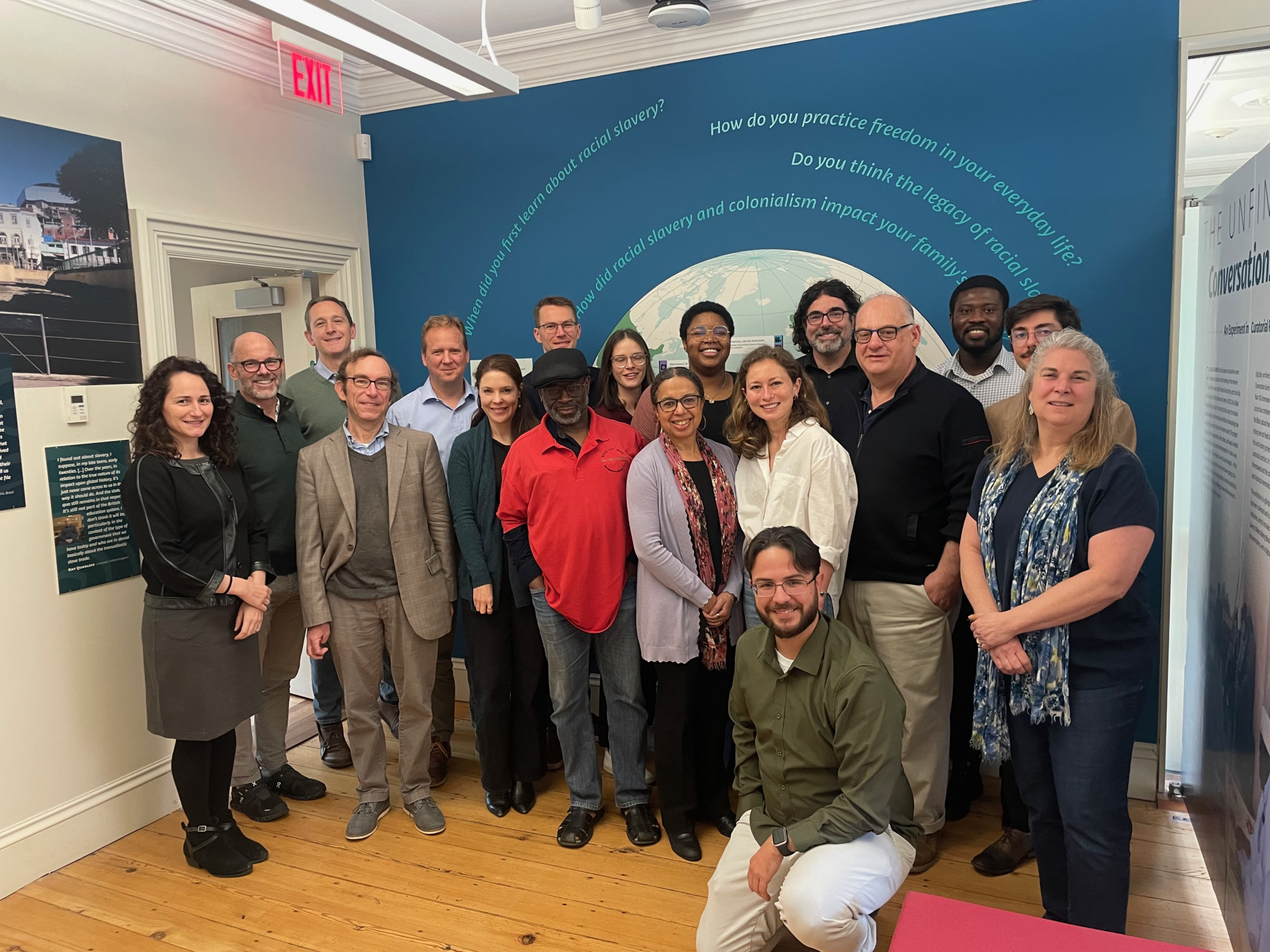
The Slavery & Finance Research Cluster welcomed a dozen scholars to Providence in May 2025 for a mini-conference exploring new research on the networks of finance and commerce undergirding the Transatlantic Slave Trade. The event allowed historians to test out some of their working hypotheses with their fellow experts, as well as to establish the basis for future collaborative research. Brown University doctoral student Isaac Mensah presented his findings on the Bank of England’s Caribbean investments alongside historians from Harvard Business School and Amsterdam’s International Institute for Social History. Among the many insightful presentations, a scholar from Princeton University shared new research on the English coin called the “Guinea,” a testament to the importance of West African gold, alongside West African captives, in the emergence of European commercial prosperity.
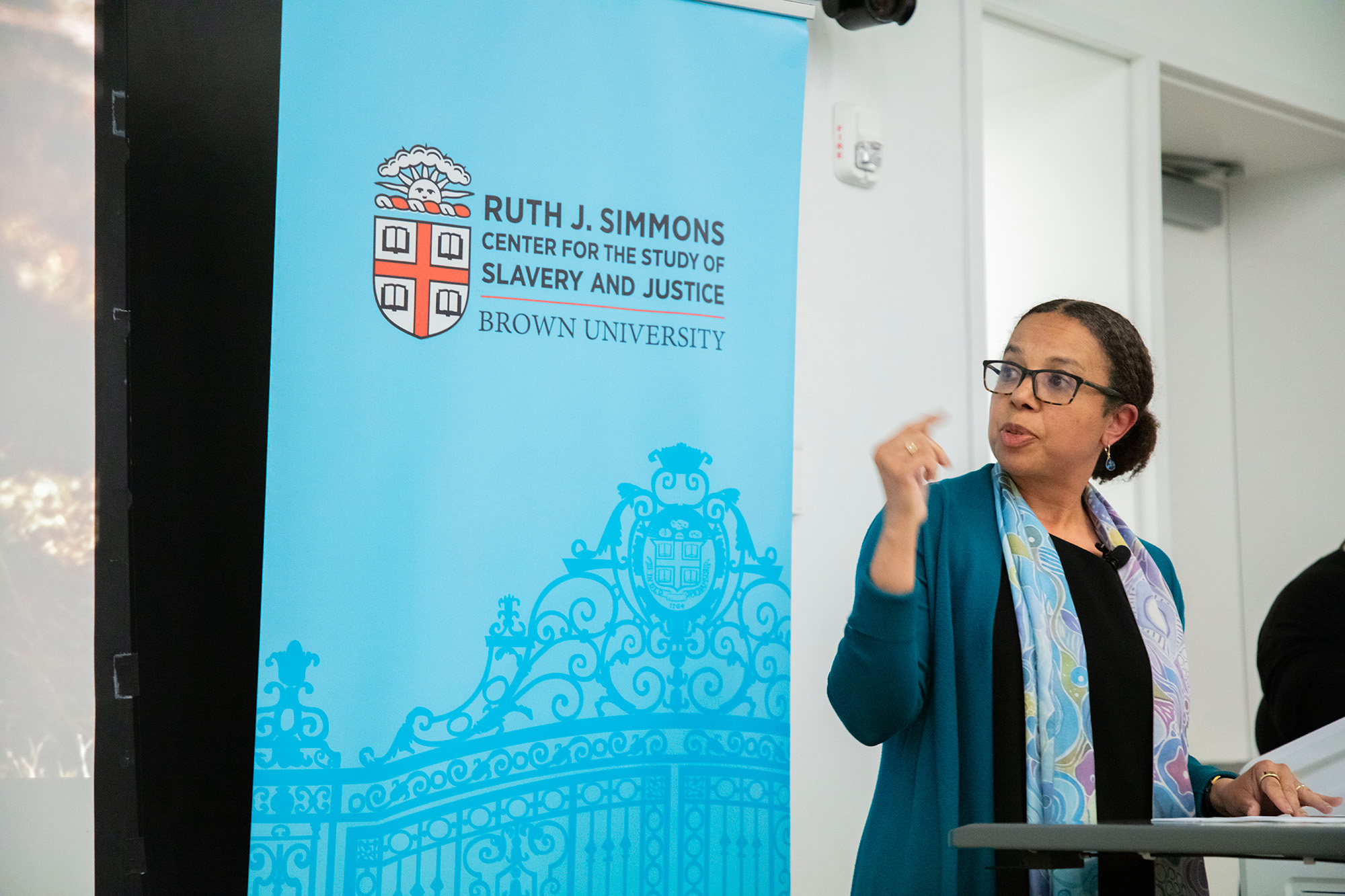
We were especially glad to have Rachel Swarns, journalism professor at NYU, deliver the keynote address on her research into Georgetown University’s 1838 sale of several hundred enslaved men, women and children from Maryland to Louisiana. Swarns, whose award-winning book “The 272: The Families Who Were Enslaved and Sold to Build the American Catholic Church” was published in 2023, reminded participants to never lose sight of people and families when analyzing dry financial records that depict slavery as an ordinary business practice. The workshop was also enhanced by the participation of several doctoral students from Morgan State University, who traveled to Providence under the auspices of an initiative in the Brown History Department to promote collaboration between our institution and students and faculty at HBCUs.
In the coming year, participants in the cluster will build upon the 2025 workshop to elaborate these research questions and findings. One thing seems abundantly clear: we’ve only begun to scratch the surface of what’s discoverable in terms of slavery’s financial history and the role of slavery in the development of the institutions of modern finance.
Seth Rockman
Slavery & Finance Research Cluster Faculty Fellow
George L. Littlefield Professor of American History