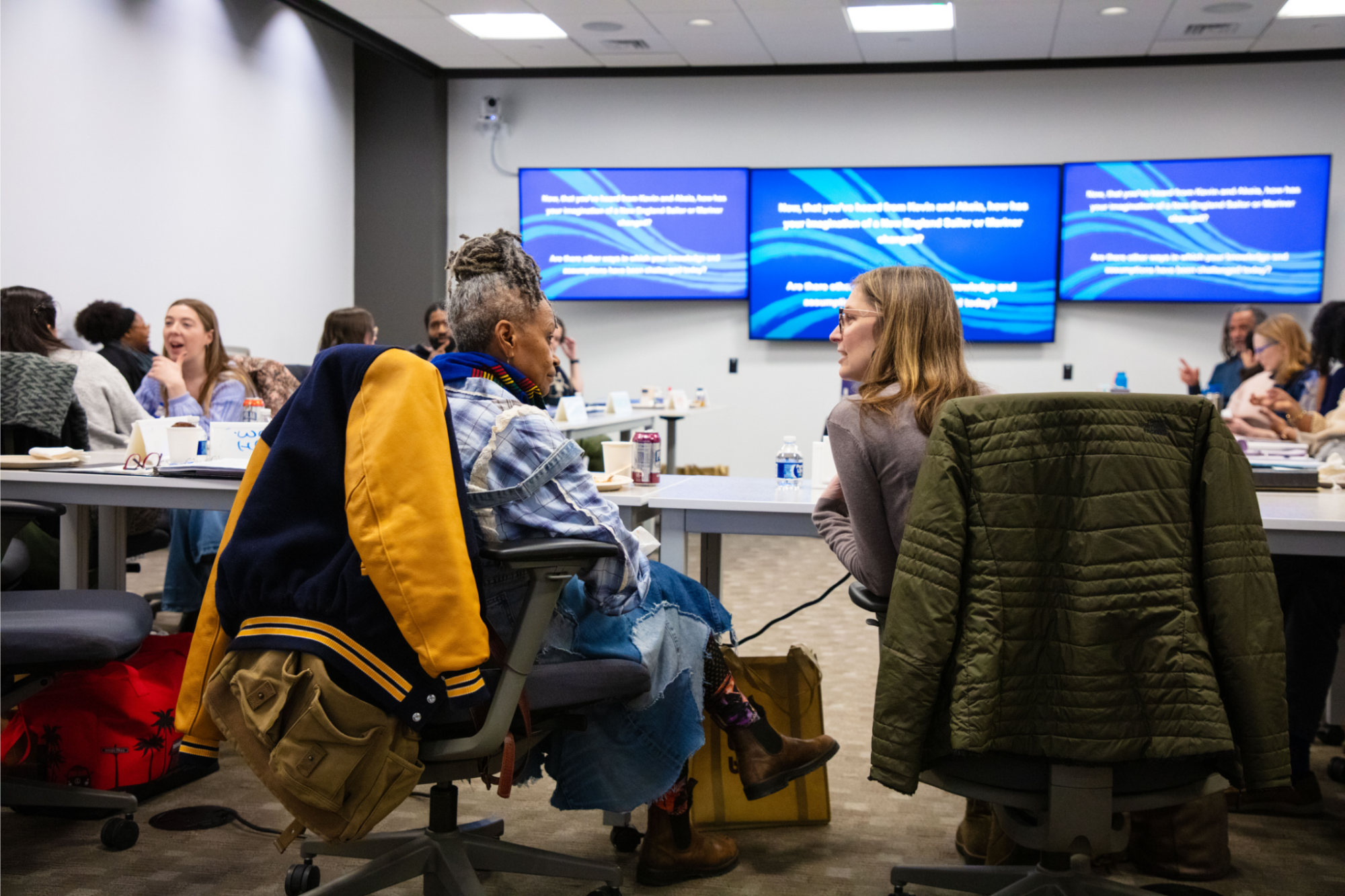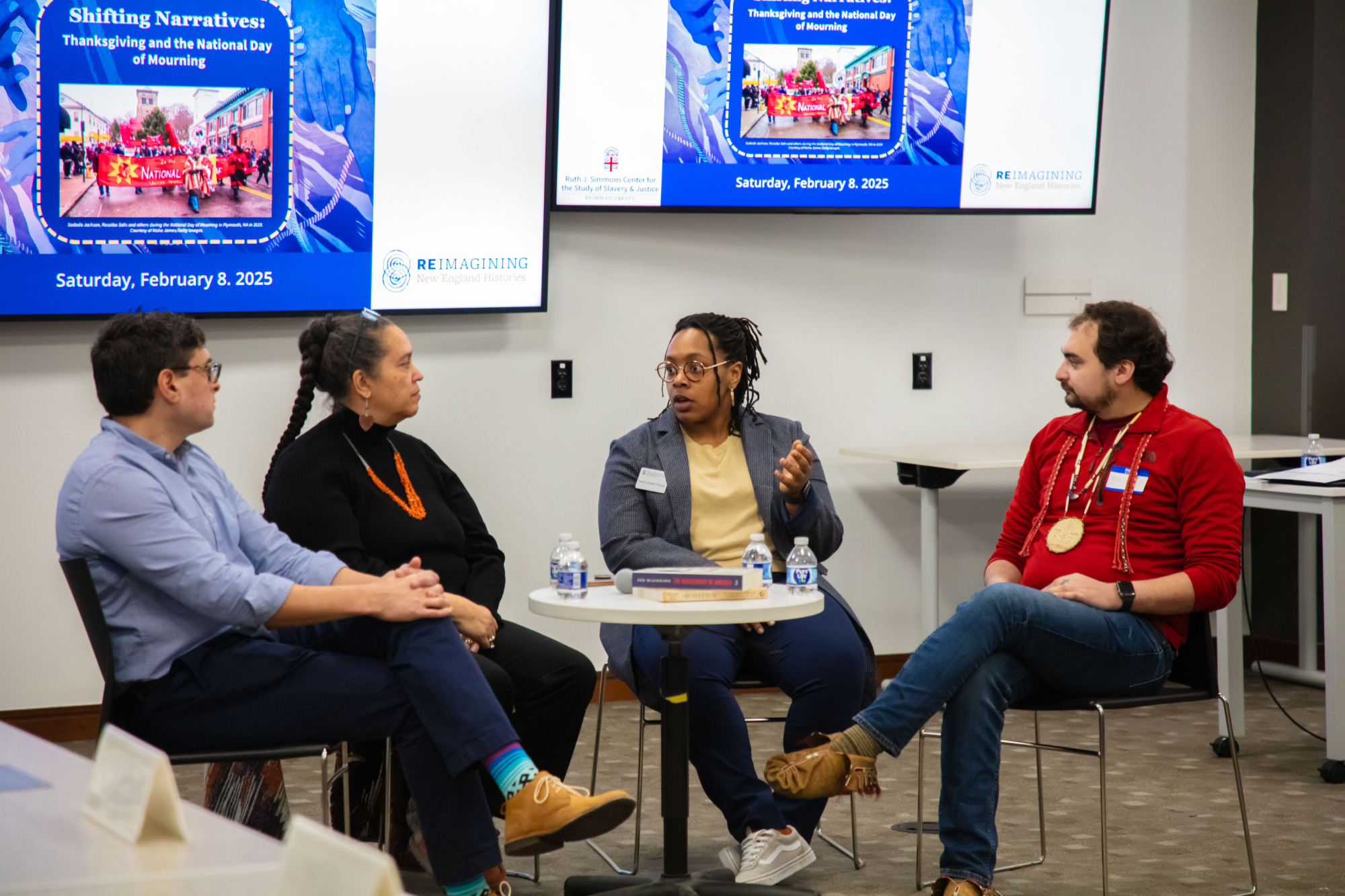
Inspired by the Reimagining New England Histories K–12 Curriculum Project, the Simmons Center’s 2023 two-day symposium “In Conversation: Black and Indigenous Histories and Pedagogies,” Rhode Island educational legislation, and the Providence Student Union’s Ethnic Studies Campaign, the Simmons Center piloted a series of Teach-Ins for educators in 2025. We realized that our focus on public education is not limited to the students, but also applies to the educators, who want and need more opportunities to grow and expand their skillset and knowledge.
Our first Teach-In, “Beyond the Feast: Reinterpreting the Wampanoag-Plymouth Agreement,” was focused on dismantling the myth of Thanksgiving that continues to circulate across the nation, while seeking to center the experiences and perspectives of the Indigenous nations of the Dawnland. To do so, we invited Steven Peters, a citizen of the Mashpee Wampanoag tribe, Bradford Lopes, a citizen of the Aquinnah Wôpanâak tribe, and Lorén Spears, an enrolled Narragansett Tribal Nation citizen. In addition, Emma York led educators through a lesson plan from the Reimagining New England Histories curriculum that allowed them to explore, evaluate and analyze primary sources to develop a clearer understanding of the relationships between English colonists and Indigenous peoples.
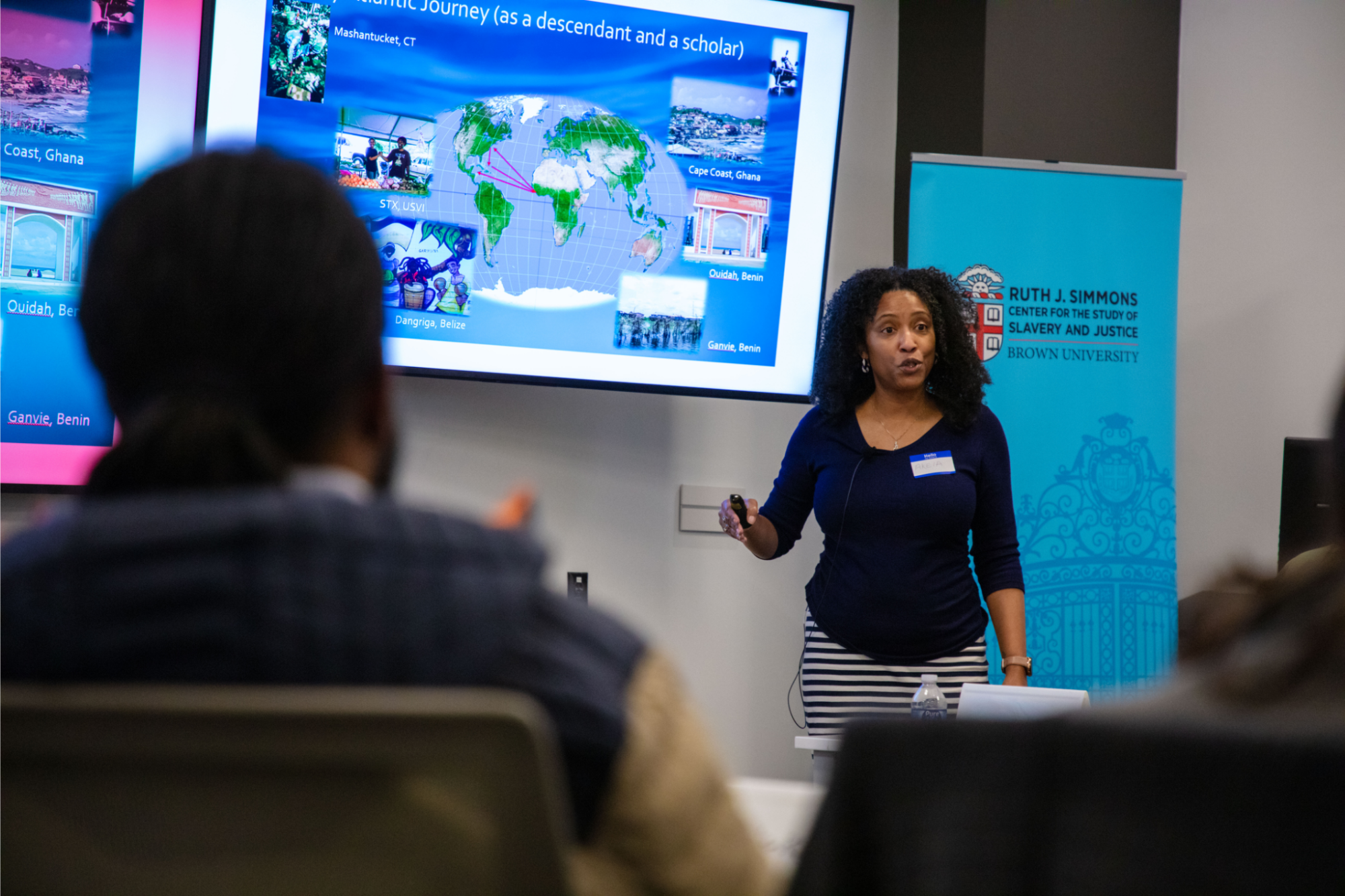
The second Teach-In, “Wading in the Waters: Black & Indigenous Voices of the Maritime Age,” focused on centering the Black experience in the Americas within the context of the Atlantic world, specifically maritime history. Guest speaker Akeia de Barros Gomes set the scene by providing us with the African cosmology for understanding the experiences of enslaved Africans on the slaveships, but also to understand the spiritual relationship between African people and water to understand historical moments such as the Igbo Landing. Gomes was followed by Kevin Dawson, who spoke on the research from his book, “Undercurrents of Power: Aquatic Culture in the African Diaspora.” Dawson’s presentation helped us to unpack the mythology surrounding Black people and their relationship even further by revealing that African people were surfing, swimming and battling maritime animals well before the Transatlantic Slave Trade, but also as part of the trade, as sugar plantations were being developed in the Americas. To conclude the day, educators were able to hear from Sofia Zepeda of Williams-Mystic Coastal and Ocean Studies, Sarah Cahill of the Mystic Seaport Museum, and Reina Thomas of the Simmons Center, who also shared primary sources and led discussions with the educators following the guest presenters.
The foundation created through this series of Teach-Ins has provided the framework and pedagogy for future Teach-Ins built in partnership with educators of our local community.