2025 Annual Report Update: First Year Reflections
Reflections from Akeia de Barros Gomes, Ph.D., Steven Lubar, and Christina Young ’26 A.M.
Fall 2025: Inaugural Interdisciplinary Studies Cohort
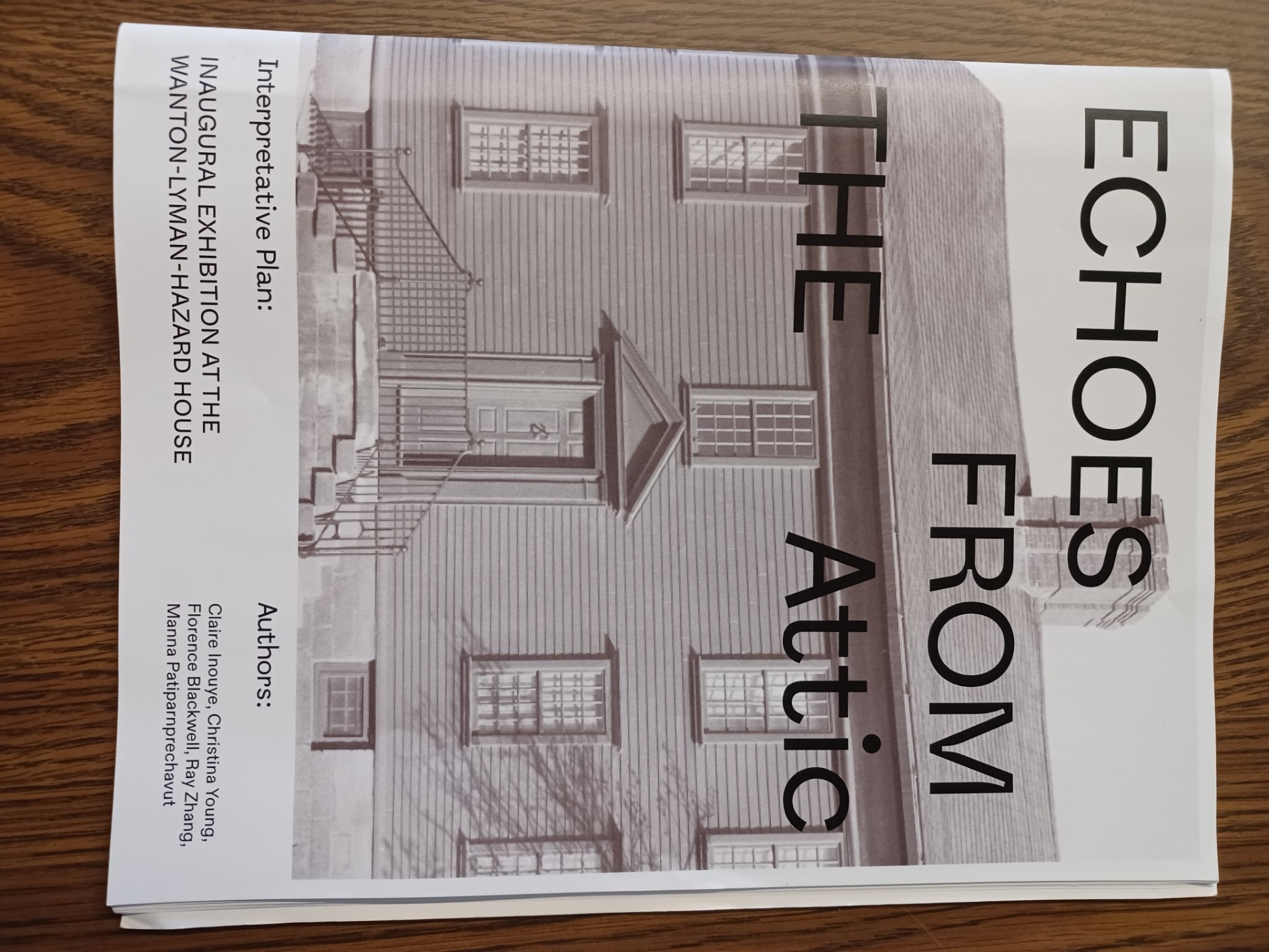
The first cohort for the Simmons Center’s Interdisciplinary Studies/Public Humanities program was a group of four graduate students who came from around the country with a wealth of different experiences, disciplines, and interests. My course, PHUM 2011, “Curatorial Practice and Change,” focused on understanding the racial, colonial, and “othering” foundations of museum practice, focused on acknowledging community voice as authoritative history, validated ways of knowing, and expanded curatorial practice beyond a focus on “objects.” There was a heavy focus on reciprocal relationship-building as the center of curatorial practice. The four students in the cohort and a design student from Rhode Island School of Design collaborated during each class with fruitful conversation, transformational site-visits, and during the creation of their final project.
The assigned final project was to create an exhibition for the Edward W. Kane and Martha J. Wallace Center for Black History in Newport, RI. Unbeknownst to me, this group of insightful and innovative students had a charette and presented me with a different idea for their final project—to work together and use each of their strengths to create an interpretive plan for the entire Center for Black History. Their project truly defined “interdisciplinary studies,” and they developed an interpretive plan that included a mission statement, design, visitor outcomes, learning initiatives, public programming, community outreach, historical narratives, and contemporary art activations.
If the inaugural cohort is any sign of what’s in store for the future of this program, it is one that will continue to draw top thinkers and practitioners in Public Humanities. More importantly, the program will redefine Public Humanities practice. The cohort continues to find success in their scholarship and practice, continues to engage with community, and is an example of critical thinking in scholarship and practice within the framework and mission of the Ruth J. Simmons Center for the Study of Slavery and Justice.
Akeia de Barros Gomes, Ph.D.
Simmons Center Adjunct Lecturer
Director, Edward W. Kane and Martha J. Wallace Center for Black History at the Newport Historical Society
Teaching Public Humanities Practice
In the spring semester, I taught Introduction to Public Humanities. The challenge: public humanities institutions are changing rapidly. They are critiqued both for being too colonial and too focused on telling new stories. So, how best to prepare students to work in institutions that are changing? I think it is important to know the old rules, the traditional ways of working that are still necessary for much of this work, as well as to understand why those ways are lacking, and how they need to change.
A straight academic course can do critique. A public humanities course has to go beyond critique: to build on it and explore changing practice.
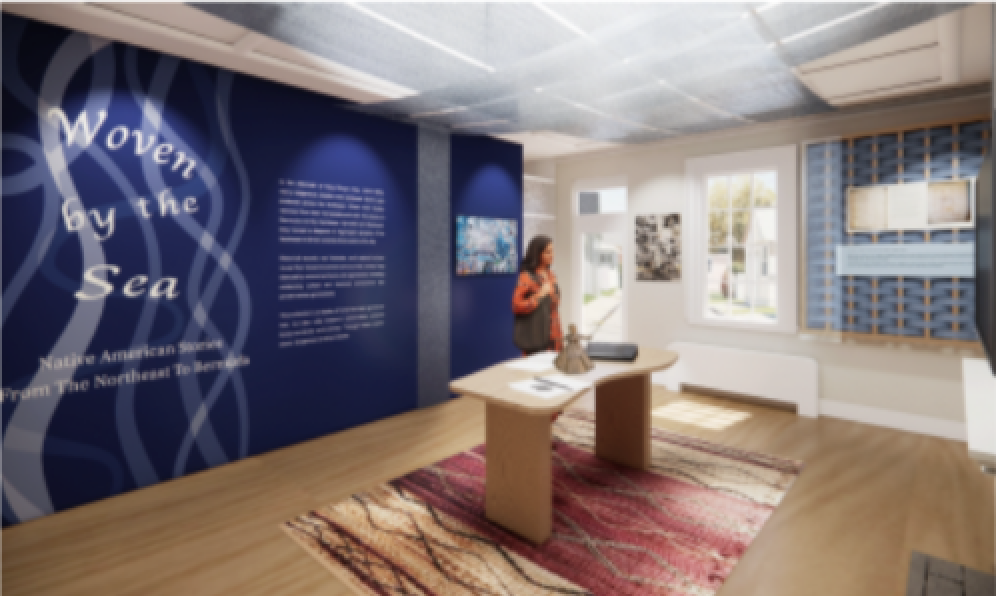
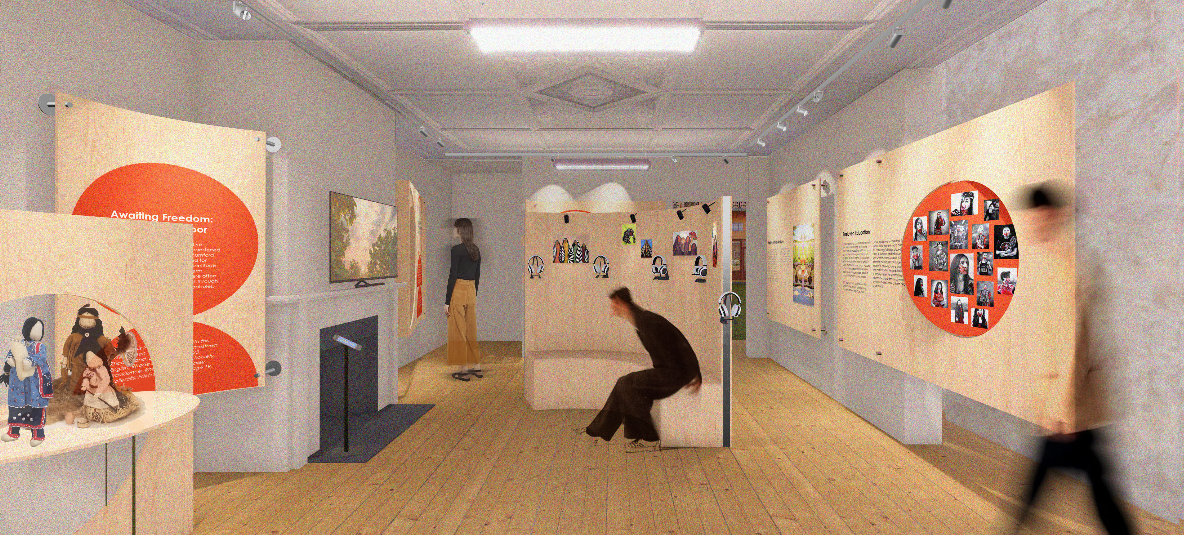
To do that, it’s important to have a project as part of a course, ideally a project that both requires traditional expertise but also opens up new approaches. The part of the museum world where this kind of work is most advanced is in museums of Indigenous art, culture and history, and we were fortunate to have two excellent projects close at hand. Students in the course developed plans for two exhibits. For the Tomaquag Museum, they reimagined exhibits to put Narragansett history into the context of the Semiquincentary. For the Simmons Center, they created plans for an exhibit of the Stolen Relations: Recovering Stories of Indigenous Enslavement in the Americas project.
Critical to learning practical work is learning to work with others. Students were fortunate to work with co-teachers Associate Professor Linford Fisher and Ph.D. candidate Ally LaForge, experts on Indigenous slavery and Indigenous museology. The exhibits were jointly created with students in an Advanced Design Studio course at RISD, co-taught by Francesca Liuni and the Tomaquag Museum Assistant Director, Silvermoon LaRose.
Public humanities work needs to be useful, and these projects were, both for the students and the institutions they worked with. I’m looking forward to seeing them turned from plans to productions.
Steven Lubar
Public Humanities Faculty Member, 2004–2025
Founding Director of the John Nicholas Brown Center for Public Humanities and Cultural Heritage, 2004–2014
George L. Littlefield Professor of American History Emeritus, Department of American Studies
Reflection on First Year
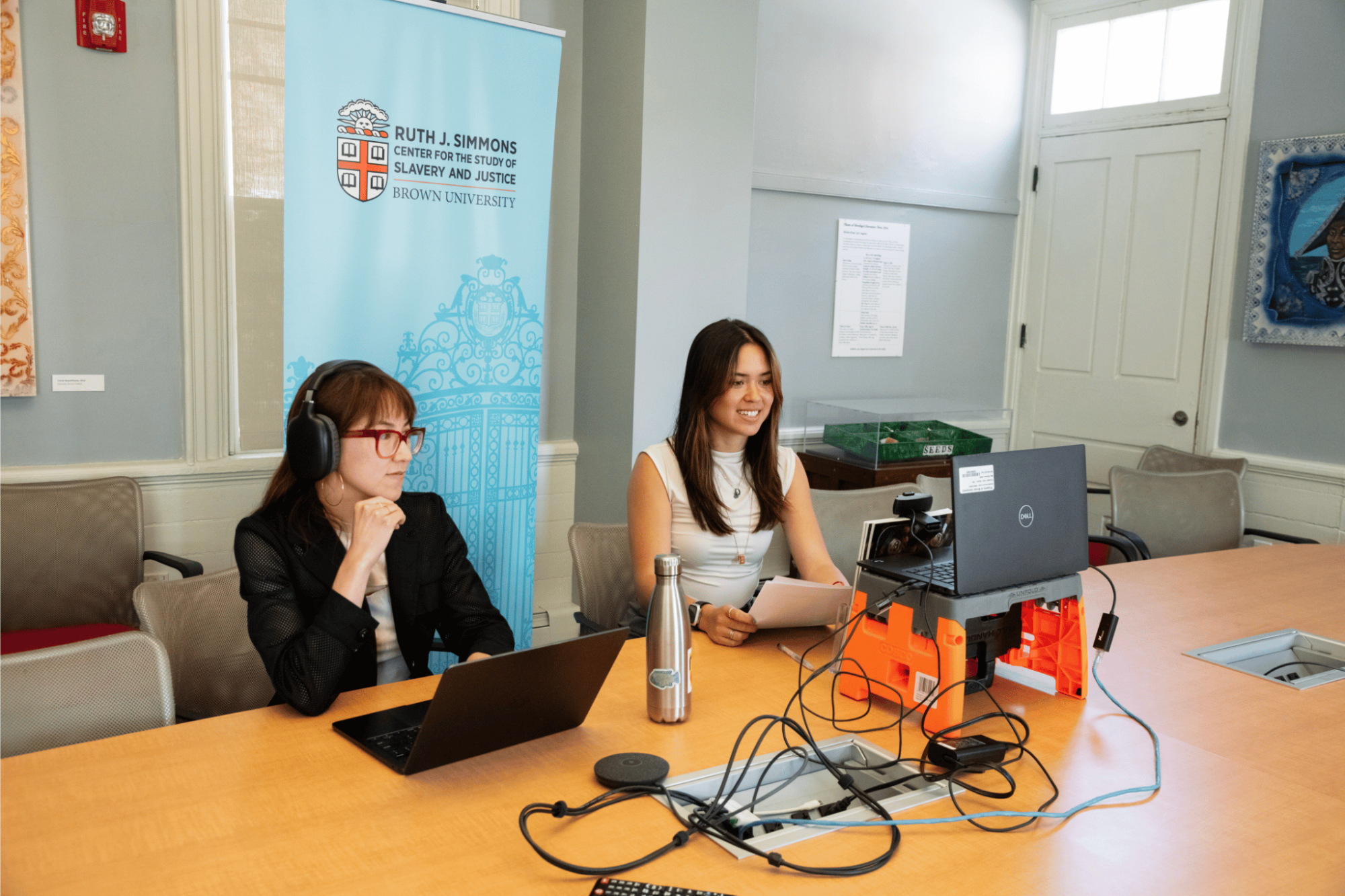
The public humanities program is a broad framework that allows for each of us to engage our individual humanities-related research and projects through the public humanities lens. Within that broad umbrella, my specialization is modern/contemporary art and curatorial practice. As the program has been taken on by the Ruth J. Simmons Center for the Study of Slavery & Justice, it has taken a distinctly critical, anti-colonial, justice-oriented approach. So, what that means for my particular research is that I am invested in reworking the foundational blocks of art history and curation, breaking them out of the traditional strictures that were predicated on Western-centrism and envisioning alternative art historical, aesthetic and curatorial methodologies. Through the open format of the program, I have been able to build an interdisciplinary education tailored to these specific interests and do independent and original research through the thesis. Through the attached fellowship work, I have been able to work at Brown Arts Institute as an exhibitions fellow. Under the mentorship of Thea Quiray Tagle, associate curator of the Bell Gallery at the Brown Arts Institute (2023–2026), I have had the opportunity to dive into the ethics and processes of contemporary exhibition-making. The professional development funding allowed me to go to France to expand my research-related contacts and connect with archives crucial to my work, such as the Bibliotheque Kandinsky Archive at the Centre Pompidou. The “Complete Disorder” conference which I organized with my peers allowed us each to engage directly with leading practitioners in the fields that we are invested in.
Christina Young ’26 A.M.
Public Humanities M.A. Student