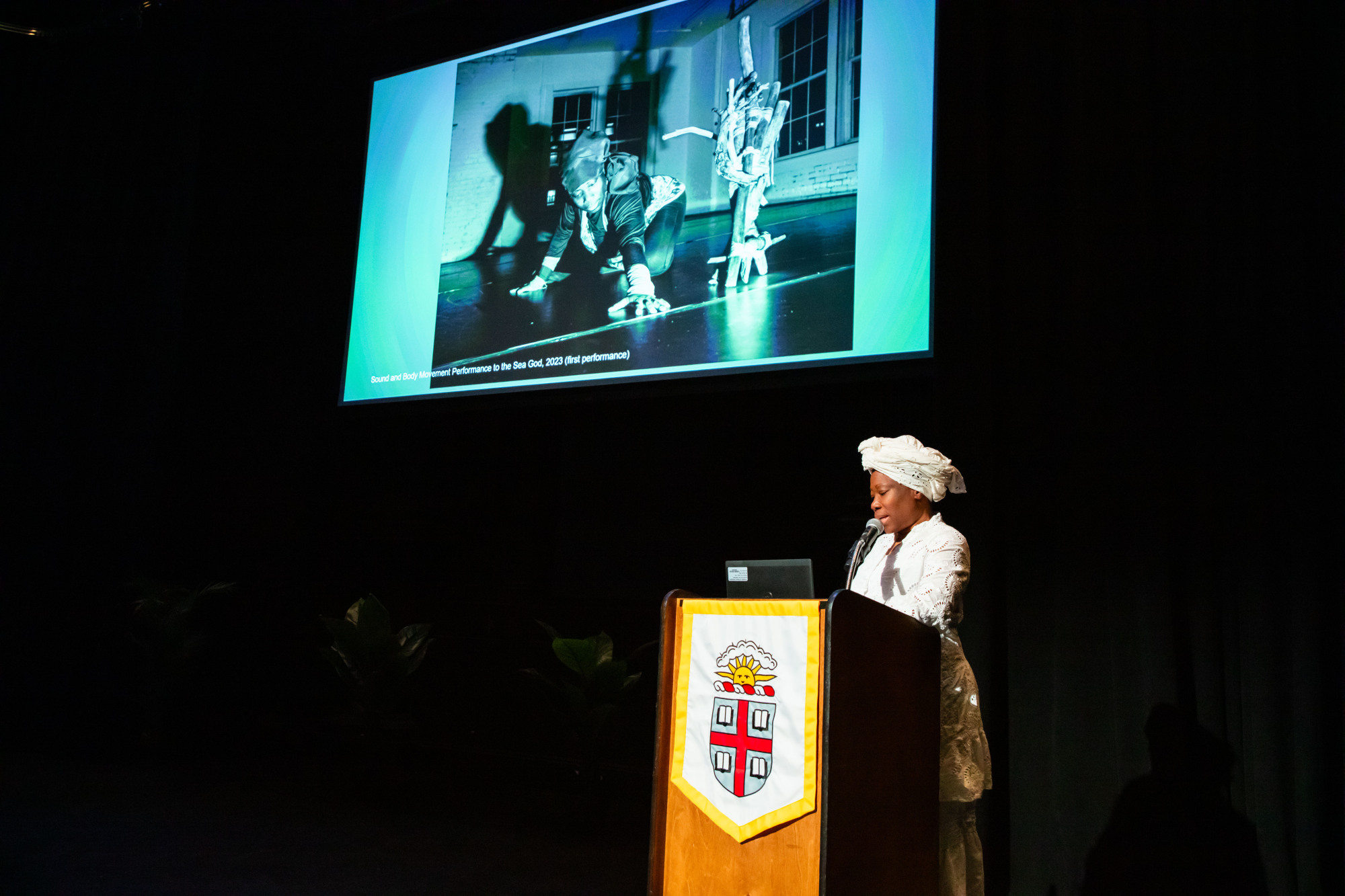
In 2024, the Simmons Center welcomed Togolese-American artist Sika Foyer as its inaugural Reimagining New England Histories (RNEH) Artist in Residence. A multidisciplinary artist whose work was also featured in the RNEH exhibition “Entwined” at Mystic Seaport Museum, Foyer’s work explores aesthetic abstraction in her West African Oral tradition, rite of passage ceremonies, and music and dance rituals, to create narratives that examine all forms of social injustice.
During Foyer's 2024 RNEH residency, she explored her ancestral legacy and the narratives of enslaved people in New England. She initially planned to continue her previous work investigating sound and body movement as signs and a form of language, which she presented at her November 2024 talk at the Simmons Center entitled "The Need for Ancestral Legacy & Contemporaneity in African and African Diaspora Artistic Practices." However, her focus shifted after she discovered Occramer Marycoo, an enslaved African musician who was brought to Newport, RI in his early teens. She was particularly excited to discover Marycoo, as African traditions are primarily oral, making written records a rare and valuable find.
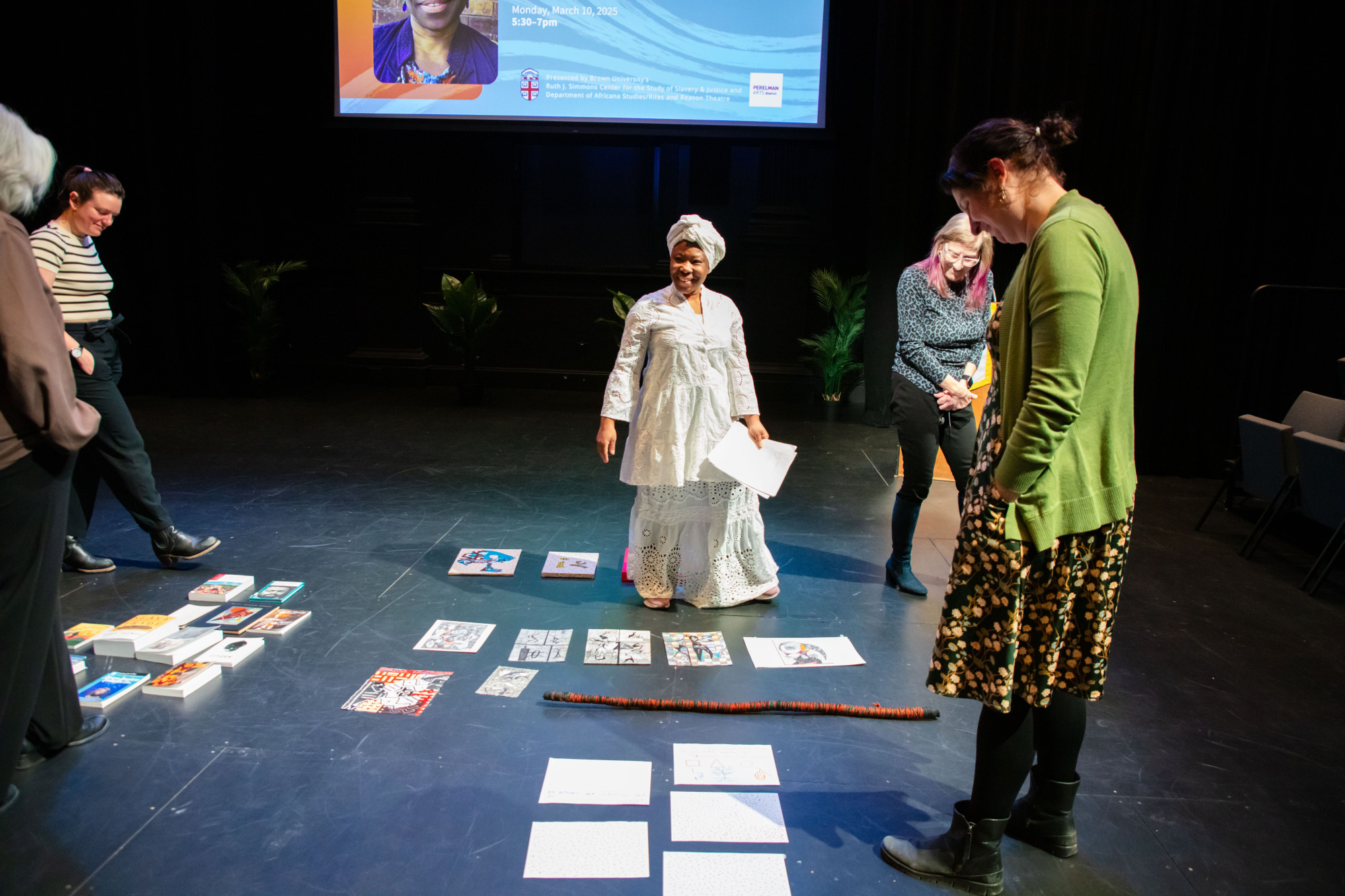
Her research, which included visits to the John Carter Brown (JCB) Library and the Newport Historical Society, focused on Marycoo's journey and struggle to maintain his identity and culture while enslaved. Foyer connected with his resiliency, noting that enslaved people survived and rejuvenated their bodies and spirits through activities such as musicmaking, dancing, lamentation and laughter. Her research culminated in a draft play manuscript about Marycoo's voyage and life. She presented a dramatic reading of the script alongside her son, George, as part of her March 2025 presentation entitled "Occramer Marycoo – Naming, Identity, Reliquary, and Resilience."
Foyer was surprised by the freedom and independence this residency allowed, reflecting that “it opened me up in a way that I wasn't expecting,” and pushed her further as an artist. The residency has also helped her think more critically about her current work on Riker’s Island. Through interactions with people in custody, she is investigating the correlations between historical experiences of slavery and contemporary experiences of people incarcerated (and in new forms of boundaries) in the United States.