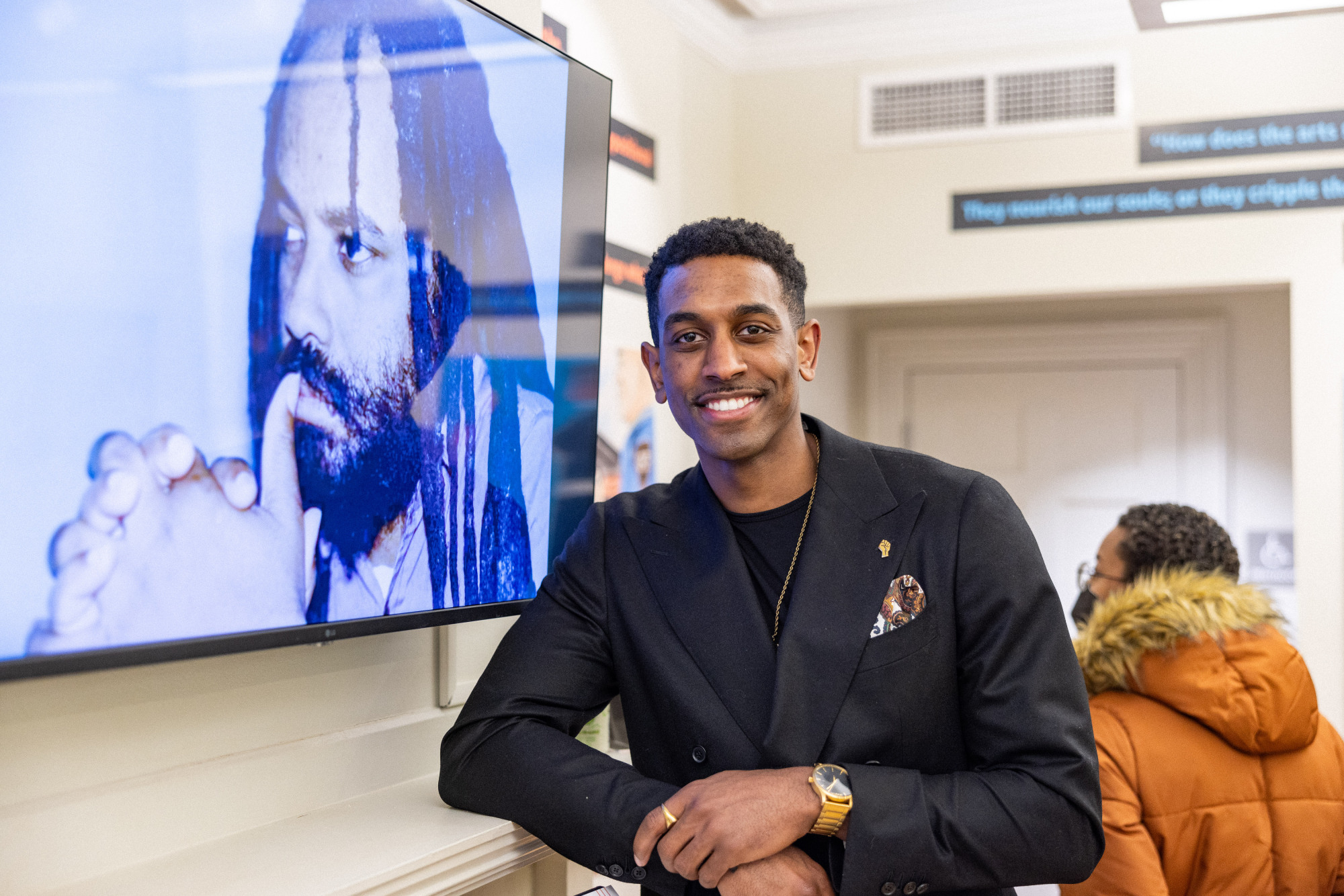
Mumia Abu Jamal is a name known around the world as an outspoken proponent of justice. When I was asked to be a part of this project, I asked my dad about Mumia, knowing that he grew up in and around Philadelphia during the time of Mumia’s radio broadcasts. He mentioned that he vividly remembers Mumia’s prolific voice, adding that Mumia’s broadcasts were through WRTI and Temple University, my alma mater. I felt fueled by this connection as I dove into the archive of Mumia’s artistic voice; his art and music spoke in a different tone but with the same message: freedom and abolition.
With the guidance, trust and support of Christopher West and Melaine Ferdinand-King, ’25 Ph.D. in Africana Studies and Co-Curatorial Fellow, Voices of Mass Incarceration, I took on the task of arranging Mumia’s “Panther Walk,” an illustrious story of the history and triumphs of the Black Panther Party. My primary goal was to arrange this song as closely as possible to Mumia’s original score while providing musical and structural adjustments only when necessary. I then listened to hours of “Prison Nation” broadcasts recorded at the time Mumia composed this piece. I chose to arrange and record “Panther Walk” in a funk/soul feel, getting inspiration from Sly Stone, Bill Withers and Marvin Gaye. With contributions from my incredible band, including Kewku Aggrey ’25 Ph.D., Dan Liperini, Tyreek KcDole and Camila Cortina, and my assistant Ryan Wyche, it came together better than I could have imagined.
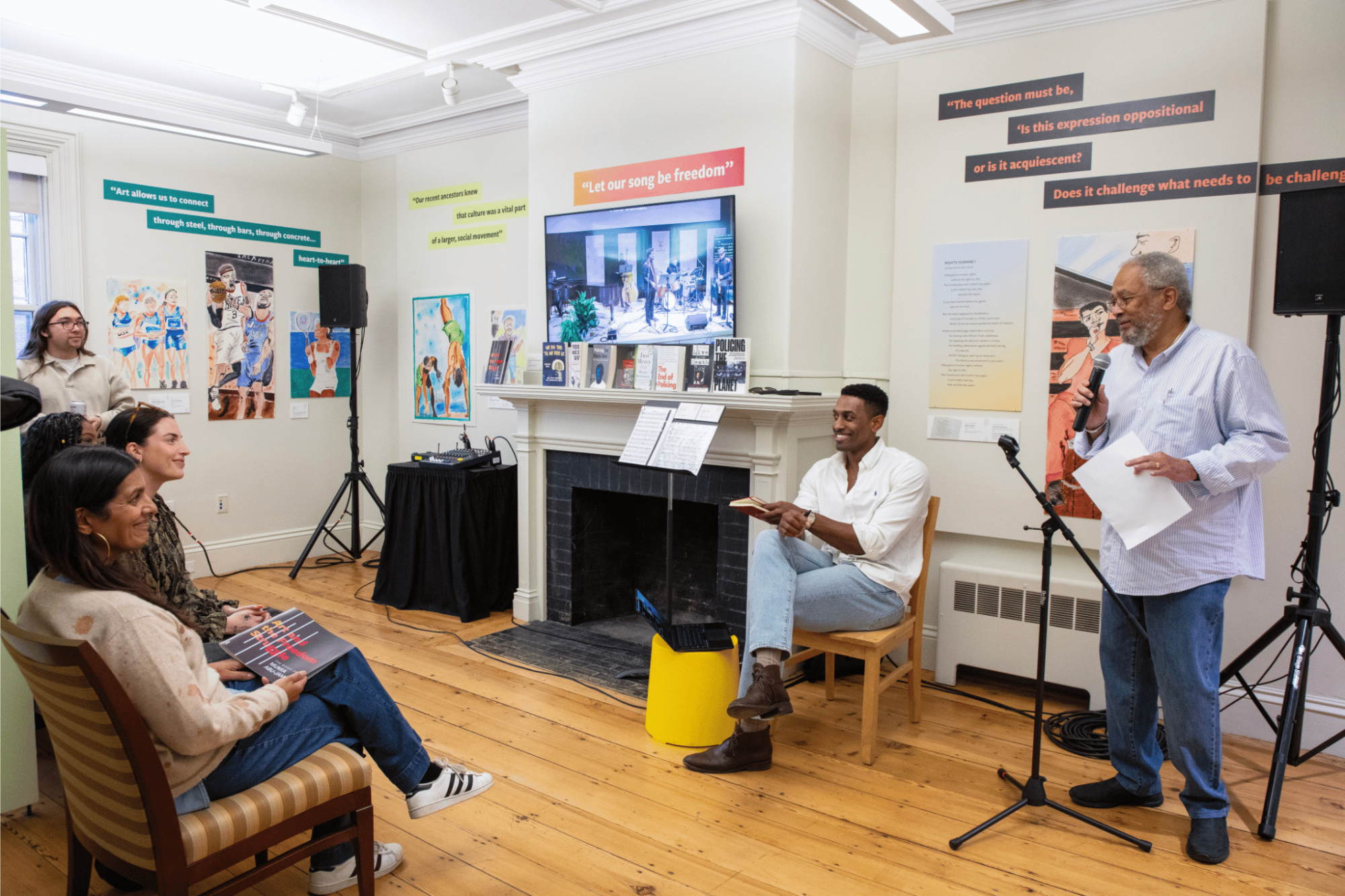
Sharing insight on this process with guests in the gallery of the Simmons Center during Family Weekend was a humbling and rewarding experience. One guest asked what the most difficult part of the process was, and certainly that was arranging the song in a way that would make Mumia proud. After speaking with him, I am honored that we achieved that goal.