Ruth J. Simmons Center for the Study of Slavery and Justice

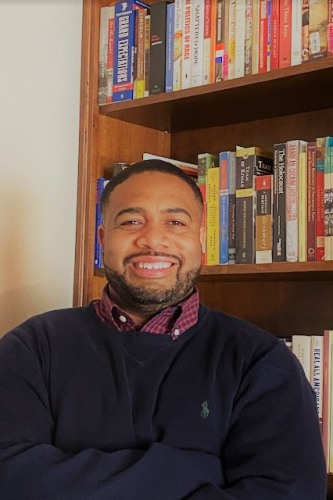
Mack Scott

Visiting Assistant Professor of Slavery and Justice

Biography

Mack Scott is a historian, educator, and member of the Narragansett Indian Tribe. His work focuses on the intersections of race and identity and employs agency as a lens through which to view and understand the voices, stories, and perspectives of traditionally marginalized peoples. He has published works illuminating the experiences of African American, Native American, and Latinx peoples. He is currently working on a project that traces the Narragansett nation from the pre-colonial to the modern era.

Recent News

Recently, the Yale Group for the Study of Native America and the NYU-Yale American Indian Sovereignty Project organized a conference, First America: The Legacies of the Declaration of Independence for Native Nations, with several historians to explore America's 250th Anniversary through a different lens. Among them were author Chris Newell and Simmons Center Visiting Assistant Professor Mack Scott. They convened to discuss the history of Native Americans in the American Revolution.
Read Article
Ellison “Tarzan” Brown, a Narragansett runner from Rhode Island, rose to prominence in the 1930s through his record-setting marathon performances. His athletic achievements brought significant visibility to the Narragansett Tribe at a time when official policies and records attempted to erase Indigenous identities. Brown’s story highlights longstanding Native running traditions, the impact of racial discrimination in New England, and the role his victories played in countering “paper genocide” and affirming the continued presence of the Narragansett people. His legacy endures through annual races held in his honor and the broader recognition of Indigenous resilience in the region. The story highlights analysis by Mack Scott, a Visiting Assistant Professor of Slavery and Justice at the Simmons Center, who provides historical context on Tarzan Brown’s impact and the visibility it brought to the Narragansett Tribe.
Read Article
Connecticut Public Radio

For Native Americans, an enduring spiritual connection to the land

Native communities in southern New England maintain a longstanding spiritual and cultural connection to their ancestral lands, rooted in traditions of stewardship, hunting, and communal responsibility. Their history includes profound disruptions caused by colonization, including disease, warfare, enslavement, and the systematic erasure of Native identity from official records. Events such as the Pequot War and Mystic Massacre illustrate these impacts. Today, Narragansett, Mashantucket Pequot, and other tribal members continue working to preserve culture, reclaim historical narratives, and uphold the resilience and continuity of Indigenous life in the region. Mack Scott, Visiting Assistant Professor of Slavery and Justice at the Simmons Center, powerfully reflects, “when I was in school, they told us that the Narragansett didn’t exist… and my grandmother’s at home, right? My mother’s there. I know that we exist, but the idea is that we don’t.”
Read Article
University of Rhode Island Magazine

Spotlight on Mack Scott | The Actualist

Historian Mack Scott, Visiting Assistant Professor of Slavery and Justice at the Simmons Center, describes himself as an “actualist.” His varied research interests share a common thread—mending ruptures in the fabric of dominant historical narratives through stories that have been neglected or erased. His goal is a more complete history—one that strives to document what actually happened.
Read Article