Ruth J. Simmons Center for the Study of Slavery and Justice

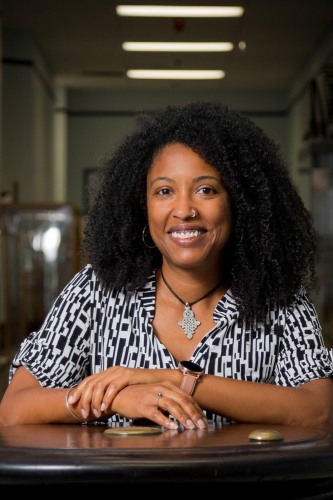
Akeia de Barros Gomes

Visiting Scholar (January through August); Adjunct Lecturer in Slavery and Justice (September through December); Director, Edward W. Kane and Martha J. Wallace Center for Black History at the Newport Historical Society

Biography

Akeia de Barros Gomes, Ph.D., is the Director of the Edward W. Kane and Martha J. Wallace Center for Black History at the Newport Historical Society. She is a Visiting Scholar & Adjunct Lecturer at The Ruth J. Simmons Center for Slavery and Justice, Brown University. At Mystic Seaport Museum she served as Senior Curator of Maritime Social Histories, Vice Pres. American Institute for Maritime Studies, and Dir. of Munson Institute. As an anthropologist and archaeologist her research has been extensive on many continents.
 

Her recent exhibition, Entwined: Freedom, Sovereignty and the Sea is a multi-year Mellon Foundation-funded project that recovers the history of the founding and development of the Dawnland (New England) through Indigenous, African, and African-descended maritime perspectives. This project is a cooperative effort with individuals in Dawnland Indigenous, African, and African-descended communities. Akeia is responsible for strategic vision and intellectual thought leadership to Mystic Seaport Museum's Library, Research, Curatorial and Exhibitions departments by overseeing professionals dedicated to advancing the Museum’s academic presence in maritime studies.  She also leads development of maritime education as well as sharing findings and stories with museum visitors through exhibitions and programming. Akeia taught as professor of American Studies and Professor of Psychology and Human Development at Wheelock College from 2008 to 2017.

Recent News

Author Lizzie Skurnick has embarked on a journey to discover the partially erased black history in New England through her travels. She has taken off to see several historic monuments to black existence and significance in the region, while educating herself on the true stories behind them. Among her stops was the new Newport Center for Black History, directed by Simmons Center Visiting Scholar Dr. Akeia de Barros Gomes, with whom she spoke and learned about the history of the historic home the center is housed in.
Read Article
While the presence of Black people in Newport, RI, may be surprising to some, they have played a large role in its history. One that Simmons Center Visiting Scholar Dr. Akeia de Barros Gomes knows very well. For this reason, she set out to develop the Newport Center for Black History, which has just been opened to transport people into the perspectives of the formerly enslaved in the region.
Read Article
Simmons Center Director Anthony Bogues and Visiting Scholar Akeia de Barros Gomes shared their insights on the impact of the new Center for Black History in Newport, RI. They both feel that it is an important aspect of teaching about the past, while remaining connected to the present and future of black history.
Read Article
The Newport Historical Society hosted a ribbon-cutting for the opening of the Edward W. Kane and Martha J. Wallace Center for Black History, where several Rhode Island leaders shared the importance of this center in bringing black history to this part of the state. Simmons Center Director Anthony Bogues participated in the ceremony and the Center for Black History is directed by Simmons Center Visiting Scholar Akeia de Barros Gomes.
Read Article
Following the discovery of an nkisi, a bundle of spiritual objects that traveled with the enslaved across the Atlantic, in the attic of Newport's oldest surviving home, the home has been transformed into Newport's Black History Center. The Center is directed by Simmons Center Visiting Scholar Akeia de Barros Gomes.
Read Article
Simmons Center Visiting Scholar and Edward W. Kane and Martha J. Wallace Center for Black History Director, Dr. Akeia de Barros Gomes, was interviewed about the center's new opening in Newport, RI. She shared that the Center was intentionally designed to place visitors in the shoes of the enslaved who lived in the home and is already positively impacting the community.
Read Article